ACL Injury Symptoms and When to Seek Medical Assessment

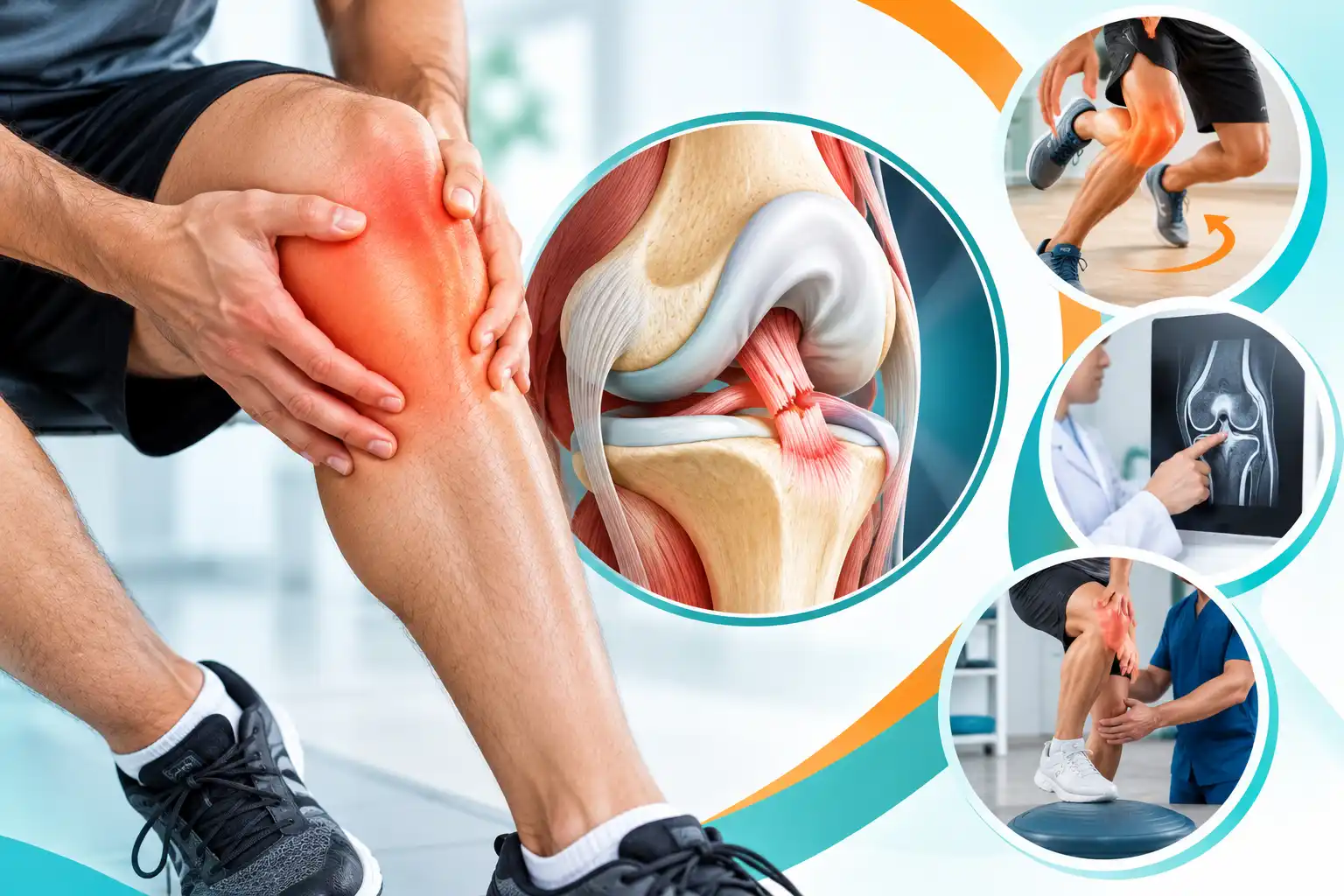
Image disclosure: All images in this article are AI-generated for illustration only. *

Dr. Amol Kathar
MPT (Neuro), 5+ years clinical
experience in neurological rehabilitation
Your knee twists during football, badminton or a workout. You feel a pop, the joint swells, and it is hard to trust your leg. Could this be an ACL injury? ACL injury symptoms often include swelling, reduced movement and a knee that gives way, but those signs are not a diagnosis. A meniscus injury, kneecap dislocation or fracture can look similar. The useful next step is to stop the activity, protect the knee and arrange an assessment when symptoms suggest more than a minor strain. This guide explains what to notice, when to seek urgent care and where physiotherapy fits after the injury is evaluated.
What the ACL Does in Your Knee
The anterior cruciate ligament, or ACL, is a strong band of tissue inside the knee. It helps control forward movement of the shin bone and rotation of the joint. An injury can happen when a person changes direction quickly, stops suddenly, lands awkwardly from a jump or takes a direct blow to the knee. Sports with cutting and pivoting movements are common settings, but you do not have to be an athlete to injure the ligament.
An ACL injury can range from a sprain to a partial or complete tear. Other structures, including the meniscus, cartilage or another ligament, may be injured at the same time. That is why the question is not simply whether the ACL is torn. The full knee assessment matters for deciding what care is safe.
Symptoms for ACL Injury That Deserve Attention
People often describe a distinct moment when the knee twisted or buckled. A pop or snapping sensation may occur, followed by pain and difficulty continuing the activity. Swelling commonly develops during the first day. The knee may feel stiff, difficult to fully straighten or uncomfortable to walk on. After the initial pain settles, some people notice that it gives way when they turn, descend stairs or try to move quickly.
These features make an ACL injury possible, not certain. A pop can come from another structure, and swelling does not identify which tissue is damaged. The absence of a pop does not rule out an ACL tear. Likewise, being able to walk does not prove that the knee is safe for running or sport. Record what happened and how the symptoms changed; that history helps the clinician more than repeated attempts to test the knee yourself.
What the First Hours After Injury Can Tell You
Notice the movement that caused the injury. Did the foot stay planted while the body turned? Did the knee bend awkwardly on landing, or was there a collision? Also note whether you could continue playing, when swelling appeared, and whether the knee felt unstable. These details are useful because different injuries can produce similar pain but need different examinations or imaging.
A knee that fills with swelling soon after an injury should be assessed, particularly when it is painful or hard to move. If the joint is locked so that it will not straighten, another injury such as a meniscus tear may be involved. Do not try to force a locked knee straight. Pain improving over the next day does not necessarily mean the underlying ligament or cartilage is uninjured.
When to Seek Urgent Medical Care
Get prompt medical assessment if the knee has changed shape, you cannot put weight on the leg, swelling is severe or rapidly increasing, or the joint cannot move normally. A knee that locks, repeatedly gives way or is very painful also needs review. Seek urgent care for an open wound, numbness, a cold or discoloured foot, or a hot, red knee with fever. These signs may point to a problem beyond an isolated ligament injury.
If the injury followed significant trauma, do not assume it is an ACL tear based on a pop or swelling. A fracture or dislocation needs its own assessment. Children and adolescents with a traumatic swollen knee should also be evaluated because injuries around growing bones require particular care. When in doubt about the severity, arrange medical advice rather than waiting to test the knee in another match.
What to Do Before Your Knee Is Assessed
Stop the activity and avoid cutting, jumping, pivoting or trying to play through instability. Reduce weight on the leg if walking is painful or unsafe. Support the knee in a comfortable position and elevate it when practical. A cold pack wrapped in a towel can help with discomfort for short periods; keep ice off bare skin. If a brace or walking aid is advised by a clinician, follow their instructions rather than selecting one based on an online photo.
Do not try a home Lachman test, forceful stretching or deep squats to see whether the ligament is intact. Those manoeuvres are difficult to interpret and may worsen pain. Ask a clinician or pharmacist about pain relief that fits your health conditions and medicines. If you cannot bear weight or the knee looks deformed, prioritise urgent assessment over home exercises.
How an ACL Injury Is Diagnosed
The clinician will ask how the injury occurred, whether you heard a pop, how quickly the knee swelled, whether it gives way and whether you can bear weight. They will examine movement, swelling, tenderness, stability and the circulation and sensation below the knee. Tests such as the Lachman test compare joint movement, but a very painful or swollen knee may limit what can be assessed immediately. Re-examination after swelling settles may be useful.
An X-ray looks for a related bone injury; it does not show the ACL itself. An MRI can show the ligament and help identify associated meniscus or cartilage damage. An MRI is not automatically needed for every knee injury, and it may not be necessary to make a clinical ACL diagnosis. The choice depends on the examination, suspected associated injuries and the decisions the result would change. Ask what the scan is intended to answer rather than treating the image alone as the whole diagnosis.
Could It Be Something Other Than the ACL
Yes. A meniscus injury can cause joint-line pain, catching or locking. A kneecap dislocation may follow a sudden change in direction and can cause rapid swelling. Collateral ligament injuries may produce pain on the inner or outer side of the knee. A fracture or tendon injury can also limit movement and walking. More than one structure may be injured at once, so symptom checklists cannot reliably separate them.
This is especially relevant if the main problem is a locked knee, a visibly altered joint, marked tenderness over bone or weakness when trying to straighten the knee. Those findings should not be labelled an ordinary ACL sprain without an examination. A useful diagnosis names both the suspected injury and any important injury that still needs to be excluded.
What Treatment May Look Like After Diagnosis
Treatment depends on whether the ACL is partially or fully torn, whether other structures are injured, how often the knee gives way and what activities you need to return to. Some people can manage with structured rehabilitation and activity changes. Others, especially those with significant instability or a return to pivoting sport as a goal, may discuss surgery with an orthopaedic specialist. A complete tear does not automatically mean every person needs an operation, and a mild-looking injury should not be dismissed without considering function.
Early care often aims to settle swelling, restore comfortable knee movement and rebuild quadriceps control. The next steps are based on assessment and medical advice, not on a fixed internet timetable. If surgery is chosen, rehabilitation starts before or after the procedure according to the treating team. If surgery is not chosen, progressive exercise and monitoring for repeated giving way remain important.
Where Physiotherapy Fits
Physiotherapy can help assess movement and function, identify signs that need medical referral, and plan rehabilitation after the diagnosis is clear. A programme may progress from safe walking and knee movement to strength, balance, landing control and sport-specific drills. The exercises and pace should match the actual injury, any meniscus or cartilage involvement and the person's goals. A generic list of ACL exercises is not a substitute for an assessment of a newly swollen knee.
For an athlete, returning to sport is a separate decision from returning to normal walking. The knee must tolerate greater strength, jumping, deceleration and direction-change demands. A clinician may use objective testing alongside symptom response and confidence; no single calendar date guarantees readiness. This article focuses on recognising and assessing the injury. A separate recovery guide can cover rehabilitation milestones in detail.
Apricot Care's sports injury physiotherapy service in Pune explains its assessment and staged return-to-sport approach.
For broader knee symptoms or rehabilitation after treatment, see knee pain physiotherapy in Pune .
The Bottom Line
A pop, swelling and a knee that gives way can suggest an ACL injury, but they do not prove one. The same injury may involve a meniscus, cartilage or bone, and some people can still walk despite a significant tear. Stop sport, protect the knee and arrange assessment if swelling, instability or loss of movement follows a twist or impact. Seek urgent help for deformity, inability to bear weight, locking, rapidly worsening swelling or changes in foot sensation or colour. Once the diagnosis and precautions are clear, physiotherapy can support a measured return to everyday activity and, when appropriate, sport.
Need a knee or sports injury assessment in Kharadi, Pune? Explore Apricot Care sports physiotherapy or contact the clinic . You can also call +91 73876 41462. For urgent warning signs, seek medical care first.
Frequently Asked Questions
What are the most common symptoms of an ACL injury?
Common symptoms include a pop or feeling that the knee gave way during a twist or landing, pain, swelling during the first day, reduced movement and later instability. These signs can also occur with other knee injuries, so a clinical assessment is needed.
Can I have an ACL tear without hearing a pop?
Yes. A pop is common but is not required for an ACL injury. The injury may still need assessment if the knee swells after a twist, feels unstable or cannot move normally.
Can I walk with an ACL injury?
Some people can walk after an ACL injury, especially once the first pain settles. Walking does not rule out a tear or another serious knee injury. Avoid sport and twisting movements until the knee has been assessed.
Does a swollen knee always mean the ACL is torn?
No. Swelling can follow an ACL injury, meniscus injury, kneecap dislocation, fracture or other problem. The timing of swelling, injury mechanism and examination findings help a clinician work out what needs further testing.
Do I need an MRI to diagnose an ACL injury?
Not always. A clinician can often suspect or diagnose an ACL injury from the history and physical examination. An MRI may help confirm ligament damage and identify associated meniscus or cartilage injuries. An X-ray may be used to look for a bone injury.
Can Apricot Care help after a suspected ACL injury in Pune?
Apricot Care offers sports injury and knee physiotherapy assessment in Kharadi, Pune. If a recent injury has severe swelling, deformity, inability to bear weight, locking or other warning signs, prompt medical assessment comes first. Rehabilitation can then be planned around the confirmed diagnosis and medical advice.
Medical Note
This article is general information, not a diagnosis or a personalised exercise plan. A clinician should assess a recently injured, swollen or unstable knee. Seek urgent care for deformity, inability to bear weight, locking, severe swelling, fever with a hot red joint, or changes in foot colour or sensation.
References
With 5+ years of experience, he specializes in personalized rehabilitation for stroke, spinal cord injuries, and mobility training to help improve mobility and functional independence.
.webp)