
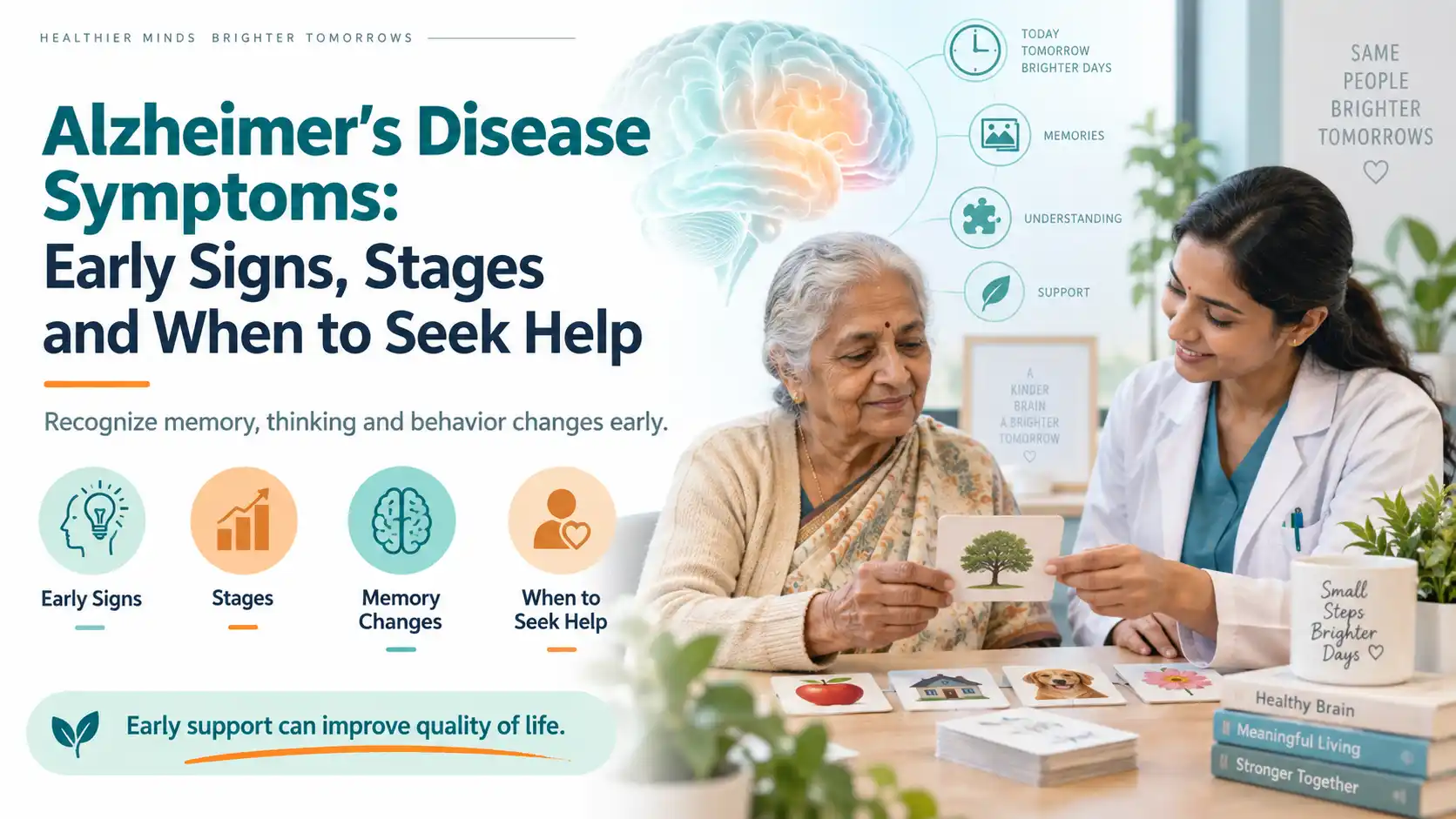

Alzheimer's disease symptoms often develop gradually and can affect memory, thinking, language, behaviour, and everyday independence. Forgetting something occasionally does not automatically mean Alzheimer’s disease. The important change is a pattern that becomes more frequent, interferes with usual tasks, or concerns the person or family. This guide explains common signs, why professional assessment matters, and how practical rehabilitation and caregiver support can help after a diagnosis.
Memory and thinking changes can have many causes, including medication effects, sleep problems, mood conditions, infection, nutritional deficiencies, or other medical conditions. A blog cannot diagnose the cause. If a change is new, persistent, or affecting safety and daily life, speak with a qualified clinician.
What Alzheimer Disease Means
Alzheimer's disease is a progressive brain condition and a common cause of dementia. Dementia is an umbrella term for changes in memory, thinking, language, judgement, or behaviour that are serious enough to interfere with everyday life. Alzheimer’s disease is one possible cause of dementia, but it is not the only one.
Symptoms and the rate of change vary from person to person. Some people first notice short-term memory changes, while others may first have difficulty finding words, navigating familiar places, judging distances, or managing familiar tasks. Only a clinical assessment can determine whether symptoms are related to Alzheimer’s disease, another form of dementia, or a potentially treatable cause.
Alzheimer's Disease Symptoms to Watch For
The following changes are worth discussing with a clinician when they are ongoing, worsening, or affecting independence. One symptom on its own does not confirm Alzheimer’s disease.
- Memory changes that disrupt daily life, such as repeatedly asking the same question, forgetting recently learned information, or relying much more on reminders for familiar tasks.
- Difficulty planning or completing familiar activities, including paying bills, following a recipe, organising medicines, or using a phone or appliance that was previously familiar.
- Confusion about time or place, such as losing track of dates, getting lost in a familiar area, or not understanding how they arrived somewhere.
- Language and communication changes, including struggling to follow a conversation, finding words, or repeating a story without realising it.
- Changes in visual or spatial skills, such as difficulty judging distance, reading, recognising visual information, or navigating steps and pathways safely.
- Poor judgement or reduced awareness of risk, for example unsafe financial decisions, neglecting personal care, or being more vulnerable to scams.
- Withdrawal from usual activities, changes in mood, anxiety, irritability, apathy, or personality changes that are new and persistent.
Normal Forgetfulness and Signs That Need Review
A person may occasionally forget a name, misplace an item, or need more time to learn something new. These experiences can occur with normal ageing. The concern is not a single lapse. It is a clear change from the person’s usual ability, especially when it repeatedly affects work, household tasks, relationships, personal care, finances, driving, or safety.
For example, forgetting an appointment and remembering it later is different from repeatedly missing appointments, being unable to use a calendar, or becoming confused about where to go. Families are often the first to notice these changes. Keeping a brief, factual record of when symptoms started, how often they happen, and how they affect daily tasks can make a clinical appointment more useful.
When to Seek Medical Assessment
Arrange a medical assessment if memory, thinking, language, or behaviour changes are persistent, progressive, or worrying. A clinician may ask about medical history, medicines, mood, sleep, alcohol use, recent illness, and daily function. They may also perform memory, thinking, physical, and neurological checks, and arrange further tests or referral if needed.
Seek urgent medical help for sudden confusion, new weakness or numbness, facial drooping, trouble speaking, severe sudden headache, a seizure, a head injury, or a rapid change in alertness. Sudden symptoms can have causes that need urgent treatment and should not be assumed to be Alzheimer’s disease.
What Support Can Look Like After Diagnosis
There is no single plan that suits every person. Support should be based on the diagnosis, current abilities, home environment, medical needs, goals, and preferences. A care plan may involve a treating doctor or neurologist, nursing support, occupational therapy, physiotherapy, speech and swallowing support, psychological support, and caregiver education when appropriate.
Rehabilitation does not cure Alzheimer’s disease or reverse its progression. It can, however, focus on practical areas that matter to the person and family, such as maintaining safer movement, reducing fall risk, adapting daily routines, supporting communication, and keeping familiar activities manageable for as long as possible.
Need a care discussion for a parent or family member? Book an Alzheimer’s and dementia care assessment .
The Role of Physiotherapy and Occupational Therapy
Physiotherapy may help assess mobility, balance, transfers, strength, walking confidence, and falls risk. Exercises and movement plans should be simple, safe, and tailored to the individual’s health status and ability to follow instructions. The aim is to support function and safety, not to promise a cure or a fixed result.
Occupational therapy can focus on everyday activities such as dressing, bathing, eating, using familiar household items, and moving around the home safely. It may also help identify practical changes to routines and the living space. Learn more about occupational therapy support for everyday independence and Alzheimer’s and dementia care at Apricot Care .
Practical Tips for Families and Caregivers
Small adjustments can reduce confusion and make daily life calmer. Try one change at a time and involve the person in decisions wherever possible. What works can vary with the person, time of day, and stage of illness.
- Keep a predictable routine for meals, medicines, rest, and familiar activities.
- Give one simple instruction at a time and allow extra time for a response.
- Use clear labels, good lighting, a visible calendar, and familiar places for important items.
- Reduce trip hazards, review footwear, and consider professional advice about home safety if mobility or judgement has changed.
- Watch for pain, constipation, infection, dehydration, poor sleep, or medication changes when behaviour suddenly becomes worse.
- Share caregiving tasks where possible and seek support before exhaustion affects your own health.
Families seeking broader mobility, safety, and daily-living support can also explore senior care and geriatric rehabilitation options .
A Respectful Next Step
A change in memory or behaviour can be difficult for everyone involved. Starting with an accurate assessment helps avoid assumptions and can identify needs that deserve attention. After diagnosis, person-centred care can support dignity, safety, participation, and the skills that remain meaningful to the individual.
To discuss rehabilitation and caregiver support, contact Apricot Care .
Frequently Asked Questions
What are common Alzheimer’s disease symptoms?
Common symptoms can include memory changes that affect daily life, difficulty with familiar tasks, confusion about time or place, communication changes, reduced judgement, and changes in mood or behaviour. Symptoms vary, and only a qualified clinician can diagnose the cause.
Is memory loss always a sign of Alzheimer’s disease?
No. Memory changes can be linked to normal ageing, sleep problems, mood conditions, medicines, infection, nutritional issues, or other medical causes. Persistent or concerning changes should be assessed by a qualified clinician.
When should a family seek urgent help for confusion?
Seek urgent medical help for sudden confusion, new weakness or numbness, facial drooping, speech difficulty, severe sudden headache, a seizure, head injury, or a rapid change in alertness.
Can physiotherapy help someone with Alzheimer’s disease?
Physiotherapy may help assess and support safe mobility, balance, transfers, strength, walking confidence, and falls risk. Plans should be personalised to the person’s health needs and current ability.
How can occupational therapy support a person with dementia?
Occupational therapy can help with safer daily routines, practical self-care strategies, home safety, and adapting activities to the person’s abilities and priorities.
Does Apricot Care provide Alzheimer’s and dementia care support?
Yes. Apricot Care provides Alzheimer’s and dementia care support that may include rehabilitation, daily-living support, caregiver guidance, and care planning based on the individual’s assessment and needs.
References
Medical note: This article is for general education and does not replace medical diagnosis, treatment, or emergency care. New or worsening memory, thinking, movement, speech, or behaviour changes should be discussed with a qualified clinician. Seek urgent care for sudden neurological symptoms or sudden confusion.
.webp)