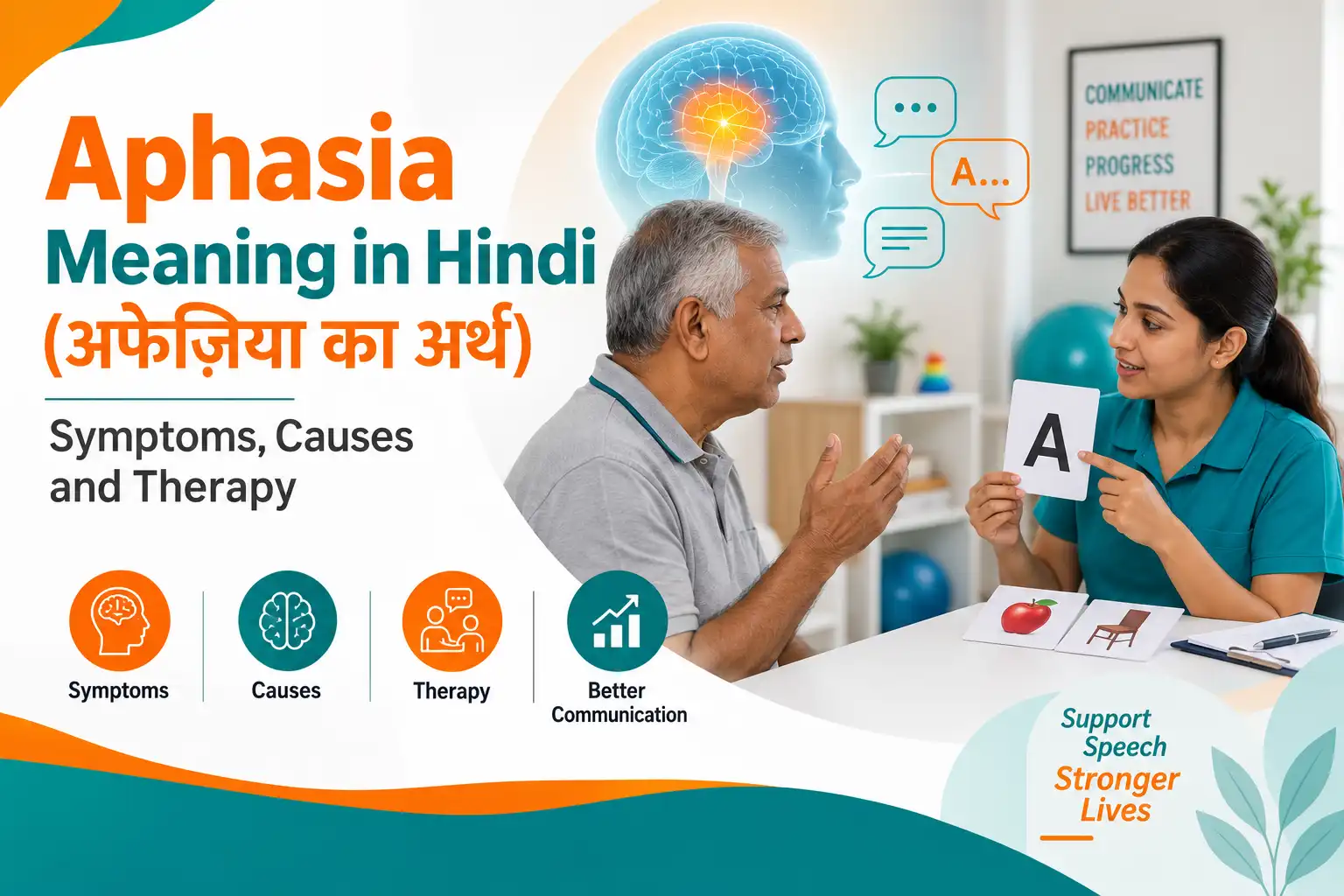
Aphasia Meaning in Hindi (अफेज़िया का अर्थ): Symptoms, Causes and Therapy


Dr. Krutika Bhadane
PT (Neuro), BPTh, MPTh (Neurosciences), 5+ years clinical
experience in neurological rehabilitation
Aphasia Meaning in Hindi (अफेज़िया का अर्थ): Symptoms, Causes and Therapy
Aphasia meaning (अफेज़िया का अर्थ) is a language disorder (भाषा संबंधी समस्या) that can make it difficult to speak, understand speech, read, or write. It often occurs after a stroke (स्ट्रोक), but it can also follow a brain injury or another condition affecting language areas of the brain. Aphasia does not mean that a person has lost intelligence. It means the brain is having difficulty processing or expressing language.
Important: If speech or understanding changes suddenly, treat it as a medical emergency (चिकित्सकीय आपात स्थिति). Sudden language difficulty can be a sign of stroke. Seek urgent medical help, especially if there is facial drooping, arm weakness, confusion, trouble walking, or a severe sudden headache.
What Is Aphasia
Aphasia is a problem with language, not a problem with effort or intelligence. A person may know what they want to say but struggle to find the correct word. They may hear words clearly but not understand their meaning, or they may have trouble reading a message and writing a reply. The pattern varies because language uses several connected areas of the brain.
In simple terms, aphasia kya hai (अफेज़िया क्या है) is a condition in which communication becomes difficult after damage to language-related parts of the brain. It can be mild, moderate, or severe. Some people speak fluently but use incorrect words. Others understand well but find it hard to speak. A proper clinical assessment identifies the individual pattern.
Aphasia Meaning in Medical Terms
In medical terms, aphasia is an acquired language disorder caused by damage to the brain. It commonly affects the left side of the brain in people whose language is mainly controlled there. A stroke is a common cause, because it can interrupt blood flow to a part of the brain. Traumatic brain injury, brain tumours, infections, and progressive neurological conditions may also cause aphasia.
Aphasia disease meaning in Hindi (अफेज़िया रोग का अर्थ) can be confusing. Aphasia is usually described as a disorder or symptom caused by an underlying brain condition, rather than a single contagious disease. The treating doctor and rehabilitation team work to identify the cause and plan care safely.
Aphasia Meaning in Hindi and Marathi
Aphasia meaning in Hindi is भाषा समझने या बोलने में दिक्कत. It may also affect reading (पढ़ने में परेशानी) and writing (लिखने में परेशानी). A family member may notice that the person uses the wrong word, pauses often, cannot follow a familiar conversation, or becomes frustrated during communication.
Aphasia meaning in Marathi can be explained as भाषा समजण्यात किंवा बोलण्यात अडचण. The medical word usually remains aphasia, while the explanation should be given in the language that the person and family understand best. Clear communication is important during rehabilitation because it helps the person participate in goals, exercises, and daily decisions.
Aphasia Symptoms
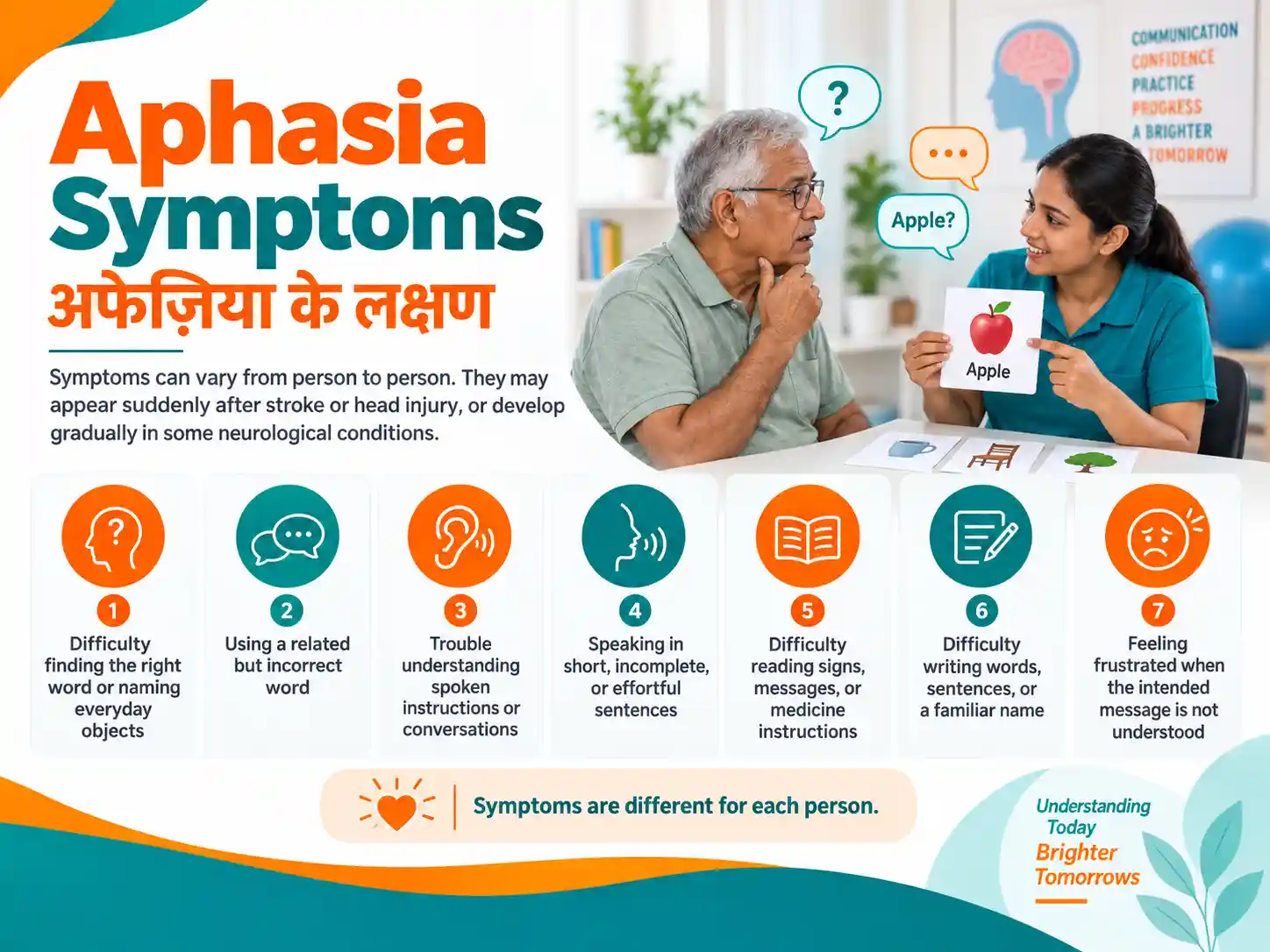
Aphasia symptoms (अफेज़िया के लक्षण) are different for each person. They may appear suddenly after stroke or head injury, or develop gradually in some neurological conditions. Common signs include the following.
- Difficulty finding the right word or naming everyday objects
- Using a related but incorrect word, such as saying chair when meaning table
- Trouble understanding spoken instructions or conversations
- Speaking in short, incomplete, or effortful sentences
- Difficulty reading signs, messages, or medicine instructions
- Difficulty writing words, sentences, or a familiar name
- Feeling frustrated because the intended message is not understood
These symptoms do not automatically confirm aphasia. Hearing loss, delirium, medication effects, low blood sugar, seizures, and other conditions can also affect communication. A clinician should assess a new or worsening change.
Aphasia and Slurred Speech
Aphasia is different from slurred speech. Slurred speech often happens when the muscles used for speaking are weak or poorly coordinated. A person with slurred speech may know the words and understand language normally, but the words sound unclear. With aphasia, the main difficulty is using or understanding language. Both problems can occur together after a stroke, so a complete assessment matters.
When Aphasia Needs Emergency Care
Aphasia that starts suddenly can be a stroke warning sign. Do not wait to see whether it improves. Call emergency services or go to the nearest emergency department immediately if there is sudden trouble speaking, understanding, reading, or writing, particularly with any of these signs.
- Face drooping or uneven smile
- Weakness or numbness in an arm or leg, especially on one side
- New loss of balance, severe confusion, or trouble seeing
- A severe sudden headache without a known cause
Early emergency treatment can be time-sensitive. This article is for education and cannot diagnose the cause of a new language problem.
Aphasia Treatment and Speech Language Therapy
Treatment depends on the cause, the type of aphasia, and the person’s goals. Once medical care is stable, speech-language therapy can help a person practise communication skills that matter in daily life. Therapy may focus on finding words, understanding conversation, reading, writing, using gestures, or using communication aids when useful.
At Apricot Care speech and swallow therapy, a speech-language therapist can assess communication and swallowing-related needs within a wider rehabilitation plan. Sessions should be individualised. The therapist may also guide family members on how to give time, use short clear sentences, and support communication without speaking over the person.
How Physiotherapy Supports Recovery
Physiotherapy does not directly restore language. However, it can be an important part of rehabilitation when aphasia follows a stroke or brain injury. A physiotherapist may work on sitting balance, walking, strength, transfers, arm function, fatigue management, and safe participation in daily activities. Better physical function can make it easier for a person to take part in communication therapy and regain independence.
When aphasia occurs after stroke, Apricot Care stroke rehabilitation can combine physiotherapy with speech-language therapy and other clinically appropriate rehabilitation support. The care plan should reflect the person’s diagnosis, recovery stage, safety needs, and realistic day-to-day goals.
How Family Members Can Help
Communication can feel tiring after aphasia. Family members can help by creating a calmer conversation environment and allowing extra response time. Ask one question at a time, use familiar words, and confirm the message rather than guessing. A notebook, pictures, gestures, written key words, and yes-or-no choices may help some people. Include the person in conversations and decisions, even when communication takes longer.
Avoid correcting every word or finishing every sentence. Encouragement is useful, but the person also needs time to attempt the message. A therapist can show the family communication strategies that fit the person’s abilities.
Can Aphasia Improve
Many people improve their communication after aphasia, especially when the underlying medical condition is treated and rehabilitation begins at the right stage. Recovery is individual. It can depend on the cause and location of brain injury, the type and severity of language difficulty, general health, fatigue, and access to regular practice and therapy. Progress may be gradual, and meaningful gains can continue beyond the early weeks.
The most useful next step is an assessment that identifies the specific communication difficulties and sets practical goals. Examples include making a phone call, understanding medicine instructions, talking with family, or returning to work-related communication where appropriate.
Conclusion
Aphasia can change how a person speaks, understands, reads, and writes, but it does not define their intelligence or their ability to take part in life. Sudden symptoms need emergency assessment. After medical stabilisation, personalised speech-language therapy, appropriate physical rehabilitation, and family support can help a person communicate and function more confidently.
Frequently Asked Questions
What does aphasia mean?
Aphasia means difficulty using or understanding language (भाषा समझने या इस्तेमाल करने में परेशानी).
What are aphasia symptoms?
Symptoms may include word-finding difficulty, trouble understanding speech, incorrect words, reading-writing problems, and communication frustration.
Is aphasia the same as speech loss?
No. Aphasia affects language. Speech can also be affected, but aphasia may involve speaking, understanding, reading, and writing.
What is the most common cause of aphasia?
Stroke is a common cause of aphasia. Brain injury and some neurological conditions can also cause it.
Can aphasia improve with therapy?
Many people can improve their communication skills with personalised speech-language therapy, practice, and family support.
Does Apricot Care provide therapy for aphasia?
Yes. Apricot Care provides speech and swallow therapy as part of neurological rehabilitation for people with communication difficulties after stroke, brain injury, and related neurological conditions. A therapist assesses the person’s needs and coordinates suitable care.
If aphasia is affecting you or a family member after a neurological condition, book an assessment with Apricot Care’s neuro-rehabilitation team. A clinical assessment can help determine the right next step for speech, communication, mobility, and daily-function goals.
References
- For aphasia definition, causes, symptoms, and treatment information, see aphasia health information.
- For sudden speech difficulty and stroke warning signs, see stroke emergency warning signs.
.webp)