Life with Parkinson's: Simple Home Modifications to Improve Mobility and Safety


Dr. Arpita Ganguly
BPT, MPT (Neuro), 6+ years clinical
experience in neuro rehabilitation & functional recovery
Imagine a man named Raj. After his stroke, his right side felt like a stranger. It was weak and unresponsive. The doctors explained the damage in his brain. Hope felt thin. Then, at his new therapy sessions, something small but miraculous happened. One day, a finger that had been still for weeks twitched. That twitch was not just a muscle movement. It was a signal. It was his brain, whispering, "I am finding a new way." This silent, inner remodeling is the heart of recovery. It is called neuroplasticity.
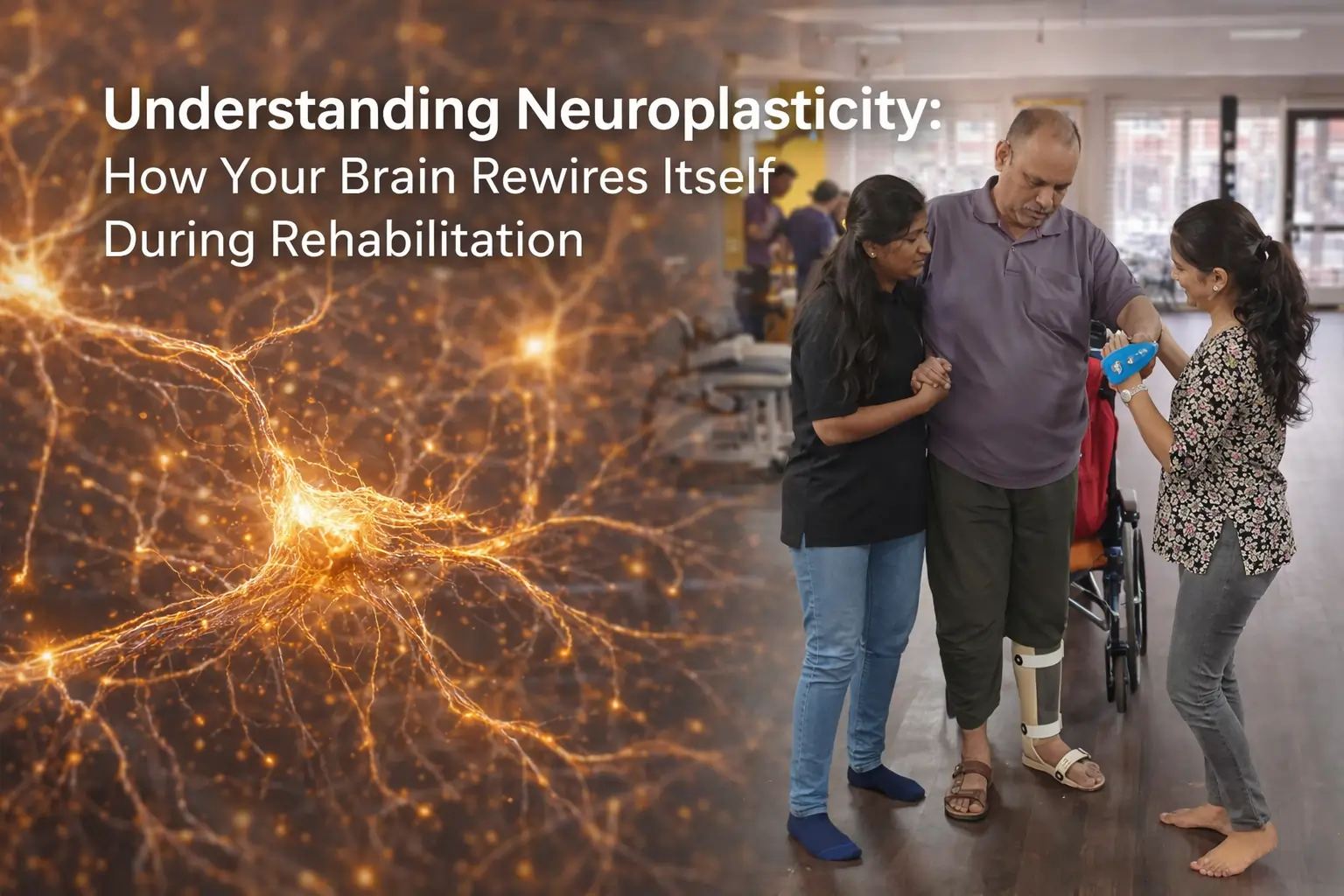
Neuroplasticity is your brain's lifelong ability to form new neural connections. This allows it to reorganize pathways, heal from injury, and learn new skills, especially through targeted rehabilitation.
For years, science believed the adult brain was fixed and unchangeable. Today, we know this is completely wrong. Your brain is dynamic, adaptable, and constantly responding to your experiences. This is not just positive thinking. It is the solid, biological foundation of all effective neuro rehabilitation. At Apricot Care, we do not just work around your injury. We collaborate with your brain's innate plasticity to guide your recovery journey.
The Surprising Truth: Your Brain Is Built for Change
What most people do not realize is that neuroplasticity is not a single event. It is an ongoing process. It happens every time you learn a new recipe, memorize a phone number, or find a new route home. After a neurological event like a stroke, brain injury, or with a condition like Parkinson's, this natural ability becomes the most critical tool for recovery.
Two Powerful Types of Plasticity at Work
Your brain uses two main strategies to rewire itself, especially after an injury.
- Structural Plasticity: Think of this as your brain's actual construction crew. With consistent practice, the brain can grow new dendritic spines. These are the tiny branches that connect neurons. It can even strengthen the physical connections between brain cells. This is the "hardware" upgrade.
- Functional Plasticity: This is your brain's brilliant software manager. If one network is damaged, functional plasticity allows a different, healthy part of the brain to take over some of its jobs. This is why repetitive, task-specific practice in therapy is so powerful. It actively trains new brain areas to handle lost functions.
The "Use It or Improve It" Principle
A foundational rule in neurorehabilitation is that specific, repeated practice drives specific brain change. You cannot wish for a better golf swing and get it. You have to practice. The same is true for recovering hand movement or speech. The neural circuits you activate most frequently become stronger and more efficient. This is why a generic exercise routine is not enough. Therapy must be highly personalized and intensely focused on your unique goals. These goals might be taking a step or holding a spoon.
What Most Rehabilitation Centres Do Not Talk About
Many discussions on neuroplasticity stop at "practice makes perfect." But to truly harness your brain's potential, you need to understand the deeper factors. These factors can speed up or slow down your progress, and they are often overlooked.
The Hidden Role of "Passive" Therapy
When you think of hard work, you think of active effort. But here is a surprising truth: advanced modalities like robotic therapy and functional electrical stimulation (FES) are not passive. They are powerful plasticity primers.
These technologies do two critical things.
- They provide high-intensity, repetitive movement. This might be impossible for you to do alone yet.
- They send a flood of correct sensory feedback to your brain.
This feedback is like a GPS for your neurons. It tells your brain, "This is what walking should feel like." This clear signal helps your brain map out the new pathways it needs to build. It makes your active efforts later much more productive.
| Therapy Type | How It Promotes Neuroplasticity | The Overlooked Benefit |
|---|---|---|
| Active, Repetitive Practice (e.g., grasping objects, step-training) | Directly strengthens new neural circuits through focused use. | Builds strength and confidence. It is the "main driver" of change. |
| Technology-Assisted Therapy (e.g., Robotic gait trainers, FES) | Provides perfect sensory feedback and high repetition to "teach" the brain the correct pattern. | Prevents your brain from learning compensatory (and often harmful) movements. It does this by reinforcing the ideal movement pathway from day one. |
Your Caregiver: Your Brain's Essential Partner
Your therapy session might be 60 minutes a day. What happens in the other 23 hours is equally important for your brain's rewiring. Family and caregivers are not just helpers. They are co-therapists in your neuroplastic journey.
A caregiver who knows how to cue your movements correctly is vital. They can encourage the use of your affected side and integrate therapeutic principles into daily activities. These activities include dressing or meal preparation. This creates a 24/7 healing environment. This constant, integrated practice leads to faster, more durable rewiring. At our neuro rehabilitation centre in Pune, we insist on training and involving families. We do this because their role is that powerful.
The Mindset That Builds New Pathways
If you are stressed, anxious, or depressed, your brain enters a "survival mode." In this state, resources are diverted away from learning and growth. This means they move away from plasticity and toward basic coping. Your emotional state is a direct regulator of your brain's plasticity chemicals.
Motivation, celebration of small wins, and a supportive environment are not just nice. They are neurologically necessary. They boost neurotransmitters like dopamine and BDNF (Brain-Derived Neurotrophic Factor). These act like fertilizer for new neural connections. A holistic neuro rehabilitation centre must address your emotional well-being. It must be taken as seriously as your physical exercises.
Practical Neuroplasticity: Actionable Hacks for Your Recovery
Knowing about plasticity is one thing. Applying it daily is another. Here are concrete, often-missed strategies to actively engage your brain's rewiring power.
1. The Power of Mental Practice (Motor Imagery)
Close your eyes. Vividly imagine yourself performing a movement. Imagine lifting your arm or taking a step with perfect form. Do this for 5 to 10 minutes, several times a day.
- The Science: Studies show that mental practice activates the same motor cortex regions as physical practice. It is a zero risk, high reward way to fire and wire those crucial neural circuits. This is especially helpful when fatigue or access to therapy limits physical practice.
2. Embrace the "Good" Frustration of Challenge
Your brain only changes when it is challenged. If an exercise becomes easy, your brain has already adapted. The key is to work at the "edge of your ability."
- The Application: A good therapist will constantly tweak your exercises. They might add a slight incline, a distraction, or a more complex sequence. This "good frustration" is the signal. It tells your brain, "We need to build a stronger network here."
3. Prioritize Sleep as Therapy Time
Sleep is when the magic of consolidation happens. The motor skills you practiced during the day are replayed and solidified in your brain overnight. Poor sleep disrupts this essential process.
- The Action: Protect your sleep hygiene. A dark, cool room and a consistent routine are not just for rest. They are a non-negotiable part of your brain injury recovery in Pune or anywhere else.
4. Engage All Your Senses
Do not just focus on movement. When practicing a task, pay attention to the sensation.
- The Method: When reaching for a cup, notice its temperature, texture, and weight. Listen to the sound of your foot making contact with the floor during walking. This multisensory input gives your brain more data. It uses this data to build richer, more stable neural maps.
Your Journey Forward: Partnering with Plasticity
Neuroplasticity turns the old, grim narrative of "permanent damage" on its head. The journey is undoubtedly demanding. It requires consistency, courage, and the right guidance. But the core message is one of profound hope: your brain is on your team, waiting to be guided.
The key takeaways are simple but profound.
- Your brain can rewire itself throughout life. This is a scientific fact, not wishful thinking.
- Specific, repetitive, and challenging practice is the primary driver of this change.
- True recovery leverages overlooked tools. These include advanced technology for perfect feedback and trained caregivers for 24/7 support. A positive mindset is also needed to fuel the brain's growth chemistry.
- You can participate actively every day. You can do this through mental practice, embracing challenge, prioritizing sleep, and engaging your senses.
The question now is not if your brain can change. The question is how will you guide that change today? Will you do five minutes of mental practice? Will you focus on the sensation of your next movement? Your next small, conscious effort is a direct instruction to your neurons.
Are you ready to explore a rehabilitation program designed in partnership with the principles of neuroplasticity? At Apricot Care, our approach to Robotic Neuro Rehabilitation in Pune and personalized therapy is built from the ground up. It is designed to strategically harness your brain's amazing ability to heal. Let us have a conversation. We can discuss how to build a recovery plan as unique and adaptable as your own brain.
With 6 years of experience, she specializes in neuro-rehabilitation, geriatric care, and balance training to help patients improve mobility and functional independence.
.webp)