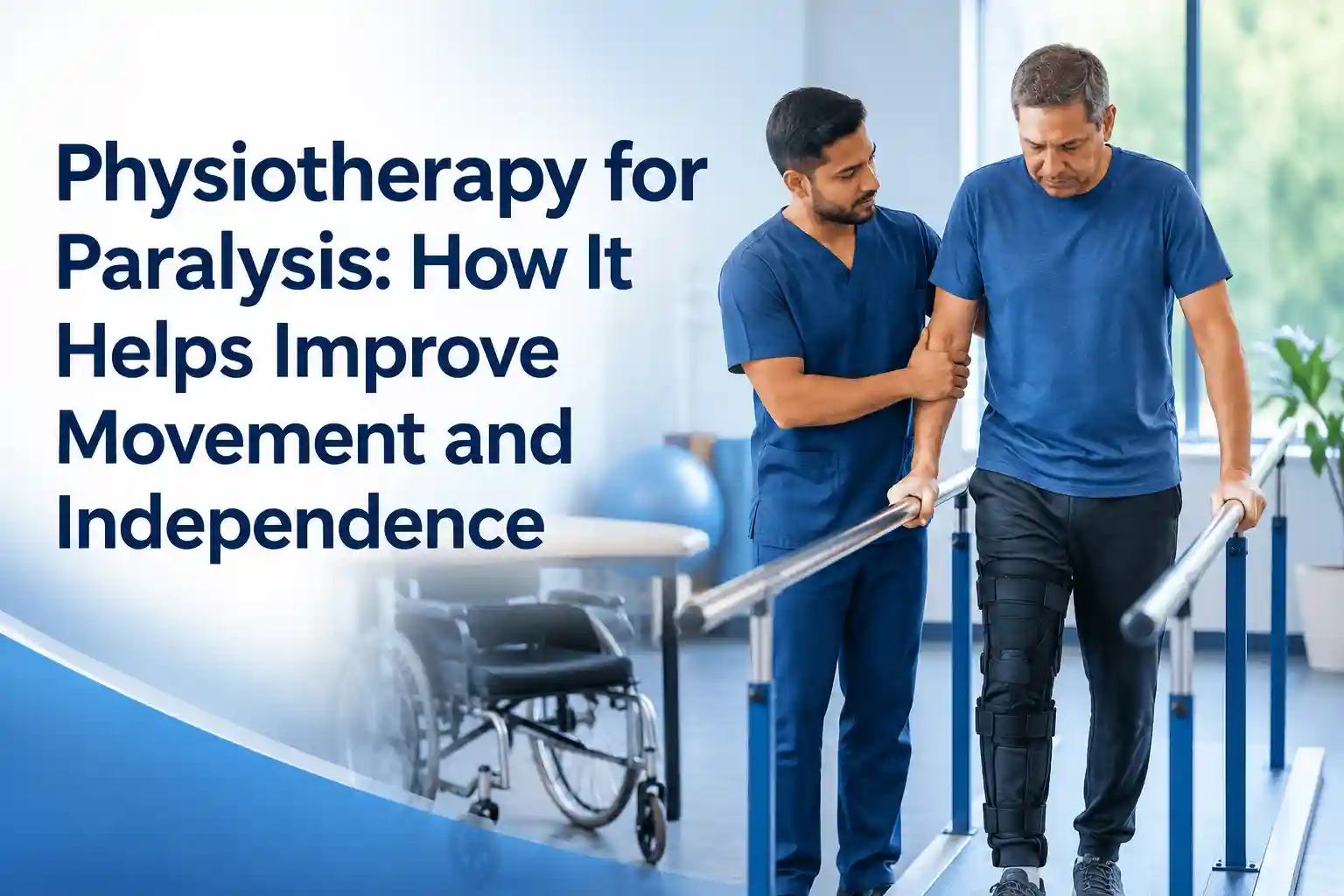
Physiotherapy for Paralysis: How It Helps Improve Movement and Independence


Dr. Arpita Ganguly
BPT, MPT (Neuro), 6+ years clinical
experience in neuro rehabilitation & functional recovery
Physiotherapy for Paralysis: A Path to Movement and Independence
Paralysis can affect a person's movement, strength, balance, posture, and independence in daily life. For patients and families, the first question is often simple but emotional: can movement improve with the right rehabilitation support? The answer depends on the cause of paralysis, severity of brain, spinal cord, or nerve involvement, overall health, and how early rehabilitation begins.
For families looking for structured paralysis care in Pune, physiotherapy plays an important role in helping patients improve mobility, prevent stiffness, regain strength, and become more independent in everyday activities.
Physiotherapy for paralysis is not only about exercises. It is a planned rehabilitation approach that may include movement training, balance work, strengthening, gait training, posture correction, breathing exercises, and caregiver education. Whether paralysis happens after stroke, spinal cord injury, brain injury, nerve damage, or another neurological condition, consistent physiotherapy can help patients work toward better function and quality of life.
This blog explains how physiotherapy helps paralysis patients, what exercises may be included, and why personalised rehabilitation is important.
What Is Paralysis?
Paralysis means loss of muscle function in one or more parts of the body. It can happen when the communication between the brain, spinal cord, nerves, and muscles is affected. Some patients may lose movement completely, while others may have partial weakness, stiffness, poor control, or reduced coordination.
Paralysis may affect:
- One side of the body
- Both legs
- Both arms and legs
- One arm or one leg
- Facial muscles
- Hand function
- Walking ability
- Balance and posture
The impact of paralysis is different for every patient. Some people may need help with walking, while others may need support for sitting, standing, transfers, dressing, bathing, or using a wheelchair. Physiotherapy focuses on improving the patient's current ability and preventing further physical complications.
Common Causes of Paralysis
Paralysis can happen due to different medical conditions. Understanding the cause helps in planning the right rehabilitation approach.
1. Stroke
Stroke is one of the most common causes of paralysis. It can affect the part of the brain that controls movement, leading to weakness or paralysis on one side of the body. Stroke-related paralysis may affect the arm, leg, face, balance, walking, speech, and swallowing.
2. Spinal Cord Injury
A spinal cord injury can affect movement and sensation below the level of injury. Depending on the severity, patients may experience weakness or paralysis in the legs, arms, or trunk. Physiotherapy helps improve strength, posture, sitting balance, transfers, and mobility.
3. Brain Injury
A traumatic brain injury or neurological damage can affect body control, balance, coordination, muscle tone, and movement. Rehabilitation helps the patient relearn functional movements step by step.
4. Nerve Damage
Peripheral nerve injuries can cause weakness or paralysis in specific muscles. Physiotherapy may help with joint mobility, strengthening, splinting support, and functional retraining.
5. Neurological Disorders
Conditions such as multiple sclerosis, Parkinson's disease, cerebral palsy, Guillain-Barré syndrome, and other neurological disorders may cause weakness, stiffness, poor coordination, or reduced mobility.
How Physiotherapy for Paralysis Helps
The main goal of physiotherapy for paralysis patient care is to help the person achieve the highest possible level of movement, safety, comfort, and independence. Recovery may be complete in some patients, partial in others, and supportive in long-term cases. However, physiotherapy can still make a major difference in quality of life.
1. Improves Muscle Strength
When a body part is not used properly, muscles can become weak. Paralysis can also cause loss of muscle control. Physiotherapy uses guided exercises to activate available muscles and improve strength gradually.
Even small improvements in strength can help with sitting, standing, gripping, shifting weight, transferring from bed to wheelchair, or walking with support.
2. Maintains Joint Flexibility
Paralysis can cause stiffness in joints and muscles. If the affected limb remains in one position for a long time, the joints may become tight and difficult to move. This can lead to pain, deformity, and reduced function.
Range-of-motion exercises help maintain flexibility and reduce stiffness. These exercises are especially important for bedridden patients or patients with limited active movement.
3. Improves Balance and Posture
Many paralysis patients struggle with sitting or standing balance. Poor posture can also increase the risk of falls, pain, and pressure sores. Physiotherapy includes posture correction, trunk control exercises, sitting balance training, standing balance work, and weight-shifting activities.
Better balance helps patients perform daily tasks more safely.
4. Helps Relearn Movement
In neurological paralysis, the brain and nervous system may need repeated practice to relearn movement patterns. Physiotherapists use task-based training, assisted movement, repetition, and functional activities to help patients improve control.
For example, a patient may repeatedly practice reaching, standing, stepping, gripping, or shifting weight. These activities help the body relearn useful movement patterns.
5. Supports Walking and Mobility
Some paralysis patients may be able to walk again with therapy, while others may need walkers, canes, braces, parallel bars, or wheelchair support. Physiotherapy helps improve walking safety through gait training, balance work, lower limb strengthening, and assistive device training.
The goal is not only walking but safe mobility. For some patients, independent wheelchair mobility or safe transfers can be an important recovery milestone.
6. Prevents Secondary Complications
Patients with reduced mobility are at risk of complications such as stiffness, muscle wasting, swelling, poor circulation, pressure sores, chest congestion, and reduced endurance. Physiotherapy helps reduce these risks through movement, positioning, breathing exercises, mobility training, and caregiver education.
7. Builds Daily Independence
Physiotherapy is closely linked to practical daily activities. Patients may practice turning in bed, sitting up, standing, transferring to a chair, walking to the bathroom, climbing small steps, or using assistive devices.
These functional improvements can reduce dependency on caregivers and improve confidence.
Physiotherapy Exercises for Paralysis Patient
The right physiotherapy exercises for paralysis patient recovery should always be selected after assessment by a trained physiotherapist. Exercises that are helpful for one patient may not be safe for another. The plan depends on muscle strength, tone, balance, sensation, pain, medical stability, and recovery stage.
Below are common types of exercises used in paralysis rehabilitation.
1. Passive Range-of-Motion Exercises
Passive exercises are used when the patient cannot move the affected limb independently. The therapist or caregiver gently moves the joint through a safe range.
These exercises may include:
- Shoulder movement
- Elbow bending and straightening
- Wrist and finger movement
- Hip and knee bending
- Ankle movement
- Toe movement
Passive exercises help maintain flexibility, reduce stiffness, and prevent joint tightness.
2. Active-Assisted Exercises
Active-assisted exercises are used when the patient has some movement but not enough strength to complete the movement independently. The therapist assists the movement while encouraging the patient to participate.
Examples include:
- Assisted arm lifting
- Assisted leg sliding
- Supported knee bending
- Assisted ankle movement
- Guided hand opening and closing
- Supported reaching exercises
These exercises help activate muscles and improve voluntary control.
3. Strengthening Exercises
As muscle control improves, strengthening exercises are added gradually. These may include bodyweight movements, light resistance, resistance bands, or functional strengthening activities.
Examples include:
- Bridging exercises
- Sitting knee extension
- Supported sit-to-stand practice
- Grip strengthening
- Core strengthening
- Arm pushing and pulling exercises
- Supported squats, if suitable
Strengthening should be done carefully to avoid fatigue, pain, or unsafe movement.
4. Balance Training
Balance training helps patients improve sitting, standing, and walking safety. It may start with simple sitting balance and progress to standing balance.
Examples include:
- Sitting without back support
- Reaching while seated
- Weight shifting from side to side
- Supported standing
- Standing with parallel bars
- Step practice with support
- Balance activities under supervision
Balance training is important for fall prevention and daily independence.
5. Gait Training
Gait training helps patients practice walking safely. It may be done with parallel bars, walkers, canes, braces, body-weight support, or therapist assistance.
Gait training may include:
- Standing tolerance
- Weight bearing on the affected leg
- Step initiation
- Heel-to-toe walking practice
- Walking with assistive devices
- Turning practice
- Obstacle training
- Stair practice, if suitable
Walking recovery depends on the patient's condition, but guided gait training can help improve confidence and mobility.
6. Functional Training
Functional training focuses on real-life activities. The goal is to help the patient manage daily tasks more safely.
Examples include:
- Rolling in bed
- Sitting up from lying position
- Bed-to-chair transfer
- Sit-to-stand practice
- Reaching for objects
- Wheelchair mobility
- Bathroom safety movements
- Dressing-related movements
Functional training is one of the most practical parts of rehabilitation because it directly improves daily life.
7. Breathing Exercises
Patients who are bedridden or less active may need breathing exercises. These help maintain lung function and reduce the risk of chest-related complications.
Breathing exercises may include:
- Deep breathing
- Chest expansion exercises
- Supported coughing techniques
- Breathing control practice
These exercises should be done as advised by a therapist, especially in patients with respiratory weakness or tracheostomy care needs.
Physiotherapy for Paralysis After Stroke
Stroke-related paralysis often affects one side of the body. The patient may have difficulty moving the arm or leg, sitting, standing, walking, gripping objects, or maintaining balance. Some patients may also experience shoulder pain, stiffness, speech issues, swallowing problems, or cognitive changes.
Physiotherapy after stroke focuses on:
- Improving sitting balance
- Improving standing balance
- Reducing stiffness
- Improving arm and leg control
- Relearning walking
- Preventing falls
- Training safe transfers
- Improving posture
- Supporting daily independence
- Educating caregivers
Early rehabilitation after medical stabilisation is important. However, patients who are months or years after stroke may still benefit from structured physiotherapy if they have clear goals and consistent practice.
Physiotherapy for Paralysis Due to Spinal Cord Injury
Spinal cord injury rehabilitation is different from stroke rehabilitation. The treatment plan depends on the level and severity of the injury. Some patients may regain partial movement, while others may focus on independence through wheelchair mobility, transfers, upper body strength, and posture control.
Physiotherapy may include:
- Sitting balance training
- Bed mobility practice
- Transfer training
- Wheelchair mobility
- Upper body strengthening
- Lower limb stretching
- Standing frame use, if suitable
- Breathing exercises
- Pressure sore prevention education
- Assistive device training
For spinal cord injury patients, independence may mean sitting safely, transferring from bed to wheelchair, using a wheelchair confidently, or managing personal activities with less assistance.
Can Physiotherapy Cure Paralysis?
This is one of the most common questions families ask. The honest answer is that physiotherapy does not cure every type of paralysis. Recovery depends on the cause, severity, location of damage, time since injury, medical condition, and rehabilitation consistency.
However, physiotherapy can help in several important ways:
- Improve available movement
- Prevent stiffness and deformity
- Improve strength and endurance
- Support safer mobility
- Improve balance and coordination
- Reduce dependency
- Build confidence
- Help patients return to daily activities
In some patients, movement recovery may be significant. In others, physiotherapy helps the patient adapt, stay active, avoid complications, and live with more independence.
Why Early Physiotherapy Matters
After paralysis, the body can quickly develop stiffness, weakness, swelling, poor posture, reduced endurance, and fear of movement. Early physiotherapy helps prevent these problems and supports better recovery planning.
Early rehabilitation may help with:
- Maintaining joint movement
- Preventing muscle shortening
- Improving circulation
- Reducing stiffness
- Training safe bed mobility
- Preventing pressure sores
- Starting functional recovery earlier
- Supporting caregiver confidence
Physiotherapy should begin only after the patient is medically stable and cleared by the treating doctor.
Role of Family and Caregivers in Paralysis Rehabilitation
Family members and caregivers play a major role in recovery. A patient may receive therapy for a limited time each day, but positioning, exercise follow-up, mobility support, and motivation continue outside the therapy session.
Caregivers may be trained in:
- Safe positioning
- Turning the patient in bed
- Helping with prescribed exercises
- Preventing pressure sores
- Safe transfer techniques
- Wheelchair handling
- Fall prevention
- Encouraging regular practice
Caregivers should avoid forcing movements or trying exercises without guidance. Incorrect handling can cause pain, shoulder injury, falls, fear, or loss of confidence.
How Long Does Physiotherapy for Paralysis Take?
There is no fixed timeline. Some patients may need weeks of therapy, while others may require months or long-term rehabilitation. The duration depends on:
- Cause of paralysis
- Severity of weakness
- Time since stroke or injury
- Age and general health
- Motivation and consistency
- Family support
- Associated problems such as spasticity, pain, speech issues, swallowing issues, or cognitive changes
Progress may be slow, but small improvements matter. Better sitting balance, improved hand opening, safer transfers, or a few supported steps can improve quality of life.
Signs That a Paralysis Patient Needs Physiotherapy
A paralysis patient may need professional physiotherapy support if they have:
- Difficulty sitting or standing
- Weakness in the arm or leg
- Stiffness in joints
- Poor balance
- Difficulty walking
- Frequent falls
- Shoulder pain after stroke
- Difficulty turning in bed
- Reduced hand function
- Fear of movement
- Bedridden status
- Poor posture
- Muscle tightness or spasms
A physiotherapist can assess the patient and create a realistic rehabilitation plan based on current ability and recovery goals.
Physiotherapy for Paralysis Patient in Pune
For families looking for physiotherapy for paralysis patient care in Pune, choosing a rehabilitation centre with neurological expertise is important. Paralysis recovery often needs more than basic exercises. It may require neuro physiotherapy, occupational therapy, speech and swallow therapy, pain management, mobility training, caregiver education, and long-term recovery planning.
A specialised rehabilitation setup can help patients with:
- Stroke-related paralysis
- Spinal cord injury
- Brain injury
- Parkinson's-related mobility issues
- Post-surgical neurological weakness
- Bedridden patient rehabilitation
- Gait and balance training
- Functional independence training
Patients from Kharadi, Viman Nagar, Magarpatta, Wagholi, Wadgaon Sheri, Chandan Nagar, Hadapsar, and nearby Pune localities can benefit from structured rehab support when home exercises alone are not enough.
What to Expect During a Physiotherapy Assessment
Before starting therapy, the physiotherapist will assess the patient's current ability, limitations, and safety needs. This helps create a personalized treatment plan.
The assessment may include:
- Muscle strength testing
- Joint movement assessment
- Balance assessment
- Posture evaluation
- Walking ability check
- Functional activity assessment
- Pain and stiffness evaluation
- Sensation and coordination check
- Goal discussion with patient and family
Based on this, a therapy plan may include clinic-based rehabilitation, home exercise guidance, caregiver training, assistive device recommendations, and progress reviews.
Safety Tips for Paralysis Exercises
Exercise is helpful, but safety is important. Families should remember:
- Do not force stiff joints
- Do not pull the affected shoulder
- Avoid unsupervised standing if balance is poor
- Use assistive devices only after training
- Stop exercise if there is severe pain, dizziness, breathlessness, or sudden weakness
- Follow the physiotherapist's instructions
- Keep the home environment clutter-free
- Use non-slip footwear and safe support
The goal is steady progress, not rushed movement.
Your Path to Better Movement and Function
Physiotherapy for paralysis can play an important role in improving movement, strength, balance, mobility, and daily independence. It may not reverse every cause of paralysis, but it can help patients make the best possible functional recovery and prevent avoidable complications.
A good rehabilitation plan should be personalized. It should consider the cause of paralysis, current ability, medical condition, recovery goals, family support, and daily challenges. With consistent therapy, guided exercises, and proper caregiver support, many paralysis patients can improve their quality of life and regain confidence in daily activities.
If you or your loved one is dealing with paralysis after a stroke, spinal cord injury, brain injury, or another neurological condition, timely physiotherapy can help you take the next step toward safer movement and better independence.
Get Expert Paralysis Rehabilitation Support
Looking for personalised physiotherapy for paralysis patient care in Pune? Apricot Care Assisted Living and Rehabilitation offers specialised neuro rehabilitation, physiotherapy, mobility training, and recovery-focused support for paralysis patients. Book a consultation to understand the right rehabilitation plan for your condition.
FAQs
1. Can physiotherapy help paralysis patients?
Yes, physiotherapy can help paralysis patients improve movement, strength,
flexibility, balance, mobility, and daily independence. The level of
recovery depends on the cause and severity of paralysis.
2. What are the best physiotherapy exercises for paralysis patient
recovery?
Common exercises include passive range-of-motion exercises, active-assisted
movements, strengthening exercises, balance training, gait training,
stretching, and functional activity practice. The right exercises should be
selected by a physiotherapist after assessment.
3. How soon should physiotherapy start after paralysis?
Physiotherapy should start once the patient is medically stable and cleared
by the treating doctor. Early rehabilitation can help prevent stiffness,
weakness, pressure sores, and mobility complications.
4. Can a paralysis patient walk again with
physiotherapy?
Some patients may regain walking ability with physiotherapy, while others
may need assistive devices or focus on wheelchair independence. Recovery
depends on the cause, severity, and consistency of rehabilitation.
5. Is physiotherapy for paralysis painful?
Physiotherapy should not cause severe pain. Some stretching or movement may
feel difficult at first, but exercises should be done safely and gradually
under professional guidance.
6. Is home physiotherapy enough for paralysis patients?
Home physiotherapy may help some patients, especially those who cannot
travel. However, patients with complex neurological conditions may benefit
from centre-based rehab with equipment, supervision, and multidisciplinary
support.
7. How long does physiotherapy for paralysis patient recovery
take?
Recovery time varies. Some patients need short-term rehabilitation, while
others need long-term therapy for several months. Progress depends on the
type of paralysis, medical condition, therapy intensity, and home practice.
8. Which specialist should I consult for paralysis
rehabilitation?
A neuro physiotherapist is usually recommended for paralysis caused by
stroke, spinal cord injury, brain injury, or neurological disorders. A
multidisciplinary rehab team may also include occupational therapists,
speech therapists, doctors, nurses, and psychologists.
With 6 years of experience, she specializes in neuro-rehabilitation, geriatric care, and balance training to help patients improve mobility and functional independence.
.webp)