How to Recover Safely After a Craniotomy: A Guide for Patients and Families

Dr. Amol Kathar
MPT (Neuro), 3.5+ years clinical
experience in neurological rehabilitation
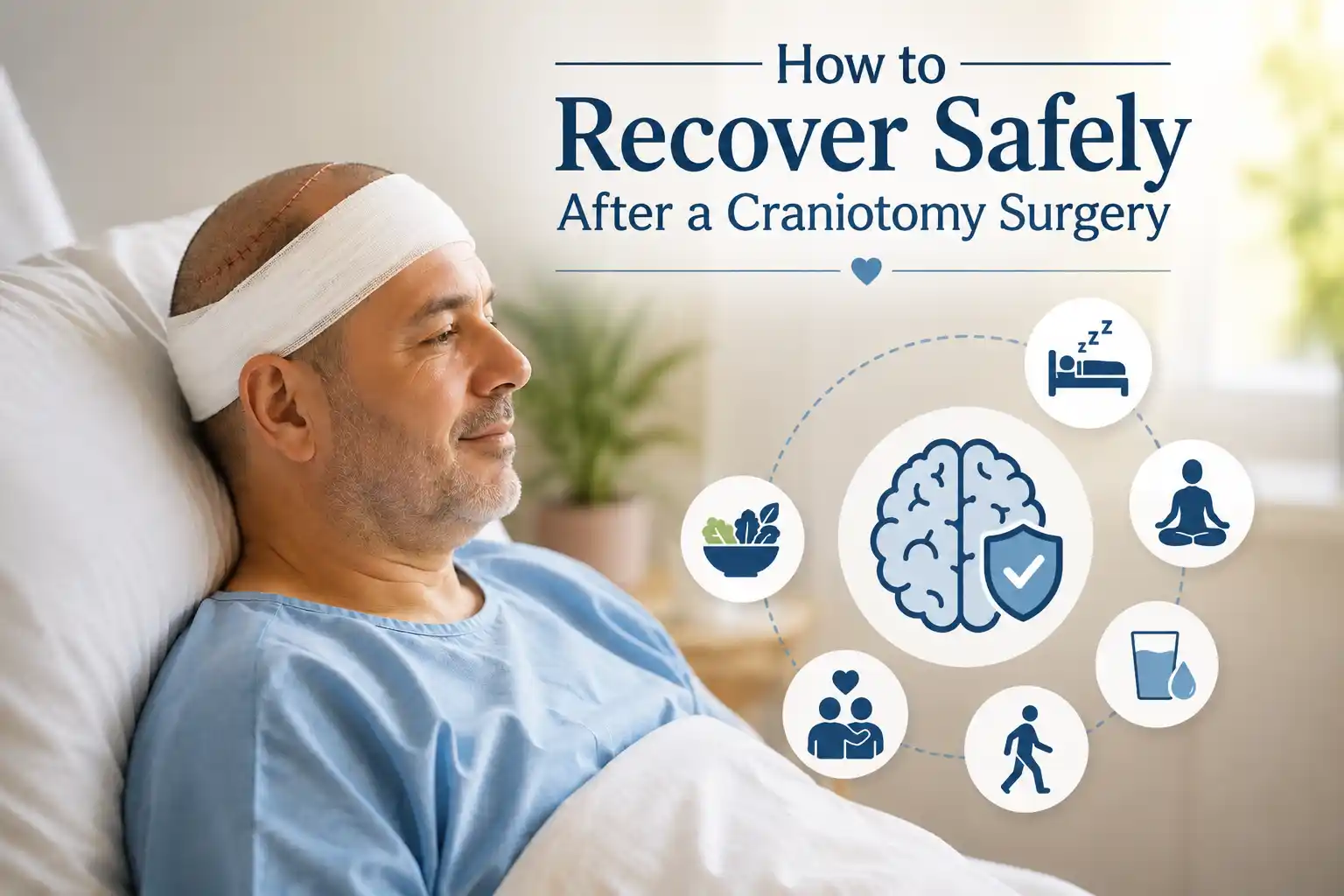
How to Recover Safely After a Craniotomy Surgery
Coming out of a craniotomy is just the beginning of the journey. For most patients and their families, the biggest question isn't "when will the surgery be over?" it's "what happens next?" Post operative care for craniotomy patients is one of the most critical, yet under-discussed, chapters of the entire brain surgery experience. Whether the procedure was performed to remove a tumour, clip an aneurysm, drain a haematoma, or relieve intracranial pressure the weeks and months following surgery largely determine how well the brain heals and how much function a patient regains.
This guide covers everything families and caregivers need to know from the immediate post-surgery phase to long-term neuro rehabilitation after craniotomy so recovery can happen safely, confidently, and with the right support in place.
What Is a Craniotomy and Why Does Recovery Take Time?
A craniotomy is a surgical procedure in which a section of the skull is temporarily removed so that neurosurgeons can access the brain. While the surgery itself can be life-saving, the brain undergoes significant trauma in the process even in the most skilled hands.
The brain controls everything: movement, speech, memory, balance, and emotion. When it is operated upon, it needs time, rest, and structured stimulation to reorganise and heal. This is the principle of neuroplasticity, the brain's remarkable ability to rewire itself by forming new pathways.
This is why craniotomy post op care is far more than wound healing. It's about creating the right environment for the brain to recover fully physically, cognitively, and emotionally.
Immediate Post Operative Care for Craniotomy Patient (First 2–4 Weeks)
The first few weeks following surgery are the most medically sensitive. Here is what comprehensive craniotomy post operative care typically involves during this phase:
1. Medical Monitoring and Wound Care
After discharge from the neurosurgery unit, patients require:
- Regular monitoring of neurological signs alertness, vision, speech, and limb movement
- Expert wound dressing and surveillance for any signs of infection at the surgical site
- Accurate and timely administration of medications including anti-seizure drugs, steroids, and pain management
- Continuous monitoring of blood pressure and vital signs
Any sudden change in behaviour, severe or worsening headache, high fever, or vision changes should be treated as a red flag and escalated to the treating team immediately.
2. Managing Post-Craniotomy Fatigue
One of the most commonly underestimated aspects of brain surgery recovery is profound, persistent fatigue. Many patients describe it as a heaviness that does not go away with sleep alone.
This happens because the brain is consuming enormous energy to heal and reorganise. During this phase, it is important to:
- Prioritise rest between any physical or cognitive activity
- Limit screen time and exposure to noisy, overstimulating environments
- Follow an energy conservation routine designed by a rehabilitation specialist
Pushing through this fatigue without professional guidance can significantly delay recovery.
3. Nutrition for Brain Recovery
A recovering brain needs high-quality fuel. Patients and caregivers should ensure:
- Adequate protein intake to support tissue repair and immune function
- Omega-3 rich foods walnuts, flaxseeds, fatty fish to support neurological healing
- Consistent hydration throughout the day
- Complete avoidance of alcohol during the entire recovery phase
Nutrition planning should ideally be overseen by a clinical nutritionist, especially if the patient is also managing swallowing difficulties post-surgery.
Core Components of Neuro Rehabilitation After Craniotomy (Weeks 4–12 and Beyond)
Once the immediate medical phase stabilises, structured neuro rehabilitation after craniotomy begins. This is where the real work of recovery happens and where outcomes are most significantly shaped.
Neuro-Physiotherapy
Motor deficits, weakness on one side of the body, balance difficulties, coordination impairment are common after brain surgery. A specialised neuro-physiotherapist addresses this through:
- Targeted exercises to rebuild the brain-to-muscle connection
- Balance and gait training using progressive techniques
- Gradual strength-building routines customised to the patient's current ability
- Fall prevention strategies to ensure safety at home and in the facility
Cognitive Rehabilitation
Surgery and the underlying brain condition frequently affect thinking skills. A structured cognitive rehabilitation programme works on:
- Short-term memory challenges and recall strategies
- Attention, concentration, and sustained focus
- Executive functions planning, organising, problem-solving
Through a combination of structured mental exercises and compensatory strategies, patients can make meaningful gains in mental clarity over time.
Speech and Language Therapy
If the craniotomy was performed in or near regions that control speech and language, the patient may experience aphasia difficulty speaking, understanding, or finding words. Early, consistent speech therapy is essential for the best possible long-term outcomes.
Occupational Therapy
Returning to daily life dressing, bathing, cooking, and eventually work requires guided, structured practice. Occupational therapy bridges the gap between clinical recovery and real-world independence, helping patients adapt and regain confidence in their daily routines.
Psychological Support
A craniotomy is emotionally overwhelming not just for the patient, but for the entire family. Anxiety, depression, identity confusion, and fear of recurrence are all common. Access to psychological counselling as part of the rehabilitation programme can significantly improve long-term quality of life.
Why Inpatient Neuro Rehabilitation Is the Safest Path After Brain Surgery
For many craniotomy patients, the safest and most effective way to complete initial recovery is within a dedicated inpatient neuro rehabilitation facility not at home without round-the-clock support.
Here is why a structured inpatient setting makes such a difference:
- 24/7 medical monitoring: any neurological change can be detected and addressed immediately
- Daily structured therapy: physiotherapy, cognitive rehab, and speech therapy under one roof
- Medical coordination: the rehab team maintains close communication with the primary neurosurgeon
- Safe environment: accessible rooms, non-slip flooring, emergency-trained staff
- Family guidance: caregivers are prepared and educated for home care once the patient is ready for discharge
This matters especially in a city like Pune, where navigating traffic, managing daily therapy logistics, and ensuring medication compliance at home can all become significant challenges for families during this critical phase.
Craniotomy Care in Pune: What to Look for in a Rehabilitation Centre
If you're looking for expert craniotomy post op care in Pune, here is what a good neuro rehabilitation facility should offer:
- A specialised neuro rehabilitation team not a general physiotherapy centre
- Round-the-clock nursing and medical supervision
- Individualised, one-on-one therapy sessions
- Inpatient stay facility with accessible and safe infrastructure
- Active coordination with your neurosurgeon
- Cognitive and speech therapy alongside physiotherapy
- Psychological support for both the patient and the family
Apricot Care Pune's dedicated neuro rehabilitation centre provides exactly this. Located in Kharadi and serving patients across Viman Nagar, Wadgaon Sheri, Wagholi, and Magarpatta, their post-craniotomy programme is built around medically supervised, intensive, and personalised recovery. Learn more about their Craniotomy Care in Pune to understand how their multidisciplinary team supports each patient through every stage of brain surgery recovery.
If the patient also required a tracheostomy during or after craniotomy - Tracheostomy Care in Pune
For extended bed-rest patients at risk of pressure injuries - Bedsore Management in Pune
For patients with overlapping cardiac conditions - Cardiac Rehabilitation in Pune
Practical Craniotomy Recovery Tips to Remember
Alongside professional rehabilitation, there are day-to-day practices that significantly support brain surgery recovery:
- Follow your medication schedule strictly never skip anti-seizure medication without consulting your doctor
- Avoid driving until your neurosurgeon provides written clearance (typically a minimum of 3–6 months)
- Do not travel by air without explicit medical approval
- Protect the head avoid contact sports, rough activities, or situations that carry a fall risk
- Sleep in the position advised by your care team to avoid pressure on the surgical site
- Attend every follow-up appointment MRI/CT scans, neurosurgeon reviews, and rehabilitation progress checks
- Involve family in the rehab process a well-informed caregiver is one of the most powerful tools in recovery
Recovering from a craniotomy is a deeply personal and medically complex journey. The path back to independence is built on the right post operative care for craniotomy patients not just rest and time, but structured rehabilitation, consistent medical vigilance, nutritional support, and emotional resilience.
The brain is extraordinary in its capacity to heal when given the right environment and the right support. Whether you or your loved one is in Kharadi, Viman Nagar, or anywhere across Pune, having a specialised neuro rehabilitation team by your side makes all the difference.
If your family member has recently undergone brain surgery and you are looking for expert craniotomy care near you in Pune, do not delay. Early, structured rehabilitation remains one of the single most powerful tools available for maximising recovery.
Ready to Begin the Recovery Journey?
Speak with Apricot Care's team of neuro rehabilitation specialists today.
Explore Our Craniotomy Care Programme in Pune
Frequently Asked Questions (FAQs)
Q1. How long does it take to recover
from a craniotomy?
Recovery timelines vary greatly depending on the reason for surgery, the
area of the brain affected, and the patient's overall health. Initial
medical healing typically takes 4–8 weeks, while functional recovery through
structured neuro rehabilitation can continue for 6 to 12 months or more.
Starting rehabilitation early consistently leads to better outcomes.
Q2. Is extreme fatigue normal after
craniotomy?
Yes profound fatigue is one of the most common and persistent symptoms
following brain surgery. The brain is using enormous resources to heal and
rewire. A structured rehabilitation programme helps patients manage this
fatigue through graded activity, energy conservation techniques, and a
carefully paced daily routine.
Q3. When should rehabilitation begin
after a craniotomy?
Rehabilitation should begin as soon as the neurosurgeon determines the
patient is medically stable and clears them for discharge from acute
hospital care. Early intervention is strongly linked to better long-term
outcomes in brain surgery recovery.
Q4. Can cognitive problems after a
craniotomy improve?
In many cases, yes. With consistent cognitive rehabilitation, the brain's
neuroplasticity allows it to compensate and rebuild function over time. The
extent of improvement depends on the specific impact of the surgery, but
with dedicated therapy, most patients experience meaningful progress in
memory, attention, and thinking skills.
Q5. Is home care sufficient after
craniotomy, or is inpatient rehab recommended?
For moderate to complex craniotomy cases, inpatient neuro rehabilitation is
strongly recommended for the initial recovery phase. The combination of 24/7
medical supervision, daily structured therapy, nutritional support, and a
safe, accessible environment is very difficult to replicate at home
particularly during the early weeks of recovery.
Q6. Where can I find specialised
craniotomy post operative care in Pune?
Apricot Care at Kharadi, Pune is a dedicated neuro rehabilitation centre
offering comprehensive post-craniotomy care. Their programme includes
intensive neuro-physiotherapy, cognitive rehabilitation, speech therapy,
24/7 nursing supervision, and psychological support. Visit their Craniotomy Care
in Pune page for a complete overview of their services.
Reference Links:
https://pubmed.ncbi.nlm.nih.gov/38651841/
https://pmc.ncbi.nlm.nih.gov/articles/PMC11895796/
https://www.ncbi.nlm.nih.gov/pmc/articles/PMC8633504/
With 3.5 years of experience, he specializes in personalized rehabilitation for stroke, spinal cord injuries, and mobility training to help patients regain independence.
.webp)