Robotic Physiotherapy in Pune: Benefits, Costs, and What to Expect at Apricot Care


Dr. Amol Kathar
MPT (Neuro), 3.5+ years clinical
experience in neurological rehabilitation
Ramesh Kumar, a 64-year-old retired banker from Kothrud, had everything planned out in life. But in October 2024, a sudden stroke changed everything. His right side went numb. His wife rushed him to the nearest hospital, and after two weeks of acute care, he came home with a wheelchair and a prescription: physical therapy.
For the first three months, Ramesh attended his local physiotherapy clinic three times a week. His therapist, a well-meaning professional, guided him through the motions. Literally. Some days, Ramesh walked ten steps with help. Other days, he managed fifteen. Progress was happening. His wife felt hopeful.
Then, around month four, something unexpected happened: the improvement stopped. The ten steps remained. The weakness in his arm didn't budge. His therapist kept showing up, but the gap between effort and results felt unbridgeable. Ramesh felt defeated. "Is this as good as it gets?" he asked his wife. "Maybe," she said quietly.
This is the moment Ramesh missed the golden opportunity that neuroscience had given him.
What most stroke patients don't know is that the human brain has a superpower after injury. But only for a limited time. This power fades if you don't use it right.
What This Guide Covers
This guide decodes robotic physiotherapy in Pune, explaining why the repetitions matter more than most people realize. It shows how residential rehabilitation centers like Apricot Care fit into the recovery puzzle. And it reveals what the real costs actually are when you stop counting just the clinic fees. You'll learn why some patients recover independence while others plateau, and how technology combined with the right environment can make the difference.
The Dosage Reality: Why Hands Aren't Enough
Here's the surprising truth most health websites won't tell you: stroke recovery isn't about magical therapy. It's about volume.
After a stroke, your brain enters a state called neuroplasticity. Think of it as your brain being in "relearning mode." But here's the catch: the brain learns through repetition. Thousands of repetitions. Scientists estimate that to rewire neural pathways and restore movement, patients need between 300 to 500 movement cycles focused on a single task, like walking.
Let's do some math.
Manual Physiotherapy: The Math of Limited Repetitions
When a therapist works with you one-on-one, they're managing multiple challenges at once. Your fatigue. Your pain. The physical strain on their own body. They're also documenting your progress, adjusting your position, and ensuring you don't fall.
In a typical 45-minute manual therapy session, a therapist can guide a stroke patient through about 50 to 100 steps. If the patient is fairly stable. Sometimes fewer. After that? The patient is exhausted. The nervous system has reached its threshold. The session ends. You go home. You've completed your daily "dose."
But one dose isn't enough. A dose is more than just one session.
Robotic Physiotherapy: The High-Dosage Solution
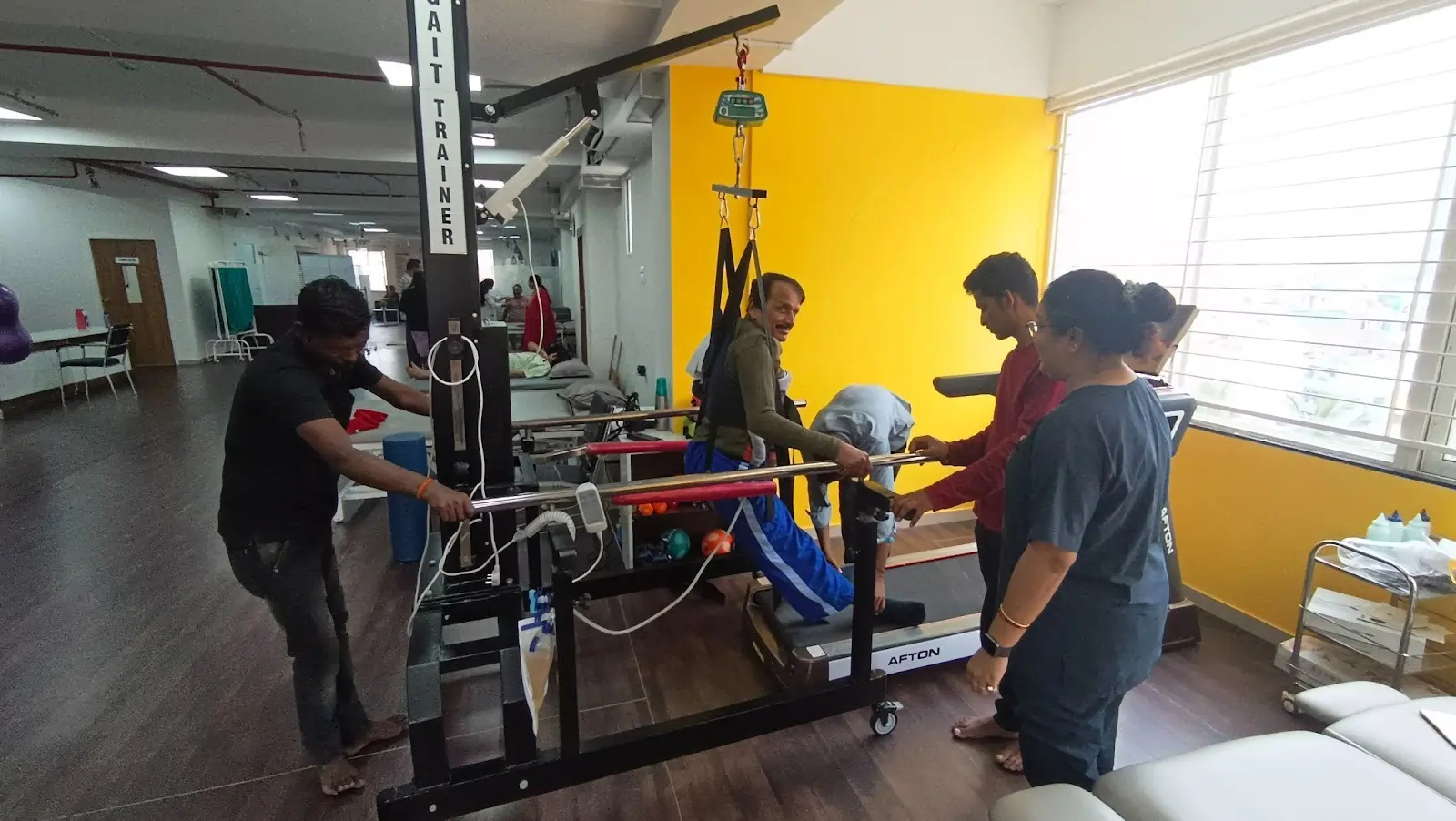
Now consider a robotic gait trainer. This is a system that uses a motorized exoskeleton to guide your legs. Unlike a therapist, it doesn't get tired. It doesn't have to support your body weight with its own muscles. It can repeat movements with perfect consistency, thousands of times, while you focus entirely on the effort.
In a single 45-minute session with robotic gait training, patients can complete 1,000 to 2,000 step cycles. Or sometimes more. The device adjusts its support gradually as you get stronger. Your brain receives massive amounts of feedback, called proprioception, telling it: "You moved. You did that. Now do it again. Again. Again."
This isn't repetitive drudgery. This is neuroplasticity on fast-forward.
Research confirms this matters. When robotic-assisted gait training was added to standard rehabilitation, patients walked twice the distance in the same time frame compared to those doing manual therapy alone. More importantly, they showed greater improvements in motor function and activities of daily living.
The Brain-Eye-Movement Connection
But there's another layer to robotic therapy that makes it even more powerful.
Most modern robotic systems don't just move your body. They show you your movement on a screen. This is called biofeedback. Your brain gets real-time information: "You're taking a symmetric step. Good. Now mirror that on the other side."
When your brain sees your body moving correctly, especially in a gamified environment where you're "playing" a therapeutic game, something chemical happens. Your brain releases dopamine, the reward hormone. This dopamine release strengthens neural connections faster than repetition alone. It also increases motivation. Suddenly, therapy doesn't feel like hard work; it feels like engaging practice.
This is why patients often show better progress with robotic systems that include visual feedback and gamification compared to those without it.
The Pune Ecosystem: Where Your Recovery Happens
If you're looking for robotic physiotherapy in Pune, you have choices. Understanding the different tiers helps you make an informed decision.
Tier 1: The Major Hospital Robotic Centers
These are the "heavy iron" hospitals with imported equipment like Lokomat and Tyromotion systems. Sometimes costing millions of rupees per device.
Examples: Large tertiary care hospitals in Baner, hospital chains with neurology departments.
What They Offer:
- State-of-the-art equipment (Lokomat Pro, Tyromotion systems)
- Highly specialized therapists trained on advanced robotics
- Integration with acute stroke care protocols
- Insurance documentation support
The Reality:
- Cost per session: Rs 3,000 to Rs 5,000 or more
- Setting is clinical, hospital-like
- Patient logistics: 1-2 hours driving across Pune traffic, multiple round trips weekly
- Best for: Acutely hospitalized patients or those in early hospital discharge phase
The Hidden Cost Nobody Talks About: If you're medically stable enough to leave the hospital but still paralyzed, making three round trips a week across Pune exhausts the patient before therapy even begins. A stroke patient who's already fatigued doesn't have the energy reserve for additional travel stress.
Tier 2: The Holistic Residential Rehabilitation Model
This is where Apricot Care Assisted Living and Rehabilitation fits. These centers operate differently from hospital robotics units.
What They Have:
- Sensor-based robotic systems, VR biofeedback, gait training equipment
- 24/7 nursing care (critical for stroke patients with catheters, feeding tubes, fall risk)
- Integrated nutrition, psychological support, and occupational therapy
- Residential accommodation
- Daily therapy without travel fatigue
The Apricot Care Advantage:
Apricot Care is located in Kharadi, an IT corridor of Pune. The center operates as an assisted living facility combined with a neuro rehabilitation centre. Instead of a patient traveling for a one-hour therapy session, they live at the center during recovery. This changes the entire recovery equation.
Target Audience: Patients who are medically stable but need intensive, long-term recovery. The "missing middle." Too stable for a hospital, but too disabled for home care with weekly visits.
The Cost Model That Works Better:
Residential rehabilitation packages in India (including accommodation, meals, nursing, and therapy) typically range from Rs 85,000 to Rs 1,45,000 per month. This sounds high until you compare it to the hidden costs of home care.
What to Expect at a Neuro-Rehabilitation Center Like Apricot Care
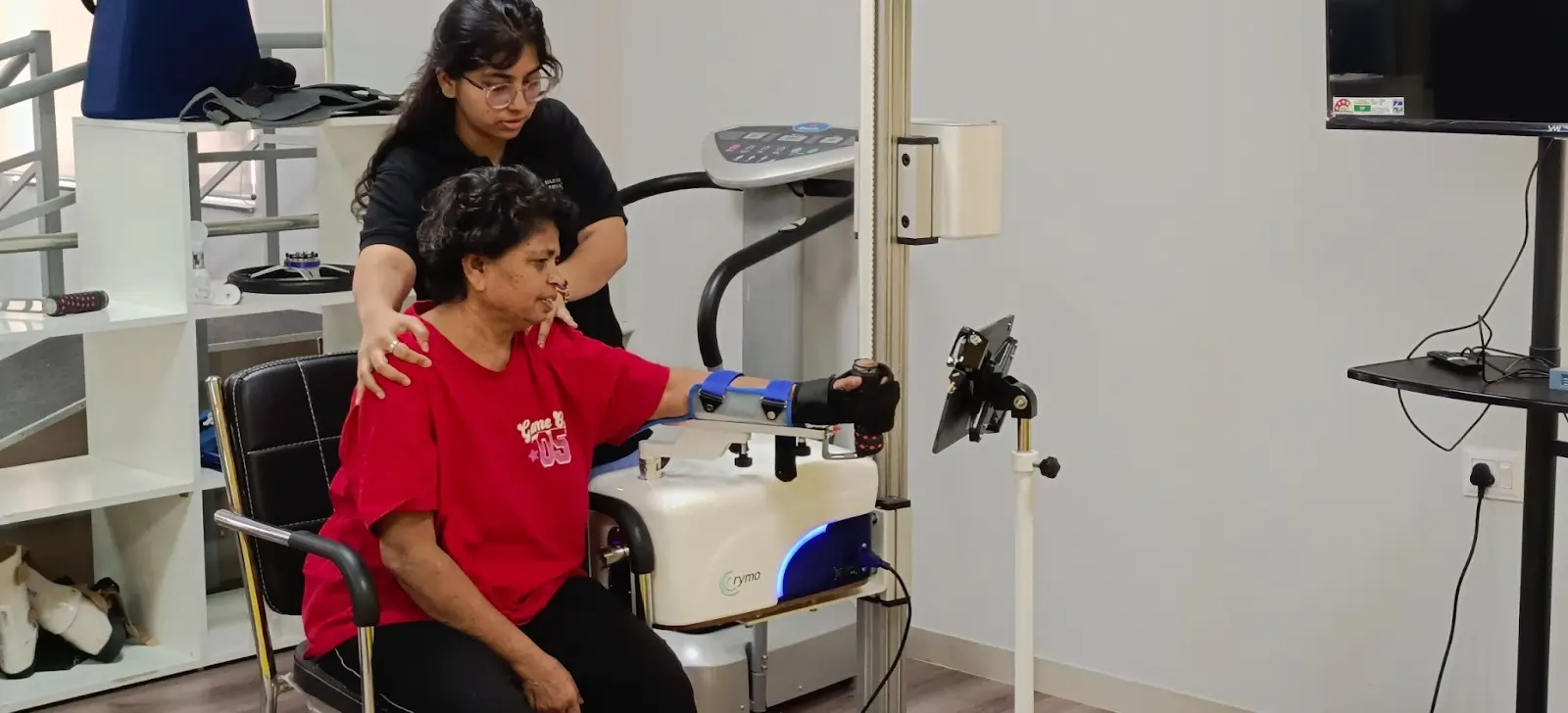
Apricot Care is specifically designed for the recovery journey after stroke, spinal cord injury, brain injury, and other neurological conditions. Here's what integrated rehabilitation looks like from the patient's perspective.
Day 1: The Assessment
You arrive (or are transferred) to the center. A team of specialists: physiatrist, neurophysiotherapist, occupational therapist, speech therapist, and nursing staff. All assess your current function. They review your medical reports, imaging, and post-hospital protocols.
This isn't a quick 15-minute evaluation. This is detailed assessment of:
- Motor control and strength
- Balance and walking ability
- Cognitive function
- Speech and swallowing
- Nutrition needs
- Pain levels
- Fall risk
- Psychological state
They ask your family crucial questions: "What's your goal? Before the stroke, what did you do every morning? What matters most to you?"
From this, they build a personalized 6-to-12-week intensive recovery plan.
The "Golden Period" Protocol
Here's a fact neuroscience is very clear about: 75% of stroke recovery happens in the first 3 to 6 months. After six months, recovery slows dramatically. This is the window.
A center like Apricot Care structures every week around this window. The protocol looks like this:
Weeks 1-2: Stabilization. Your body adjusts to the new environment. Baseline measurements taken. Medical clearance confirmed.
Weeks 3-8: Intensive phase. You're in therapy 3-4 hours daily. This includes robotic gait training, sensor-based upper limb work, VR-guided balance training, occupational therapy (learning to dress, eat, bathe again), and speech therapy if needed.
Weeks 9-12: Functional phase. Therapy shifts to real-world tasks. You practice getting out of bed to a wheelchair to walking to the dining room. You practice climbing stairs (if that's your goal). You practice problem-solving for life post-recovery.
This intensity is only possible in a residential setting. You can't commute for three hours and then do four hours of intensive therapy. Your nervous system would collapse.
The Tech Behind the Scenes: Robotics and Biofeedback
Apricot Care uses modern sensor-based and robotic equipment. They mention cutting-edge robotics and intelligent tools in their approach.
Here's how it works in practice:
Robotic Gait Training: A device assists your legs in taking controlled steps. Sensors track your weight shift, step length, and cadence. On a screen, you see real-time feedback. In some systems, you're "walking" through a virtual village or playing a game where you must hit targets with each step. Your brain isn't just moving legs; it's problem-solving.
Sensor-Based Upper Limb Training: If your arm is weak, you might use a device that tracks hand position and movement. On screen, you're reaching for virtual objects or drawing shapes. The system adjusts resistance based on your capability. As you get stronger, the game gets harder.
VR Balance Training: Standing balance is often the first thing stroke patients lose. VR systems place you in a safe, controlled environment where you practice shifting weight, responding to virtual obstacles, and maintaining posture. All while being supported safely.
Real-Time Biofeedback: All these systems show you what you're doing. If your right leg isn't engaging enough during a walking stride, you'll see it on screen. This immediate information (feedback scientists call it "augmented feedback") accelerates learning because your brain corrects the movement in real-time, not hours later when you've forgotten the session.
The Support System: Why 24/7 Nursing Matters
Here's something standard outpatient clinics cannot provide: a stroke patient often has medical complexity.
They might have:
- A urinary catheter
- A feeding tube (if swallowing is impaired)
- Risk of deep vein thrombosis (blood clots from immobility)
- Risk of pneumonia
- High blood pressure spikes
- Seizure risk (in some stroke types)
- Depression or anxiety
A residential center like Apricot Care has 24/7 medical backup. If a patient develops complications during therapy, say a spike in blood pressure, a nurse is there within seconds. This safety net allows therapists to push intensity without fear. It allows patients to push harder, knowing they're medically monitored.
This is different from home-based care, where families manage these risks with periodic visits from nursing staff.
Nutrition, Psychology, and Reintegration
Recovery isn't just muscles and nerves. Apricot Care integrates:
Nutritionist-Planned Meals: Stroke recovery demands specific nutrition. Protein for muscle rebuilding. Omega-3s for brain healing. Balanced sodium for hypertension management. Proper hydration.
Psychological Support: Many stroke patients experience depression. Some experience cognitive changes. A residential center provides counseling, not just therapy.
Reintegration Planning: Before discharge, a good center helps you plan life after recovery. How will you manage stairs at home? Do you need your home modified? How do you navigate public spaces again?
The Economics: What Robotic Rehabilitation Actually Costs
Let's talk about money, because this is where confusion usually starts.
Session-Based Pricing (Outpatient Model)
If you visit a clinic three times a week:
| Therapy Type | Cost Per Session | Weekly Cost (3x) | Monthly Cost (12 sessions) |
|---|---|---|---|
| Standard physiotherapy | Rs 500 to Rs 800 | Rs 1,500 to Rs 2,400 | Rs 6,000 to Rs 9,600 |
| Robotic or sensor-based therapy | Rs 1,500 to Rs 3,000 | Rs 4,500 to Rs 9,000 | Rs 18,000 to Rs 36,000 |
Robotic therapy is 3-4 times more expensive per session.
But here's the hidden cost calculation nobody does.
The True Cost of Outpatient Rehabilitation
You're not just paying for the session. You're paying for:
| Cost Item | Monthly Impact |
|---|---|
| Ambulance or cab (3x weekly round trips) | Rs 2,000 to Rs 4,000 |
| Attendant/caregiver accompanying patient | Rs 10,000 to Rs 20,000 (lost wages if family) |
| Medical complications from travel stress | Rs 5,000 to Rs 15,000 (unpredictable) |
| Home nursing care (3x weekly visits) | Rs 6,000 to Rs 10,000 |
| Medicines and medical supplies | Rs 4,000 to Rs 8,000 |
| Dietary supplements for recovery | Rs 2,000 to Rs 4,000 |
Real monthly cost of outpatient therapy: Rs 94,000 to Rs 1,61,000
And here's the uncomfortable truth: most patients on this schedule see slower recovery because they're fatigued by logistics.
The Residential Rehabilitation Package
A center like Apricot Care bundles everything:
| What's Included | Value |
|---|---|
| Accommodation (private or shared room) | Rs 20,000 to Rs 30,000 |
| All meals (breakfast, lunch, dinner, snacks) | Rs 8,000 to Rs 12,000 |
| Skilled nursing 24/7 | Rs 15,000 to Rs 25,000 |
| 3-4 hours daily therapy (PT, OT, ST, robotics) | Rs 25,000 to Rs 40,000 |
| Medical equipment | Included |
| Doctor consultations | Included |
| Medicines (on-plan) | Included |
| Monthly Total | Rs 85,000 to Rs 1,45,000 |
This sounds expensive until you do the math: you're getting a similar cost to home care, but with 15-20 hours of therapy per week instead of 3-4 hours.
The Long-Term Cost Difference
A study comparing home care versus residential rehabilitation found something striking.
Scenario 1: Home Care (Poor Recovery)
- 30% functional recovery
- Requires full-time caregiver forever: Rs 40,000 per month x 120 months = Rs 48,00,000
- Lifetime medical costs from complications: Rs 5,00,000+
- Total: Rs 53+ Lakhs
Scenario 2: Residential Rehab (Better Recovery)
- 65% functional recovery
- Rehabilitation cost (4 months): Rs 4,00,000
- Part-time assistance afterward: Rs 15,000 per month x 116 months = Rs 17,40,000
- Lower medical complication costs: Rs 2,00,000
- Total: Rs 23+ Lakhs
Savings: Rs 30 Lakhs (and independence)
The Evidence: What Science Says Works
This isn't my opinion. Major clinical studies confirm that robotic rehabilitation, when combined with residential care intensity, delivers better outcomes.
Key Findings:
- Dosage Matters Most: Patients who received twice the number of movement repetitions (through robotics) showed significantly better motor recovery compared to those on manual therapy alone.
- Timing is Critical: Recovery within the first 3-6 months is 75% of total potential recovery. Patients who received intensive therapy during this window showed 40-60% functional recovery versus 20-30% for those on weekly outpatient therapy.
- Brain-Eye Synchronization Accelerates Learning: VR biofeedback combined with movement increased dopamine release in the brain's reward centers, strengthening neural connections 2-3 times faster than repetition alone.
- Persistence of Gains: Unlike temporary therapy benefits, gains from robotic rehabilitation persist. Patients maintained improvements at 6 and 8 months post-therapy.
Choosing the Right Path Forward
Ramesh's story doesn't have to be your story.
The difference between a patient who plateaus at 3 months and one who achieves 60% or higher functional recovery often comes down to timing and intensity.
If you or a loved one is within the "golden period" of stroke recovery (days to months post-stroke), the data is clear: intensive, high-dosage rehabilitation during this window changes outcomes.
For patients in Pune, residential models like Apricot Care Assisted Living and Rehabilitation offer something outpatient clinics cannot: the environment to deliver intensive, daily therapy without the logistics of travel. Combined with robotic systems, VR biofeedback, and 24/7 medical support, they target the critical recovery window when neuroplasticity is highest.
The cost isn't higher than home care. The recovery is.
Stroke treatment and rehabilitation in Pune has evolved. You're no longer limited to weekly clinic visits. Robotic neuro rehabilitation is available. What you do in the next 3-6 months determines your next 30 years.
Ready to Take the Next Step?
If you're asking "What if we had started intensive rehabilitation earlier?" when you see your loved one plateau, reach out for a consultation. The best recovery doesn't come from the fanciest technology alone. It comes from the right intensity, at the right time, in the right environment.
A specialized neuro rehabilitation centre in Pune can provide a personalized assessment within 48 hours. Review your medical history. Outline a recovery plan tailored to your situation.
The neuroplasticity window is open. The question isn't whether recovery is possible. It's whether you'll seize the golden period.
Three Questions to Ask Any Center Before Enrolling
Before choosing a rehabilitation center (whether it's hospital-based, clinic-based, or residential), ask these three questions.
1. Is the Robot Active (Moving Me) or Passive (I Move It)?
An active robot does the work. It moves your paralyzed limb through the correct motion pattern, then gradually reduces assistance as you get stronger. This is crucial in early recovery when you can't move on your own yet.
A passive robot (or worse, equipment you move yourself) may not be appropriate early on.
Ask: Does your device actively assist patients who are initially paralyzed, or do they require some baseline movement?
2. Do You Offer Residential Stay to Avoid Travel Fatigue?
If the answer is no, ask the follow-up: Can you accommodate 3-4 hours of daily therapy, or will I be coming 3 times a week for 45 minutes?
The difference in recovery is measurable.
3. Is There 24/7 Medical Backup?
Can a doctor see you immediately if complications arise? Is a nurse on staff all hours, or do you need to call an ambulance?
This matters for safety and for the intensity of therapy. Therapists are more aggressive when medical support is present.
With 3.5 years of experience, he specializes in personalized rehabilitation for stroke, spinal cord injuries, and mobility training to help patients regain independence.
.webp)