Rotator Cuff Injuries and Treatment Symptoms Physiotherapy and Recovery

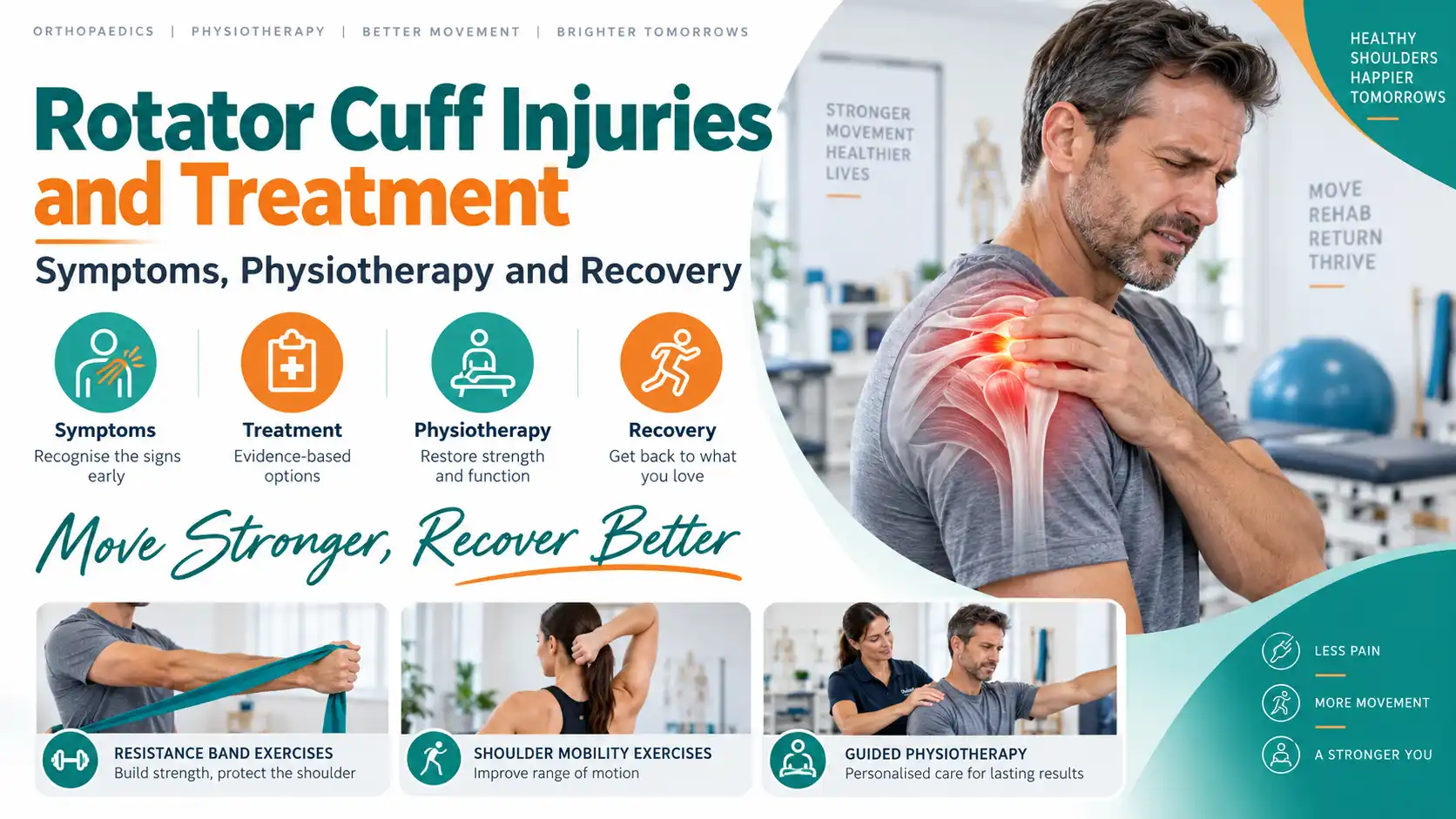
Image disclosure: All images in this article are AI-generated for illustration only. *

Dr. Amol Kathar
MPT (Neuro), 5+ years clinical
experience in neurological rehabilitation
Shoulder pain can make a simple reach to a shelf or a comfortable night's sleep surprisingly difficult. If it began after a fall, or if lifting your arm has gradually become painful, you may wonder whether your rotator cuff is involved. Rotator cuff injuries and treatment are not one-size-fits-all: a tendon that has become sensitive over time is managed differently from a sudden tear with marked weakness. This guide explains the symptoms to notice, how clinicians assess the shoulder, when physiotherapy may help and when you should seek medical care promptly.
What Is the Rotator Cuff
The rotator cuff is a group of four muscles and their tendons around the shoulder. Together they help lift and rotate the arm and keep the ball of the upper-arm bone controlled in the shoulder socket. The tendons can become painful with repeated load or develop a partial or full-thickness tear. Some tears occur suddenly after an injury; others develop gradually with age and use.
Pain does not reveal exactly what has happened to a tendon. A scan may show a tear in someone whose shoulder works well, while another person can have significant pain without a tear. A clinician considers the symptoms, examination and the activities that matter to you before deciding what treatment is appropriate.
Common Symptoms of a Rotator Cuff Injury
The usual complaint is pain around the outside or front of the shoulder, sometimes felt down the upper arm. It may be worse when reaching overhead, lifting to the side, lowering the arm, reaching behind the back or lying on the affected shoulder. You may notice reduced strength while carrying an object or rotating the arm. Night pain is common, although it is not specific to a rotator cuff injury.
A sudden tear can cause a different story: pain after a fall or lifting incident, followed by an immediate loss of strength or difficulty raising the arm. That pattern needs prompt assessment. Gradual pain can also become disabling, but it does not automatically mean the tendon is torn. Neck problems, frozen shoulder, arthritis and other shoulder conditions can produce overlapping symptoms.
What Causes Rotator Cuff Problems
A rotator cuff problem may follow a sudden fall or a forceful overhead movement. More often, symptoms build over time as the shoulder is asked to do more than it currently tolerates. A rapid increase in gym loading, repeated overhead work, a new sport or long periods of painful reaching may contribute. Age-related tendon changes can also be present. None of these factors proves a diagnosis on its own.
The details of how symptoms started matter because they change the next step. Someone with gradual pain after increasing swimming volume may be able to begin a carefully dosed rehabilitation programme. Someone who falls and immediately cannot lift the arm needs a medical evaluation for possible tear, fracture or dislocation before trying strengthening exercises.
How a Clinician Diagnoses a Rotator Cuff Injury
Assessment starts with the injury history: was there a fall, a sudden pull or a gradual increase in pain? The clinician asks about night pain, weakness, numbness, work, sport and the movements you can no longer do. They may compare how far you can move the arm yourself with how far it moves when assisted, then check strength and the neck when relevant.
A single shoulder test rarely gives a complete answer. Imaging is not always required for gradual shoulder pain. An X-ray may help check bone or joint concerns; ultrasound or MRI may be considered when a significant tear is suspected or the result would change management. A scan finding must be interpreted alongside your symptoms and function rather than treated as the entire diagnosis.
Rotator Cuff Injuries and Treatment Options
Treatment depends on the type of problem, its severity and your goals. For many non-traumatic presentations, the first steps are to modify aggravating activities, maintain comfortable movement and progressively strengthen the shoulder. Pain relief may help someone participate in rehabilitation, but medication or an injection should be discussed with an appropriate clinician because benefits and risks vary.
A confirmed tear does not automatically mean surgery, and avoiding surgery is not always the right goal. The decision considers the tear, the strength you have lost, how the injury occurred, your work or sport and whether a suitable non-surgical programme has helped. Large or acute traumatic tears, especially with marked weakness, may warrant early orthopaedic opinion. Surgery, when chosen, is followed by a protected rehabilitation programme set by the surgeon.
When Physiotherapy May Help
Physiotherapy can help people with rotator cuff-related pain restore comfortable movement and rebuild strength for reaching, carrying and lifting. An early programme may focus on finding a tolerable range, changing a painful workload and using low-load exercises. Later stages can include progressive resistance, shoulder-blade control and practice of the tasks you need at work or in sport. Progress is measured by function and symptom response, not by one exercise or machine.
If your symptoms are gradual or you have been medically cleared after an injury, learn more about shoulder pain physiotherapy in Pune .
What a Safe Exercise Plan Might Look Like
A clinician may begin with gentle supported arm movements and light isometric work, such as pressing the hand gently against a wall without moving the shoulder. Later, resistance bands or small weights may be added for rotation and lifting. The starting position, load and frequency should be chosen after assessment. If an exercise causes sharp pain, worsening weakness or a clear flare the next day, reduce it and seek advice.
Avoid trying to stretch aggressively through marked pain or copying a heavy overhead routine too early. Complete rest for weeks can also leave the shoulder stiffer and weaker. The useful middle ground is comfortable movement and progressively dosed loading, unless a clinician has given specific protection instructions for a tear or operation.
Recovery and Return to Activity
Recovery is often gradual. Someone with a sensitive tendon may notice daily tasks improving before heavier gym exercises feel comfortable. A person recovering from a tear or surgery may need a longer, staged plan. There is no reliable universal deadline because the injury type, symptom duration, strength, medical conditions and activity demands differ.
Return to sport or overhead work should be tied to what you can actually do: reaching without a major flare, adequate strength and control, and tolerance of repeated task-specific practice. A cricket bowler, painter and office worker do not need the same endpoint. If symptoms remain unchanged despite an appropriate programme, ask for reassessment rather than simply repeating the same exercises.
Athletes returning to throwing, swimming or gym lifting may also need sports injury rehabilitation once basic shoulder function is restored.
When to Seek Urgent Medical Advice
Seek prompt medical assessment if shoulder pain follows a fall or accident and you suddenly cannot lift the arm, have marked weakness, visible deformity or severe swelling. A hot, red joint with fever, persistent numbness or a cold hand also needs urgent review. Shoulder or arm pain with chest pressure, breathlessness, sweating or nausea may be a medical emergency; seek emergency care rather than assuming it is a muscle injury.
For pain that develops gradually, arrange a non-urgent assessment if it is persistent, worsening, disrupting sleep or limiting work and daily tasks. A physiotherapist or doctor can clarify whether your shoulder is suitable for rehabilitation alone or needs imaging or specialist input.
Frequently Asked Questions
What are the common symptoms of a rotator cuff injury?
Common symptoms include pain around the shoulder or upper arm when reaching or lifting, pain when lying on the affected side and weakness with certain movements. Some tears cause little pain, and similar symptoms can come from other conditions, so an assessment is needed for a diagnosis.
Can a rotator cuff injury heal without surgery?
Many people improve in pain and function with activity changes and a structured rehabilitation programme, but a torn tendon does not necessarily reattach on its own. Whether surgery should be considered depends on the type and size of the tear, injury mechanism, weakness, activity needs and response to treatment.
When should I seek urgent care for shoulder pain after a fall?
Seek prompt medical assessment if shoulder pain follows a fall or other trauma and you suddenly cannot lift the arm or have marked weakness. Visible deformity, severe swelling, numbness, fever with a hot red joint or possible dislocation also needs urgent review.
Is an MRI always needed for rotator cuff pain?
No. A clinician usually starts with the history and physical examination. Ultrasound or MRI may be useful when a significant tear is suspected, symptoms are not improving, or imaging would change a treatment decision. An X-ray may be used to check for other bone or joint problems.
Which exercises are safe for a rotator cuff injury?
The safest starting exercises depend on whether the problem is gradual tendon-related pain, a suspected acute tear or recovery after surgery. Gentle, comfortable shoulder movement and low-load strengthening may suit some people, but do not start resistance exercises after a traumatic injury with marked weakness until assessed.
Does Apricot Care provide rotator cuff physiotherapy in Pune?
Apricot Care provides shoulder pain physiotherapy in Kharadi, Pune. The physiotherapist can assess movement, strength and daily or sports activities, then plan rehabilitation or recommend medical review when a significant tear or another serious condition is suspected.
The Bottom Line
Rotator cuff symptoms can include painful reaching, night discomfort and weakness, but those signs do not confirm a tear by themselves. Gradual symptoms often begin with activity changes and progressive physiotherapy. Sudden loss of strength after trauma needs prompt medical assessment. A good treatment plan fits the actual diagnosis and the tasks you want to return to, then changes as your shoulder responds.
Need a shoulder assessment in Pune? Explore Apricot Care shoulder physiotherapy or contact the Kharadi clinic . You can also call +91 73876 41462 to ask about an appointment.
References
- National health information on rotator cuff injuries and symptoms
- Orthopaedic plain language guidance on rotator cuff injury management
- Clinical referral guidance for acute traumatic rotator cuff tears
- Public guidance on urgent shoulder pain symptoms
Medical Note
This article is general health information, not a diagnosis or a personal exercise prescription. Seek prompt medical review for sudden weakness after injury, suspected fracture or dislocation, fever with a hot red shoulder, persistent numbness or emergency symptoms such as chest pressure and breathlessness. Follow your surgeon's restrictions after an operation.
With 5+ years of experience, he specializes in personalized rehabilitation for stroke, spinal cord injuries, and mobility training to help improve mobility and functional independence.
.webp)