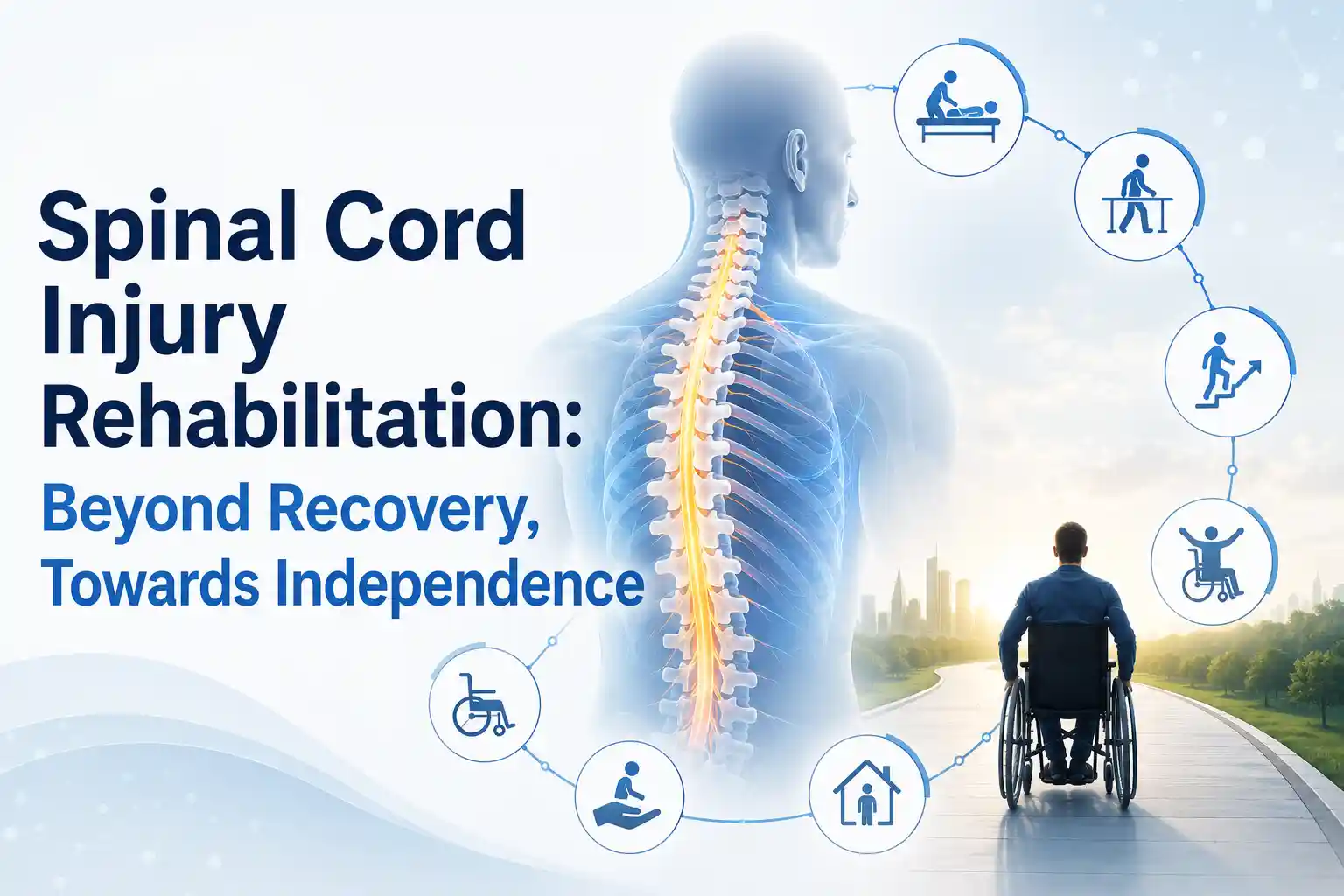
Spinal Cord Injury Rehabilitation: Beyond Recovery, Towards Independence


Dr. Krutika Bhadane
PT (Neuro), BPTh, MPTh (Neurosciences), 3+ years clinical
experience in neurological rehabilitation
Spinal Cord Injury Rehabilitation: Beyond Recovery, Towards Independence
As physiotherapists, we often meet patients at one of the most challenging points in their lives. A spinal cord injury (SCI) can occur in a matter of seconds, but its impact extends far beyond the initial trauma. Suddenly, everyday activities such as sitting, standing, walking, or even breathing independently may become difficult. While the injury itself can be devastating, rehabilitation plays a crucial role in helping individuals regain function, confidence, and a sense of control over their lives.
Understanding Spinal Cord Injury
The spinal cord acts as the communication pathway between the brain and the rest of the body. When this pathway is damaged due to trauma such as road traffic accidents, falls, sports injuries, or violence or due to non-traumatic causes such as tumors, infections, or degenerative conditions motor, sensory, and autonomic functions can be affected.
The severity of impairment depends on the level and extent of the injury. Some individuals may experience complete loss of movement and sensation below the level of injury, while others retain varying degrees of function. Regardless of the severity, the journey following a spinal cord injury requires comprehensive rehabilitation and long-term support.
Why Rehabilitation Matters
Many people associate recovery solely with medical treatment or surgery. However, for individuals with spinal cord injury, rehabilitation is often where meaningful recovery truly begins.
Rehabilitation is not simply about strengthening muscles or practicing exercises. It focuses on maximizing physical abilities, promoting independence, preventing secondary complications, and improving overall quality of life. Early and consistent rehabilitation has been shown to significantly improve functional outcomes and community participation.
One of the most important messages healthcare professionals need to spread is that rehabilitation should begin as early as medically possible. Delayed rehabilitation can increase the risk of complications and limit functional gains.
The Role of Physiotherapy
Physiotherapy remains a cornerstone of spinal cord injury rehabilitation. Treatment is always individualized, depending on the patient's level of injury, functional status, and personal goals.
In the early stages, physiotherapy focuses on preventing complications such as pressure injuries, joint stiffness, respiratory problems, muscle wasting, and deconditioning. As the patient's condition stabilizes, rehabilitation progresses toward improving mobility, balance, trunk control, strength, and functional independence.
Task-oriented training plays a particularly important role. Instead of exercising muscles in isolation, patients are encouraged to practice meaningful activities such as bed mobility, transfers, standing, reaching, grasping, and walking whenever possible. Repetition of functional tasks promotes neuroplasticity and helps individuals develop effective movement strategies.
For patients with incomplete spinal cord injuries, gait rehabilitation may include body-weight-supported treadmill training, overground walking practice, robotic-assisted devices, and functional electrical stimulation. Even small improvements in mobility can have a significant impact on confidence and participation in daily life.
Looking Beyond Physical Recovery
The effects of spinal cord injury are not limited to physical impairments. Many individuals face emotional challenges including anxiety, depression, fear of dependence, and uncertainty about the future. Families often experience significant emotional and financial burdens as well.
Therefore, successful rehabilitation requires a multidisciplinary approach involving physiotherapists, occupational therapists, physicians, psychologists, nurses, social workers, caregivers, and family members. Addressing psychological well-being is just as important as addressing physical function.
Community reintegration is another essential aspect of rehabilitation. Returning to education, employment, recreational activities, and social roles helps individuals rebuild confidence and regain a sense of identity.
Advances in Rehabilitation
Over the last decade, remarkable advances have transformed the field of spinal cord injury rehabilitation. Technologies such as robotic-assisted gait training, virtual reality, functional electrical stimulation, and wearable exoskeletons are providing new opportunities for recovery and participation.
Although these technologies do not replace conventional rehabilitation, they serve as valuable tools that can enhance motivation, increase practice intensity, and improve functional outcomes when used appropriately.
Creating Awareness
Spinal cord injury awareness extends beyond rehabilitation. Prevention remains equally important. Road safety measures, helmet use, fall prevention strategies, workplace safety practices, and timely medical intervention can help reduce the incidence and severity of spinal cord injuries.
At the same time, society must work toward creating more accessible and inclusive environments for individuals living with disabilities. Accessibility, equal opportunities, and social acceptance are vital components of successful rehabilitation.
Conclusion
A spinal cord injury may alter the course of a person's life, but it does not define their future. With timely rehabilitation, evidence-based physiotherapy interventions, technological advancements, family support, and community inclusion, individuals with spinal cord injuries can achieve meaningful recovery and lead fulfilling lives.
As rehabilitation professionals, our role extends beyond restoring movement. We help restore independence, dignity, participation, and hope.
Recovery is not just about regaining movement; it is about reclaiming independence, confidence, and quality of life.
References
1. World Health Organization (WHO)
Spinal
Cord Injury Fact Sheet
2. Glinsky JV, Harvey LA. (2024)
Physiotherapy management
of people with spinal cord injuries: An update. Journal of
Physiotherapy, 70(4), 256–264. DOI: 10.1016/j.jphys.2024.09.008
3. Glinsky JV, Harvey LA, et al. (2025)
An Australian and New
Zealand Clinical Practice Guideline for the Physiotherapy Management of
People with Spinal Cord Injuries. Spinal Cord.
.webp)