What Is Trauma Care? Meaning, Types & Centres in Pune


Dr. Arpita Ganguly
BPT, MPT (Neuro), 6+ years clinical
experience in neuro rehabilitation & functional recovery
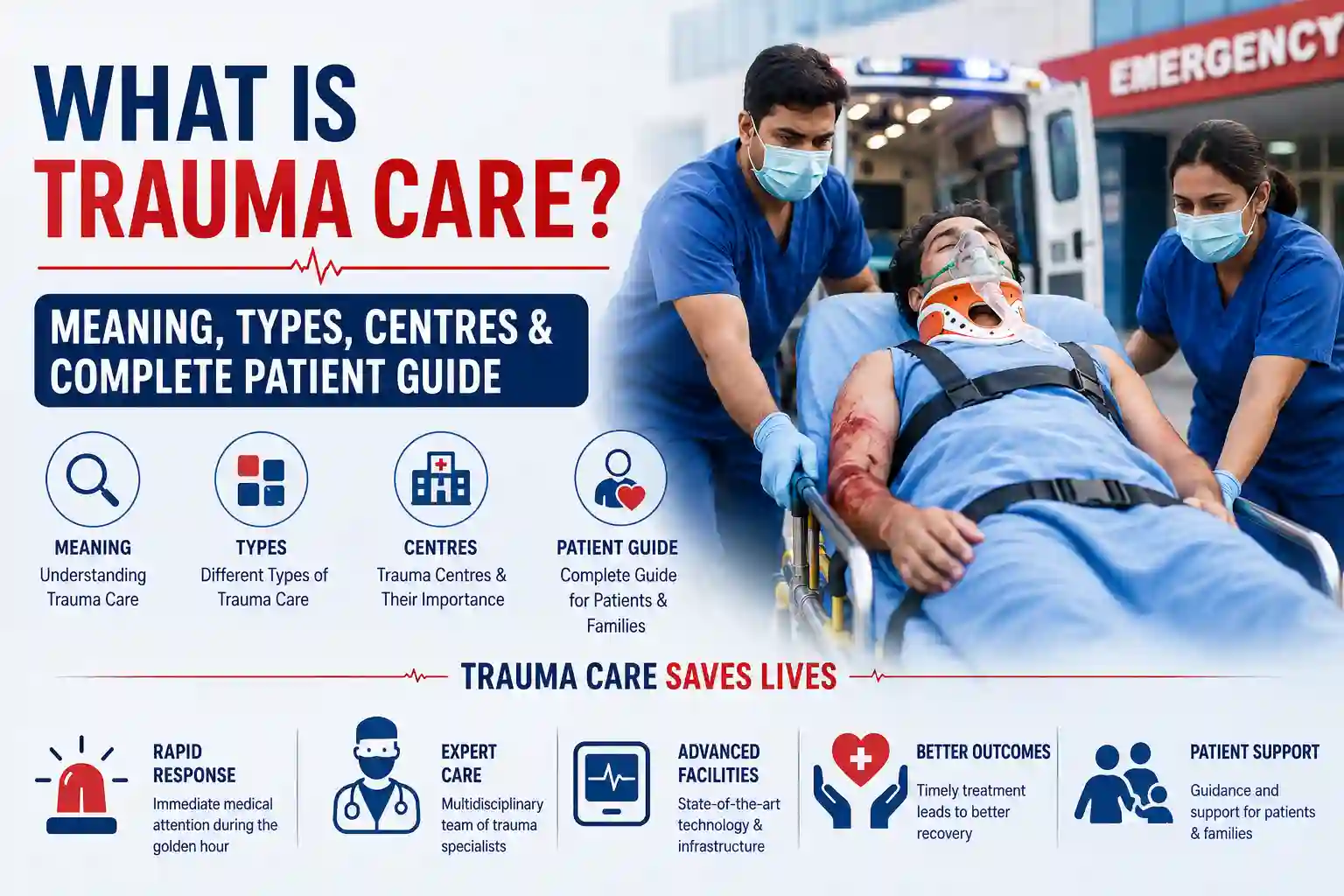
What Is Trauma Care? Meaning, Types, Centres & Complete Patient Guide
Looking for a trusted trauma care centre? Apricot Care Assisted Living and Rehabilitation is a dedicated trauma care centre in Pune that helps patients recover after serious injuries from road accidents and major falls to complex fractures and polytrauma. Our multidisciplinary team supports you through every stage of healing, combining advanced physiotherapy, occupational therapy, pain management, and compassionate care under one roof. Before you decide where to recover, though, it helps to understand what trauma care really involves and what your journey will look like. This complete patient guide explains the meaning of trauma care, its main types, the difference between emergency treatment and rehabilitation, and how to choose the right centre for you or your loved one.
Trauma care is the specialised medical and rehabilitative treatment given to a person who has suffered a serious physical injury such as a road accident, a major fall, or a complex fracture. It covers two connected stages: the emergency treatment that saves life and stabilises the body, and the longer trauma rehabilitation that restores movement, strength, and independence afterwards.
Trauma Care Meaning: A Simple Definition
The trauma care meaning is straightforward: it is the organised, time-sensitive care a patient receives after a sudden, severe injury. The word "trauma" in medicine refers to a physical wound or shock to the body, not only emotional stress, which is how the word is often used in everyday conversation.
Good trauma care is built around speed and coordination. In the first hours, the goal is to keep the patient alive and prevent the injury from worsening. In the weeks and months that follow, the goal shifts to healing fully and returning to normal life. Both stages matter, and the quality of the second stage often decides how well a person recovers in the long run.
What Is Trauma Care, Exactly? The Two Phases
To understand what is trauma care, it helps to see it as a journey with two distinct phases. Each phase happens in a different setting and is handled by different specialists.
Phase 1: Emergency Trauma Treatment
Emergency trauma treatment is the immediate, life-saving care delivered right after an injury usually in a hospital emergency department or a dedicated hospital trauma centre. This includes controlling bleeding, stabilising fractures, emergency surgery, and monitoring vital signs. Speed is critical here; the first hour after a major injury is often called the "golden hour."
Phase 2: Trauma Rehabilitation
Once a patient is medically stable and out of danger, the focus moves to trauma rehabilitation, the structured recovery process that rebuilds the body and mind. This is where a specialised rehabilitation centre takes over, working alongside your surgeon to help you regain mobility, manage pain, and return to daily life safely.
Here is how the two phases compare:
| Aspect | Emergency Trauma Treatment | Trauma Rehabilitation |
|---|---|---|
| When | Immediately after injury | After the patient is medically stable |
| Where | Hospital ER / trauma centre | Rehabilitation centre, home, or online |
| Main goal | Save life, stabilise the body | Restore movement, strength, independence |
| Who provides it | Emergency doctors, trauma surgeons | Physiotherapists, occupational therapists, counsellors |
| Duration | Hours to days | Weeks to months |
Both phases are essential. Skipping or rushing rehabilitation is one of the most common reasons patients are left with long-term stiffness, weakness, or chronic pain after an injury heals.
Types of Trauma and Injuries That Need Care
Trauma is not a single condition, it is a broad category. The most common types of injury that need dedicated trauma care and rehabilitation include:
- Fractures and complex bone injuries -including multiple or poorly healing fractures.
- Polytrauma - multiple serious injuries from a single event, such as a road accident, which is among the leading causes of traumatic injury in India (Ministry of Road Transport & Highways).
- Soft tissue injuries - affecting muscles, ligaments, and tendons.
- Spinal and brain injuries - which often need both physical and neurological rehabilitation.
- Post-surgical trauma - where the body must recover after major orthopaedic operations.
Each type heals at its own pace and needs a recovery plan built around the specific injury, the surgery performed, and the patient's overall health.
What Happens During Trauma Rehabilitation?
Trauma rehabilitation is not just "doing some exercises." A major injury affects the body in many ways at once, so good rehabilitation is led by a multidisciplinary team. At a well-run trauma care centre, recovery is usually built on four pillars:
Advanced physiotherapy and pain management :This is the foundation. Therapists use hands-on techniques and carefully graded exercises to restore joint movement, rebuild muscle strength, and control pain without over-relying on medication helping you move from being bed-bound to walking confidently again.
Occupational therapy : After a serious injury, simple daily tasks like dressing, bathing, or cooking can feel impossible. Occupational therapists help you relearn these activities safely, use aids like walkers or braces correctly, and adapt your home so you stay independent while you heal.
Strength, conditioning, and scar tissue management : As healing progresses, the focus shifts to rebuilding your former strength and endurance, and to managing scar tissue so it stays flexible and you become less prone to future injury.
Psychological support : A physical trauma is also an emotional one. Anxiety, fear of moving, and low mood are common and normal. Counselling support helps patients process the event, stay motivated, and rebuild confidence, a part of recovery that is too often ignored.
This kind of coordinated, whole-person approach is exactly what dedicated Trauma Rehabilitation Services are designed to deliver.
Trauma Recovery Care: What the Journey Looks Like
Strong trauma recovery care follows a clear, predictable path so patients and families always know what comes next. At Apricot Care, recovery typically begins in three simple steps:
- Comprehensive assessment. A detailed evaluation by rehabilitation specialists to understand the injury, surgery, and recovery goals.
- A coordinated recovery plan. A personalized therapy plan built in line with your surgeon's protocols, so every injury is addressed safely and together.
- Guided healing. One-on-one therapy in a supportive environment, with the team adjusting the plan as you improve.
Around this, continuous support makes a real difference 24/7 nursing and medical supervision, nutritional support to speed up healing, a safe and accessible environment, and home care options for those who recover better at home.
Who Needs Trauma Recovery Care?
You may benefit from structured trauma rehabilitation if you are:
- Recovering from a road accident or a serious fall.
- Healing from one or more complex fractures.
- Discharged after major orthopaedic surgery and cleared for therapy.
- Living with stiffness, weakness, or pain that has lingered after an injury.
- Caring for a family member who needs supervised, professional recovery support.
A simple rule: if your surgeon has cleared you for physiotherapy and you want to recover fully rather than partially, rehabilitation is worth starting early. Beginning therapy soon after medical clearance helps prevent stiffness and speeds healing.
How to Choose a Trauma Care Centre in Pune
Because recovery decisions affect your long-term health, choose carefully. When comparing any trauma care centre in Pune, look for these signs of genuine expertise and trustworthiness:
- Multidisciplinary team : physiotherapists, occupational therapists, and counsellors working together, not in isolation.
- Surgeon collaboration : a centre that follows your operating surgeon's protocols for a safe, seamless recovery.
- Experience with complex and polytrauma cases, not just routine physiotherapy.
- One-on-one, supervised sessions rather than crowded group settings.
- Flexible care options : in-clinic, home-based, and online therapy.
- A focus on function : getting you back to real life, not just healing the injury on paper.
These are the same standards reflected in India's own rehabilitation framework the Rights of Persons with Disabilities Act (2016) and the WHO's Rehabilitation 2030 strategy both emphasise comprehensive, patient-centred recovery, including emotional well-being and long-term independence.
Trauma Care in Pune: Areas We Serve
Apricot Care Assisted Living and Rehabilitation provides specialist trauma care in Pune from its centre in Kharadi, with in-clinic, home-care, and online therapy options across the city.
Main centre: 3rd Floor, Cherry Life, F Wing, Ganga Altus, 302, Thite Nagar, Kharadi, Pune, Maharashtra 411014.
We support patients across Kharadi, Chandan Nagar, Wagholi, Wadgaon Sheri, Viman Nagar, and Magarpatta, with home-care services available in the surrounding areas. If you or someone you love is recovering from a serious injury anywhere in or around Pune, professional, compassionate trauma rehabilitation is within reach.
Start Your Recovery - Book a Trauma Care Consultation in Pune
Recovery is easier with the right team beside you. Whether you need on-site rehabilitation, home care, or an online consultation, Apricot Care builds a personalized plan to help you rebuild strength, confidence, and independence after a major injury.
Email: hello@apricotcare.in
Call-us / WhatsApp: +91
73876 41462
Book your trauma care assessment today →
Take the first step on your road to recovery. Our specialists will guide you every step of the way.
Frequently Asked Questions
What does trauma care mean?
Trauma care is the medical and rehabilitative treatment given after a serious physical injury. It includes emergency trauma treatment to stabilise the patient, followed by trauma rehabilitation to restore movement, strength, and independence.
What is the difference between emergency trauma treatment and trauma rehabilitation?
Emergency trauma treatment is immediate, life-saving care given in a hospital right after an injury. Trauma rehabilitation is the structured recovery process that begins once the patient is medically stable, focusing on regaining function and quality of life.
When should I start trauma rehabilitation after my accident or surgery?
Begin as soon as your surgeon gives medical clearance. Starting early even with gentle, specific exercises helps prevent stiffness, reduces pain and swelling, and speeds up healing.
Can a rehabilitation centre handle severe or multiple injuries?
Yes. Centres that specialise in polytrauma create a single, coordinated plan that addresses all injuries together. This multidisciplinary approach is essential for a safe, successful recovery from complex injuries.
Do you offer trauma care at home in Pune?
Yes. Alongside in-clinic rehabilitation in Kharadi, Apricot Care offers home-care therapy and online consultations for patients across Pune who recover better at home.
With 6 years of experience, she specializes in neuro-rehabilitation, geriatric care, and balance training to help patients improve mobility and functional independence.
.webp)