Understanding SCI Levels: How a C-Spine vs. T-Spine Injury Affects Your Body

Apricot Care
Spinal cord injury (SCI) levels refer to where damage occurs along the spine, determining which body parts lose function. C-spine injuries affect arms and legs, while T-spine injuries primarily affect legs and core muscles.
Why Understanding Your Spinal Cord Injury Level Matters
When someone experiences a spinal cord injury, the first question families ask is: "What does this mean for their future?" At Apricot Care Assisted Living and Rehabilitation, we've worked with hundreds of patients recovering from spinal injuries. The honest answer is that your injury level changes everything. It changes how you'll breathe and how independent you can become.
The difference between a C5 injury and a T12 injury isn't just medical terminology. It's the difference between needing 24-hour attendant care and living independently in your own home. It's the difference between breathing on your own and depending on a ventilator. These aren't small details. They shape your entire recovery journey.
Let me walk you through what actually happens when your spine gets injured at different levels. This information matters whether you're newly injured, a family member trying to understand what's ahead, or a caregiver at a neuro rehabilitation centre in Pune or anywhere else.
The Spine Basics. What You Need to Know First
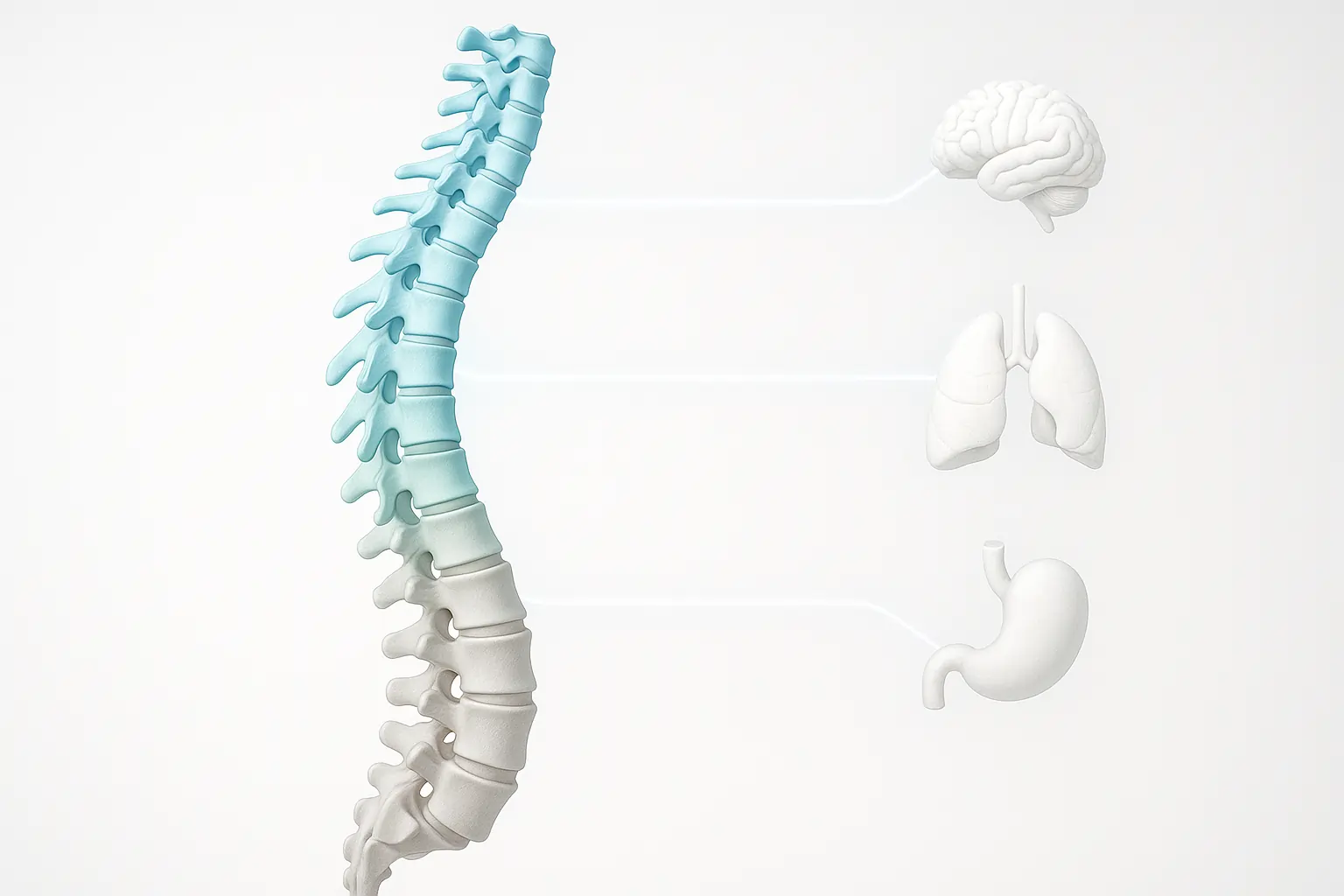
Your spinal cord runs from your brain down your back inside your spine. The spine has 33 bones called vertebrae. These divide into regions: cervical (neck), thoracic (mid-back), lumbar (lower back), and sacral (tailbone).
Here's something most people don't realize. The spinal cord doesn't line up with the vertebrae perfectly. When doctors talk about injury levels, they're referring to which nerve roots got damaged. A fracture at the C7 vertebra might damage the C8 nerve root. This matters because it affects what body parts lose function.
When damage occurs at different levels, different nerves stop communicating with different parts of your body. Think of it like cutting a telephone wire at various points. Cutting it at the top stops all calls below that point. Cutting it lower down only affects some lines.
Cervical Spine Injuries (C1-C8). When Your Neck Gets Hurt
What Happens with C-Spine Injuries
Cervical spine injuries are the most severe category. They damage nerves that control your arms, hands, and legs. Doctors call this tetraplegia or quadriplegia. This means all four limbs lose function.
The scary part is how much depends on exactly where the injury happens.
C1 to C3 Injuries. The Severest Cases
These high-level cervical injuries affect the highest nerves in your spinal cord. Most patients with C1-C3 injuries cannot breathe without help. These injuries damage the phrenic nerve that controls your diaphragm. The diaphragm is the muscle that lets you breathe.
At a neuro rehabilitation centre, C1-C3 patients typically need mechanical ventilators for life. They have almost no voluntary movement. They require round-the-clock nursing care and medical support. This isn't pessimism. It's medical fact.
C4-C5 Injuries. Partial Diaphragm Function
C4-C5 injuries still affect breathing. They affect it less severely though. Some patients can breathe on their own for short periods. They may wear a ventilator during sleep or when tired. Their shoulders may move slightly. Arm movement stays very limited.
C6-C8 Injuries. The Boundary Where Independence Becomes Possible
Here's where things change dramatically. C6 injuries preserve more arm function. By C8, patients have wrist movement and some hand function. They can often feed themselves, use a computer with modifications, and perform some personal care tasks.
This is the level where independence starts becoming realistic. Not easy. Realistic.
Why Breathing Changes Everything
Let me explain why respiratory function matters so much. When your spinal cord gets injured high in the cervical region, it damages nerves that control breathing. Your lungs still work fine. Your brain still sends the signal. But the connection between your brain and the muscles that breathe gets broken.
At a spine care and rehabilitation facility in Pune or elsewhere, therapists spend significant time on respiratory management for cervical patients. They teach breathing techniques. They monitor oxygen levels. They manage ventilators.
Patients with C1-C5 injuries often need ventilators permanently. C6-C8 patients usually breathe independently. Though they may have weak coughs and tire more easily.
Thoracic Spine Injuries (T1-T12). Mid-Back Damage
The Major Difference: Your Arms Still Work
This is the crucial distinction. Thoracic spine injuries preserve arm and hand function. This single fact changes the entire recovery picture.
Thoracic injuries cause paraplegia. This means paralysis of the legs and lower body. Your arms work fine. This means you can feed yourself, bathe yourself, dress yourself, and work at a desk. You can use a manual wheelchair independently.
Don't underestimate how important this difference is.
T1-T5 Injuries. High Thoracic
Upper thoracic injuries affect trunk control and some chest muscles. Patients lose leg function but keep arm strength. They can use manual wheelchairs. They can work jobs that don't require standing.
Autonomic dysreflexia becomes a concern at this level. More on that in a moment.
T6-T12 Injuries. Mid to Low Thoracic
These injuries are progressively less severe. T10-T12 injuries have the best functional outcomes. Patients have excellent core control. They're highly independent. Many return to work, drive, and live fully in their communities.
Breathing Works Normally
Here's another huge difference. Thoracic injured patients breathe normally. Their diaphragm works perfectly. They never need ventilators from the injury itself. This eliminates an entire category of medical complexity that cervical patients face.
The Big Scary Word. Autonomic Dysreflexia
Both C-spine and high T-spine patients face a dangerous complication called autonomic dysreflexia. This happens when stimuli below your injury cause a sudden, dangerous spike in blood pressure. Stimuli might include a full bladder or constipation.
Your body gets a signal: "Hey, there's a problem down here." But that signal can't reach your brain normally. So your body overreacts. Blood pressure shoots up dangerously. This can cause stroke, heart problems, or death if untreated.
Who's at Risk?
Cervical injuries put up to 90% of patients at risk. High thoracic injuries (T1-T6) affect 48-91% of patients. Low thoracic injuries (T10-T12) rarely cause this complication.
At a neuro rehabilitation centre in Pune or anywhere else, staff trains patients to recognize warning signs. These include sudden severe headache, flushing, sweating, and pounding heart.
C-Spine vs. T-Spine. The Direct Comparison
| Functional Area | C-Spine Injuries | T-Spine Injuries |
|---|---|---|
| Arm & Hand Function | Lost or severely limited | Fully preserved |
| Leg Function | Lost | Lost |
| Independent Breathing | C6-C8 yes; C1-C5 no | Yes, always |
| Self-Care Tasks | Limited (C1-C5); possible (C6-C8) | Highly possible |
| Wheelchair Use | Power chair typical; manual possible (C7+) | Manual wheelchair typical |
| Employment Prospects | Challenging; desk work hard | Better; many options |
| Autonomic Dysreflexia Risk | Up to 90% | 48-91% (high thoracic); rare below T10 |
| Hours of Daily Care Needed | C1-C4: 24 hours; C5+: variable | Usually none; independent |
| Quality of Life Independence | Lower | Higher |
This table tells a story. Preserved arm function changes everything. It's the single biggest factor determining whether someone regains independence.
What Happens to Your Body Functions
Bladder and Bowel Control
Both C-spine and T-spine injuries cause loss of bladder and bowel control. Both require management programs. Both need catheterization. This affects quality of life significantly.
However, patients manage this. At spine care and rehabilitation centers, staff teaches clean intermittent catheterization. This is a technique patients learn to perform themselves. Bowel programs become routine. Most people adjust.
Sexual Function
Both injury types affect sexual function. This matters, and it's worth discussing with rehabilitation specialists. Adaptations and solutions exist. This isn't the end of intimate relationships. It's a change requiring adjustment.
Sensation and Pain
Some patients experience pain or phantom sensations below their injury. This can be managed with medication, therapy, and other techniques. Pain management becomes part of long-term care at any quality neuro rehabilitation centre.
Recovery. What's Actually Realistic
This is where people get confused. "Will I walk again?" families ask. The honest answer depends on your injury level and whether it's complete or incomplete.
Complete Injuries (Total Loss of Function Below Injury)
Cervical complete injuries show improvement in only 15% of cases to incomplete status. Thoracic complete injuries are similar. Most remain complete. However, incomplete thoracic injuries tell a different story. Over 50% show improvements.
Incomplete Injuries (Some Function Preserved)
These have much better recovery potential. Therapy can help regain function. People surprise everyone.
Recovery Timeline
The critical window is the first 3-12 months. Most improvement happens here. After 12 months, changes slow down. However, therapy can produce improvements even years later.
Age matters too. Younger patients recover better. A 25-year-old and a 65-year-old with identical injuries will likely have different outcomes.
Life After Spinal Cord Injury. The Real Story
At Apricot Care Assisted Living and Rehabilitation, we work with patients daily. Here's what we see: people adapt. Not easily. Not quickly. But they do.
A person with T12 paraplegia might use a manual wheelchair but live independently, work full-time, and travel. Someone with C7 tetraplegia requires help but can live in their own home with attendant care and adapted equipment.
What Changes Outcomes
Quality rehabilitation in the first year makes a big difference. Family support matters. Psychological adjustment is crucial. Access to assistive technology helps significantly. Determination and work ethic carry people through.
The patients who do best are the ones who get proper rehabilitation early. They're the ones whose families understand what's possible. They're the ones who refuse to let their injury define their entire life.
How Spinal Cord Rehabilitation Works
If you or someone you care about experiences a spinal cord injury, the rehabilitation journey is critical. At a neuro rehabilitation centre in Pune like Apricot Care, we focus on several areas.
Physical Therapy
Therapists work on strength, flexibility, and whatever movement remains possible. For C-spine patients, they focus on arm and hand function. For T-spine patients, they focus on trunk control and wheelchair skills.
Occupational Therapy
This teaches adaptive techniques for daily living. How to dress yourself with limited arm function. How to feed yourself. How to use assistive devices.
Respiratory Management
For cervical patients, this is critical. Training includes ventilator use, breathing exercises, and secretion management.
Psychological Support
Spinal cord injury is traumatic. Depression is common. Counseling helps patients and families process this life change.
Technology Training
Modern assistive devices can dramatically improve independence. Voice-controlled computers, adaptive wheelchairs, and environmental controls all expand what's possible.
Critical Points You Must Understand
1. Injury level determines function, but not destiny. A C8 patient might achieve more independence than a C5 patient through determination and therapy. Individual factors matter.
2. Incomplete injuries have better recovery potential. If tests show some function below the injury, recovery is more likely.
3. Early rehabilitation changes outcomes. Starting therapy soon after injury produces better long-term function.
4. Family involvement matters. Patients with strong family support recover better psychologically.
5. Technology and adaptations expand possibilities constantly. Today's assistive technology seems like science fiction compared to ten years ago.
6. Independence is possible at higher levels than most people think. Modern rehabilitation makes independence achievable for many C6-C8 patients.
Next Steps. Getting Quality Care
If you're facing a spinal cord injury, yours or a loved one's, find a quality neuro rehabilitation centre. Not all rehabilitation facilities are equal. Look for several things.
Specialized SCI programs matter. Experienced staff makes a difference. Modern equipment and technology help significantly. Psychological support services should be available. Strong track records with patient outcomes matter most.
At Apricot Care Assisted Living and Rehabilitation, our team specializes in helping patients recover maximum function from spinal injuries. We understand that every patient's situation differs. We tailor rehabilitation programs to individual needs and goals.
Whether you need spine care and rehabilitation in Pune or information about what's possible after your injury, quality rehabilitation matters more than you realize.
The Bottom Line
Understanding your spinal cord injury level helps you understand your recovery potential. C-spine injuries present different challenges than T-spine injuries. But both offer paths toward meaningful recovery and independence.
The injury level you receive determines your starting point. Your determination, rehabilitation quality, and support system determine where you end up.
If you're facing this situation, don't make assumptions. Talk to specialists. Get rehabilitation early. Work hard during therapy. Adapt as needed. Connect with people who've faced similar injuries.
Your injury level matters. Your choices matter more.
Looking Ahead. Keep This Information Current
Spinal cord injury rehabilitation constantly evolves. New treatments emerge. Technology improves. Recovery outcomes improve yearly. Revisit this information every 4-6 months to stay current with latest developments in SCI care.
Apricot Care Assisted Living and Rehabilitation stays current with the latest rehabilitation techniques and technologies. When you're ready for quality spine care and rehabilitation in Pune or seeking a neuro rehabilitation centre, evidence-based care makes all the difference.
Your recovery journey starts with understanding where you are and what's possible. We're here to help guide that journey.
.webp)