Lower Back Pain Treatment in Pune with Physiotherapy
Lower back pain can interfere with sitting, bending, lifting, walking, running, sleep
and routine
household work. It may begin after a strain or sudden movement, or develop gradually
during desk
work, travel or reduced activity. Apricot Care provides personalised lower back pain
physiotherapy
in Pune from its Kharadi clinic, with treatment planned around the way symptoms affect
your
movement and daily function.
This service focuses on pain centred mainly in the lower back. Pain that travels into
the leg,
numbness or weakness may require a sciatica-focused assessment, while significant trauma
or
serious warning signs need medical care. A physiotherapist uses the history and
examination to
decide whether active rehabilitation is suitable and what starting level is safe.
Treatment is planned around the way symptoms affect your movement and daily
function.
Personalised Physiotherapy
What This Service Focuses On
Movement-based assessment
Bending, sitting, walking, lifting and other relevant tasks are assessed.
Graded exercise plan
Mobility, trunk, hip and lower-limb exercises are progressed according to response.
Work and running guidance
The plan can address desk work, travel, gym training and return to running.
No fixed-package promises
Session frequency is reviewed according to progress and clinical need.
When Physiotherapy May Help
Lower Back Pain Physiotherapy in Pune: When to Consider an Assessment
Physiotherapy may help when lower back pain follows a muscle strain, prolonged sitting,
a change in
gym or running load, repeated lifting or a period of inactivity. People also seek
treatment for
recurrent stiffness, back spasm, reduced tolerance for standing, discomfort during
household tasks
or symptoms associated with age-related joint changes. The clinician should assess what
you can do,
not only where it hurts.
Terms such as arthritis, degeneration, spasm and muscle strain are often used broadly. A
scan
finding may be relevant, but it does not always explain the severity of pain. The
treatment plan
should combine examination findings with your health history, symptom behaviour and
goals, rather
than assuming that every lower-back problem requires the same exercises or complete
rest.
Clinical Assessment
Lower Back Pain Symptoms and Functional Problems We Assess
Common Symptoms and Limitations
Common problems include local aching, stiffness after sitting, a sharp catch during
bending,
muscle spasm, reduced confidence with lifting, pain after running and difficulty
changing position
in bed. Symptoms may be one-sided or central and can vary during the day. Some people
feel better
with movement, while others need a more gradual return because the pain is highly
irritable.
Functional and Neurological Screening
The assessment considers spinal and hip movement, trunk and leg strength, walking,
balance when
relevant and the specific tasks that are limited. When symptoms extend into the leg, the
clinician
may add neurological screening. Persistent pain is also considered in relation to sleep,
stress,
activity levels and previous experiences, without suggesting that the pain is imaginary.
Possible Contributing Factors
Common Causes and Contributing Factors in Lower Back Pain
Lower back pain may follow muscle or ligament strain, sudden lifting, unaccustomed
running or gym
work, prolonged static positions, reduced conditioning or age-related changes. In many
cases, no
single damaged structure can be identified, and the problem is described as non-specific
low back
pain. This does not make the symptoms less real; it means treatment is guided by
function and
response rather than one structural label.
Running-related lower back pain can be influenced by training increases, recovery, hip
or trunk
capacity and technique, while arthritis-related stiffness may need a gradual movement
and
strengthening plan. A responsible physiotherapist avoids attributing all pain to posture
or
claiming that a manual adjustment permanently corrects the spine.
Urgent medical assessment is needed for new bladder or bowel loss, saddle-area numbness,
rapidly
worsening leg weakness, symptoms in both legs, severe pain after significant trauma,
fever with
back pain, unexplained weight loss, a history of cancer with new symptoms or severe
unremitting
pain with serious illness. Chest or abdominal symptoms may also require emergency
evaluation.
Routine lower back physiotherapy should not delay appropriate care.
Your First Visit
What We Check During a Lower Back Pain Assessment
The first session reviews when the pain began, previous episodes, work and travel
demands,
exercise, sleep, medicines, scans and the activities you want to resume. The
examination is
adapted to comfort and does not require forcing painful movements.
01
Pain pattern and medical screening
We clarify whether pain is local, whether it travels, and whether trauma,
systemic symptoms
or neurological changes require referral.
02
Spinal, hip and lower-limb movement
Bending, rotation, hip mobility, walking and other relevant movements are
assessed
according to irritability.
03
Strength and load tolerance
Trunk, hip and leg capacity may be tested using safe tasks related to lifting,
standing,
running or work.
04
Functional goals and progress measures
Baselines such as sitting time, walking distance, sleep, lifting or exercise
tolerance are
recorded for review.
Visit Apricot Care
Visit Our Lower Back Pain Physiotherapy Clinic in Kharadi, Pune
Apricot Care provides lower back pain physiotherapy at its Kharadi clinic. The centre is
accessible
from Viman Nagar, Wadgaon Sheri, Chandan Nagar, Wagholi, Kalyani Nagar, Magarpatta,
Hadapsar and
nearby Pune areas. Check the embedded map for the route and call the clinic before your
visit.
Our Physiotherapy Plan for Lower Back Pain Relief and Recovery
Graded spinal and hip mobility
Gentle movement may be used to reduce stiffness and rebuild confidence with bending,
rotation
and daily transitions. The range is selected according to symptom response.
Treatment does not
rely on forcing the spine or repeatedly provoking a severe flare-up.
Trunk, hip and lower-limb strengthening
Exercises can target the trunk, hips and legs using body weight, bands or gym
resistance. The
purpose is to improve capacity for sitting, standing, lifting, running or household
work, not
to chase one ‘perfect’ core exercise.
Management of spasm and acute irritability
During a painful flare, the starting plan may include comfortable movement, short
walks,
position changes, pacing and selected symptom-relief techniques. Prolonged bed rest
is generally
avoided unless another clinician has given specific instructions.
Running, lifting and work rehabilitation
People with lower back pain from running or lifting may need a temporary change in
volume,
intensity or technique followed by progressive reloading. Workstation changes can
support
comfort, but movement variety and capacity remain important.
Manual therapy as supportive care
Hands-on techniques may be considered for short-term movement or comfort when
appropriate. They
are used alongside education and exercise rather than presented as a stand-alone
cure or a way
to permanently realign the spine.
What to Expect From the First Few Sessions
The initial appointment should leave you with an explanation, a small number of
manageable
actions and clear guidance about what to monitor. Follow-up visits review movement,
function and
exercise response. Progress may include longer sitting or walking, fewer spasms,
improved sleep
and greater confidence with bending or lifting.
Recovery time varies. A recent muscle strain may improve differently from
long-standing pain
associated with reduced conditioning, arthritis or multiple health factors. Apricot
Care does
not recommend a fixed number of sessions before assessment or promise that pain will
disappear
completely by a particular date.
Why Choose Apricot Care for Lower Back Pain Physiotherapy in Pune
Apricot Care provides one-to-one lower back assessment and an exercise-led plan
linked to
practical goals. The physiotherapist explains what is being tested, why an exercise
has been
selected and how the programme will progress if symptoms settle.
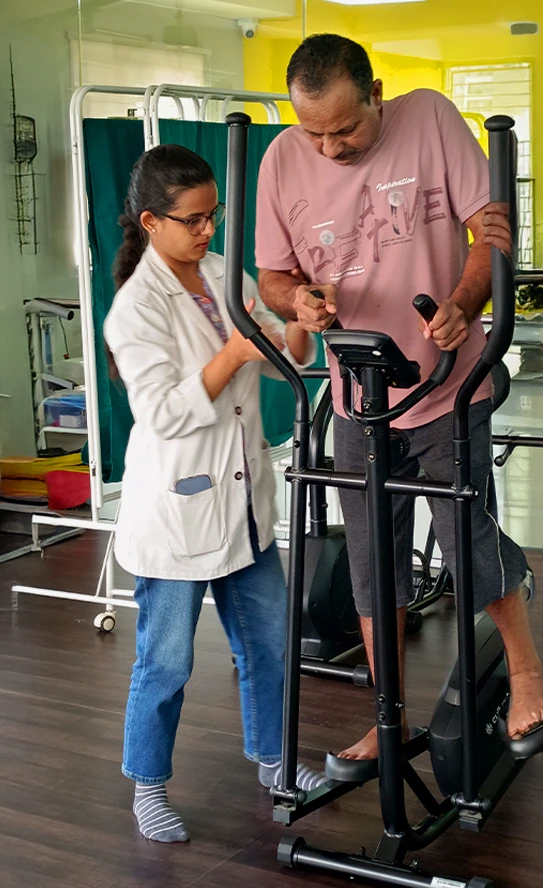
Clinic appointments support supervised exercise and functional retraining. Home
physiotherapy
may be discussed when travel is difficult, while complex neurological or medical
presentations
are referred or co-managed. Patients should verify the clinician’s qualifications
and share
relevant reports before treatment.
Kharadi and East Pune
Lower Back Pain Physiotherapy Near Kharadi and East Pune
When choosing lower back pain physiotherapy, consider the clinic’s actual location,
clinician
qualifications, assessment process and whether the service matches your needs.
Apricot Care is
situated in Kharadi, Pune, and is accessible from nearby areas of East Pune.
Book an Appointment for Lower Back Pain Physiotherapy
In-Clinic Care in Kharadi
Visit Apricot Care for lower back pain assessment and a personalised
rehabilitation plan.
Selected Home-Care Options
Home visits may be considered when mobility or practical access is limited.
Common Questions
Frequently Asked Questions About Lower Back Pain Treatment in
Pune
Physiotherapy may help after a lower back muscle strain by guiding comfortable movement,
gradual strengthening and return to lifting, work or exercise. The assessment should
first
exclude significant injury or neurological problems. Treatment is progressed according
to
symptoms rather than complete rest or aggressive stretching.
A spasm may settle with comfortable movement, short walks, position changes, pacing and
appropriate pain management. Severe or repeated spasm needs assessment because the
trigger may
differ between people. Seek urgent care if spasm occurs with bladder or bowel changes,
saddle
numbness, progressive weakness, fever or major trauma.
Treatment may include temporarily modifying running volume, reviewing recent training
changes,
improving hip and trunk capacity and gradually rebuilding tolerance. The physiotherapist
may
also assess mobility, recovery and running-related tasks. A fixed rest period is not
appropriate
for every runner.
Age-related changes on scans do not predict symptoms perfectly. Many people remain
active despite
degenerative findings. Physiotherapy can focus on mobility, strength, activity and
self-management, while a doctor may be needed when symptoms are severe, unexplained or
associated
with neurological loss.
Apricot Care combines history, movement testing, relevant neurological screening and
functional
baselines. The physiotherapist then selects a personalised programme and reviews
outcomes such as
sitting, walking, sleep, lifting or return to exercise.
Apricot Care is located at 3rd Floor, Cherry Life, F Wing, Ganga Altus, 301 &302,
Thite Nagar,
Kharadi, Pune, Maharashtra 411014. The clinic is accessible from Kharadi and nearby East
Pune
areas. Call +91 73876 41462.



.webp)