
Slipped Disc Physiotherapy in Pune

Disc Bulge and Slipped Disc Treatment in Pune with Physiotherapy

A disc bulge or “slipped disc” may be mentioned after an MRI of the lower back or neck. Some people have local pain, while others experience pain, tingling, numbness or weakness into a leg or arm. Apricot Care provides physiotherapy for disc-related symptoms in Pune from its Kharadi clinic, with treatment based on the clinical presentation rather than the scan wording alone.

The term slipped disc is commonly used, but the disc does not literally move out of place like a loose object. Disc material can bulge or herniate and may irritate a nearby nerve. Similar scan findings can also appear in people without pain. The physiotherapist therefore reviews the history, neurological signs, movement and function before deciding whether conservative rehabilitation is suitable.

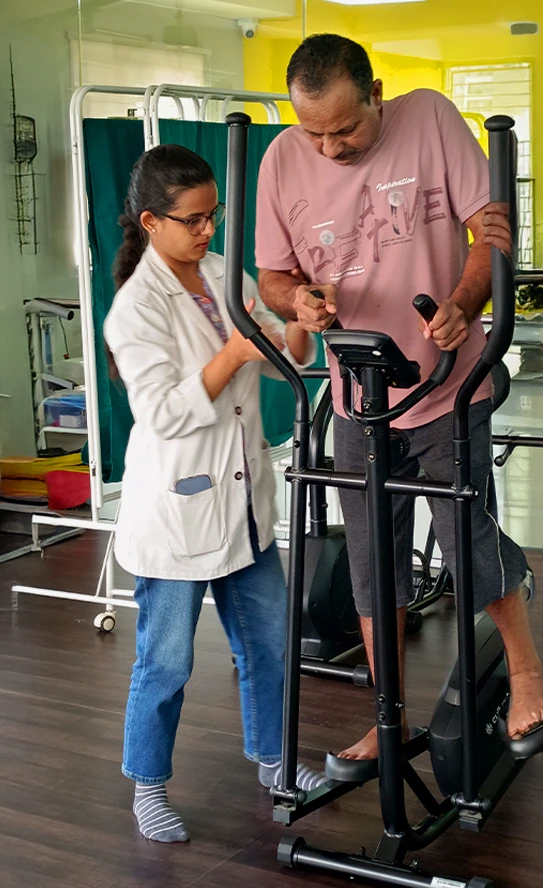
Slipped disc physiotherapy and rehabilitation at Apricot Care Pune

Scan-Informed, Function-Focused Care

Treatment is planned around symptoms, neurological findings, movement and daily function.

What This Service Focuses On

Scan-informed, not scan-led

MRI findings are interpreted with symptoms, neurological examination and daily function.

Neurological screening

Strength, sensation and reflexes are checked when arm or leg symptoms are present.

Graded conservative care

Movement and strength are progressed without promising that one exercise fixes every disc.

Medical coordination

Progressive deficit or emergency signs are referred promptly.

When Physiotherapy May Help

Slipped Disc Physiotherapy in Pune: When Conservative Rehabilitation May Help

Physiotherapy may be part of non-surgical care when a clinician has identified a lumbar or cervical disc-related presentation without emergency neurological signs. It may help people regain sitting, walking, bending, lifting, work and exercise tolerance. Treatment can also support recovery after an acute episode once symptoms are stable enough for graded movement.

A scan result alone does not determine whether physiotherapy, injection or surgery is required. The decision depends on pain behaviour, loss of strength or sensation, impact on function, medical history and response over time. Severe or progressive neurological findings may require urgent specialist review even when the person hoped for treatment without surgery.

Clinical Assessment

Disc Bulge and Slipped Disc Symptoms We Assess

Lumbar and Cervical Symptoms

A lumbar disc-related problem may involve lower back pain with symptoms into the buttock, thigh, calf or foot. A cervical disc problem may cause neck pain with arm or hand symptoms. Tingling, numbness, altered reflexes and weakness can occur, but not every disc bulge produces nerve symptoms. Pain may change with sitting, bending, coughing, walking or specific neck movements.

Symptoms Interpreted in Context

The assessment identifies whether symptoms are local or nerve-related, whether they are stable or worsening and what activities are limited. Existing MRI reports are reviewed in context. The physiotherapist avoids frightening explanations such as a permanently damaged or unstable spine when the evidence does not support them.

Understanding the Scan

What a Disc Bulge or Herniation Means

Spinal discs sit between the vertebrae and help distribute load. Age-related changes, genetics, repeated or sudden loading and other factors can influence disc structure. A bulge describes the contour of the disc, while a herniation may involve a more focal displacement of disc material. The wording and significance vary, so the report should be interpreted by a qualified professional.

Pain can be influenced by local inflammation, nerve irritation, muscle guarding, reduced movement and the nervous system’s response to a threatening experience. Rehabilitation does not aim to push a disc back into place. It aims to improve symptoms, function and confidence while monitoring whether medical intervention is needed.

Safety First

When to Seek Urgent Medical Attention

Seek emergency care for new bladder or bowel loss, saddle-area numbness, symptoms affecting both legs, rapidly worsening leg weakness or severe unsteadiness. With neck-related symptoms, urgent review is needed for new walking difficulty, hand clumsiness, weakness affecting several limbs or bladder and bowel changes. Significant trauma, fever, unexplained weight loss or severe illness also requires medical assessment. Physiotherapy should not delay urgent neurological or surgical review.

Your First Assessment

How We Assess Disc Bulge and Slipped Disc Symptoms

Bring MRI or X-ray reports, prescriptions and details of previous injections or surgery. The assessment remains symptom-led and is modified when movement is highly irritable or neurological findings require medical coordination.

01

History and scan context

We review symptom onset, arm or leg distribution, medical history and what the imaging report does and does not explain.

02

Movement and functional testing

Spinal, hip or shoulder movement and tasks such as sitting, walking, lifting or reaching are assessed safely.

03

Neurological examination

Strength, sensation, reflexes and selected nerve-related tests are used when symptoms extend into a limb.

04

Conservative-care decision

Findings guide rehabilitation, monitoring, referral or communication with the treating doctor or surgeon.

Visit Apricot Care

Visit Our Clinic for Slipped Disc Physiotherapy in Kharadi, Pune

Apricot Care provides physiotherapy assessment for disc bulge and slipped-disc symptoms at its Kharadi clinic. The centre can be reached from Viman Nagar, Wadgaon Sheri, Chandan Nagar, Wagholi, Kalyani Nagar, Magarpatta, Hadapsar and nearby Pune areas. Use the map for directions and confirm the appointment before travelling.

Clinic address3rd Floor, Cherry Life, F Wing, Ganga Altus, 301 & 302, Thite Nagar, Kharadi, Pune, Maharashtra 411014
Opening hoursMonday to Sunday, 8:00 am to 8:00 pm
Call Apricot Care+91 73876 41462
Personalised Rehabilitation

Our Physiotherapy Plan for Disc-Related Pain and Rehabilitation

What to Expect From the First Few Sessions

The first sessions focus on reducing uncertainty, establishing safe movement and monitoring neurological symptoms. Improvement may involve pain becoming less intense or less widespread, better sitting or walking tolerance and a gradual return of strength. The scan itself is not repeated routinely simply to prove progress.

Many people are managed conservatively, but physiotherapy cannot guarantee that surgery will be avoided. The treatment route may change if weakness progresses, severe symptoms persist or a specialist identifies a surgical indication. These limits are discussed clearly, and care is coordinated when needed.

Why Choose Apricot Care for Disc Bulge and Slipped Disc Physiotherapy in Pune

Apricot Care combines scan review with clinical and functional assessment and does not treat imaging terminology in isolation. Patients receive a personalised home plan, supervised exercise and progress measures relevant to daily life.

The Kharadi clinic can support conservative rehabilitation and coordinate with spine or neurological specialists when symptoms require medical management. Patients should share complete reports and disclose changes in bladder, bowel, balance, strength or sensation immediately.

Kharadi and East Pune

Disc Bulge and Slipped Disc Physiotherapy Near Kharadi and East Pune

When choosing care for slipped disc or disc bulge symptoms, compare neurological screening, referral pathways and rehabilitation quality rather than promises of a permanent non-surgical cure. Apricot Care’s clinic is located in Kharadi, Pune, and serves patients travelling from nearby areas.

Get Directions
Book appointment
Your Road to Recovery

Book a Physiotherapy Assessment

In-Clinic Care in Kharadi

Visit Apricot Care for disc bulge and slipped disc assessment with a personalised rehabilitation plan.

Selected Home-Care Options

Home visits may be considered when mobility or practical access is limited.

Slipped disc physiotherapy appointment at Apricot Care Pune
Common Questions

Frequently Asked Questions About Disc Bulge and Slipped Disc Treatment in Pune

Slipped disc is a common non-technical term. Reports may use terms such as bulge, protrusion or herniation, which describe different disc changes. Their clinical importance depends on symptoms and examination, so the wording should be discussed with a qualified clinician.

Many people are initially treated conservatively with medical advice, suitable activity and physiotherapy. Surgery may be needed for emergency nerve compression, progressive neurological loss or selected persistent symptoms. No clinic should guarantee that surgery will always be avoided.

Exercises do not physically push a disc back like an object. They may help movement, strength, confidence and symptom management. The appropriate exercise varies, and worsening weakness, numbness or radiating pain requires reassessment.

No. MRI findings must be interpreted with pain pattern, strength, sensation, reflexes, movement and function. Some findings may be incidental, while serious neurological symptoms can require action even before repeat imaging.

Apricot Care reviews the scan in context, completes movement and neurological screening and sets functional goals. The physiotherapist then provides graded rehabilitation or recommends medical coordination if conservative care is not appropriate.

Apricot Care is located at 3rd Floor, Cherry Life, F Wing, Ganga Altus, 301 & 302, Thite Nagar, Kharadi, Pune, Maharashtra 411014. The clinic is accessible from Kharadi and nearby East Pune areas. Call +91 73876 41462.

WhatsApp Call