Knee Pain Physiotherapy in Pune

Physiotherapy for Knee Pain in Pune

Knee pain can affect walking, stairs, squatting, driving, exercise and confidence in daily movement. Apricot Care provides personalised physiotherapy for knee pain in Pune from its Kharadi clinic, with home-care support for selected patients. Treatment begins with an assessment of the knee and the movements that matter to you, not with a standard list of exercises given to everyone.

Your plan may focus on reducing irritability, restoring movement, rebuilding strength, improving balance and helping you manage activity safely. Physiotherapy can support recovery from many knee problems, but it is also important to recognise when medical imaging, medication, injection or surgical opinion may be required.

Knee pain physiotherapy and rehabilitation at Apricot Care Pune

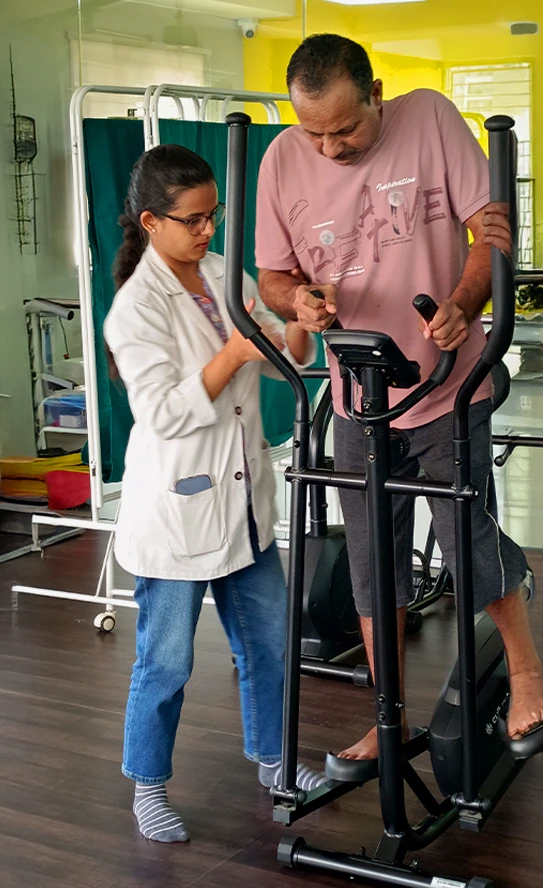
Personalised Knee Rehabilitation

Your treatment plan is connected to walking, stairs, strength, balance, sport and everyday recovery goals.

One-to-One Assessment

Clinical evaluation based on your symptoms, movement and function.

Strength and Mobility

Progressive exercise for the knee, hip and lower limb.

Clinic and Home Care

Kharadi clinic appointments and selected Pune home visits.

Who It Can Help

Knee Pain Physiotherapy in Pune: Who It Can Help

Consider an assessment if knee pain is limiting your walking distance, making stairs difficult, causing discomfort during squats or gym training, or returning whenever you increase activity. Physiotherapy may also help when the knee feels weak after rest, an injury or surgery, or when fear of movement is slowing recovery.

Common goals include walking with less discomfort, standing for longer, returning to running or sport, managing osteoarthritis, improving knee bend after surgery and rebuilding confidence after a ligament or meniscus injury. The same symptom can have different causes, so the programme should be based on your history and examination.

Clinical Assessment

Common Knee Problems We Assess

Knee Pain, Stiffness and Post-Surgery Recovery

Our physiotherapists assess movement-related knee pain, patellofemoral pain around the kneecap, osteoarthritis-related stiffness, tendon overload, muscle weakness, reduced balance and rehabilitation after an appropriate diagnosis. We also support staged recovery after ligament, meniscus, fracture or joint-replacement procedures when the surgeon's protocol and precautions are available.

Whole Lower-Limb Movement Assessment

A knee assessment should not stop at the painful joint. Hip strength, ankle movement, walking pattern, training load, footwear, work demands and recent changes in activity may all influence how the knee is loaded. The objective is to identify modifiable factors without claiming that one finding is the single root cause of every symptom.

When Knee Pain Needs Urgent Medical Review

Seek prompt medical care after major trauma, visible deformity, inability to bear weight, a knee that is locked and cannot straighten, rapidly increasing swelling, or a hot red joint with fever. Calf swelling, chest pain or breathlessness can signal a medical emergency and should not be treated as routine knee pain. New progressive weakness or numbness also needs timely assessment.

Your First Visit

What We Check During a Knee Physiotherapy Assessment

The first session covers how the problem started, swelling, clicking or locking, previous injuries, scans, medical conditions, medicines, work, exercise and your goals. The physiotherapist may assess walking, stair use, sit-to-stand, squat pattern, knee and hip movement, muscle strength, balance and swelling. Sport-specific tests are added only when safe and relevant.

After surgery, we review the procedure, date, wound status, surgeon's instructions and weight-bearing precautions. Progress measures may include knee bend and straightening, walking quality, functional strength and confidence with daily tasks. You should understand the working assessment, what physiotherapy can address and what signs would require referral.

01

Detailed History

Symptoms, swelling, clicking, locking, previous injuries, scans and your goals.

02

Functional Movement

Walking, stairs, sit-to-stand, squat pattern and activities important to you.

03

Strength and Swelling

Knee and hip movement, muscle strength, balance, swelling and movement control.

04

Clear Rehabilitation Plan

Working assessment, realistic goals, progress measures and referral guidance.

Visit Apricot Care

Visit Our Knee Pain Physiotherapy Clinic in Kharadi, Pune

Our physiotherapy clinic in Kharadi provides individual assessment and rehabilitation for knee pain, arthritis-related stiffness, ligament injuries, muscle weakness and post-operative recovery. Patients visit us from Kharadi and nearby Pune areas, including Viman Nagar, Wadgaon Sheri, Wagholi and Magarpatta.

Opening hours Monday to Sunday, 8:00 am to 8:00 pm
Personalised Rehabilitation

Your Personalised Knee Rehabilitation Plan

Knee rehabilitation is progressed according to symptoms, tissue healing, health conditions and the demands you need to meet. The plan may combine the following elements.

Strengthening for the Knee, Hip and Lower Limb

Therapeutic exercise is central to many knee programmes. Exercises may target the quadriceps, hamstrings, calf and hip muscles using body weight, resistance bands or gym-based loading. The dose is increased gradually, with attention to technique and next-day response rather than pain alone.

Mobility, Walking and Stair Training

Stiffness can make walking and stairs inefficient. Your programme may include knee and ankle mobility, gait practice, step work and functional tasks such as getting up from a chair. A walking aid may be recommended temporarily after injury or surgery when it improves safety and movement quality.

Balance and Proprioception

After an ankle, knee or ligament injury, the leg may feel unreliable even when pain is improving. Balance and movement-control exercises can help prepare you for uneven ground, direction changes and sport. Progressions should match your current capacity and risk.

Load Management and Return to Activity

Complete rest is not always the best long-term answer, but sudden increases in walking, running, sport or gym load can irritate the knee. We help you find a tolerable level, then build volume and intensity in stages. Return to running or sport should be based on function and confidence, not only a calendar date.

Hands-On Care and Symptom Management

Manual techniques, taping or selected physical modalities may be considered for short-term support when appropriate. They are not presented as substitutes for progressive exercise. For osteoarthritis, education and tailored therapeutic exercise remain important parts of conservative care.

Physiotherapy After Knee Surgery

Rehabilitation after ACL reconstruction, meniscus procedures, fracture fixation or total knee replacement follows procedure-specific precautions. Early priorities may include swelling control, knee straightening, safe walking and muscle activation. Later phases build strength, endurance, balance and task-specific ability.

Bring your discharge summary and protocol to the first appointment. The physiotherapist should communicate with the surgeon when progress, wound status, pain, swelling or other findings fall outside the expected course. Home physiotherapy can be useful during the early period when travel is difficult, followed by clinic-based rehabilitation as mobility improves.

Why Choose Apricot Care for Knee Physiotherapy in Pune

Apricot Care provides one-to-one physiotherapy assessment at its Kharadi centre. Care plans are built around specific functional goals such as walking to work, managing stairs at home, returning to badminton or recovering after surgery. Progress should be documented using relevant movement, strength and function measures.

Before treatment, ask about your physiotherapist's qualifications, registration, experience with your condition and the reason for each recommendation. We do not describe physiotherapy as a guaranteed cure, and we do not recommend a fixed number of sessions without first assessing the problem.

Kharadi and Nearby Pune Areas

Knee Physiotherapy Near Kharadi and Nearby Pune Areas

The clinic is located in Thite Nagar, Kharadi, with access from Chandan Nagar, Viman Nagar, Wadgaon Sheri, Wagholi, Kalyani Nagar, Magarpatta, Hadapsar and nearby East Pune areas. When comparing knee physiotherapy near me options, review the assessment process, clinician credentials, post-surgery coordination and whether the provider gives a clear home programme.

Get Directions
Book appointment
Your Road to Recovery

Book a Knee Assessment

In-Clinic Care in Kharadi

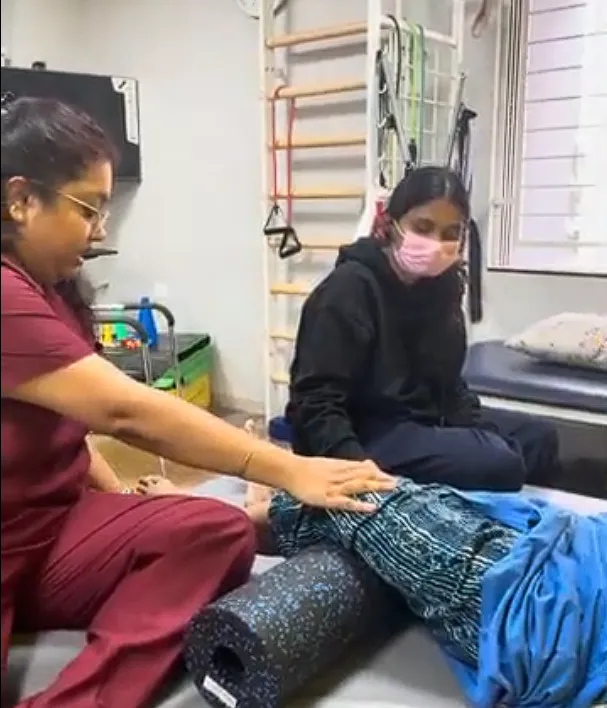
Visit Apricot Care for an individual knee assessment and personalised rehabilitation plan.

Selected Home-Care Options

Home physiotherapy may support selected patients during early recovery when clinic travel is difficult.

Knee pain physiotherapy appointment at Apricot Care
Common Questions

Frequently Asked Questions About Knee Pain Physiotherapy

Yes. Physiotherapy can help improve knee strength, movement and physical function. For knee osteoarthritis, tailored therapeutic exercise is a core treatment and may include local muscle strengthening, mobility exercises and general aerobic activity.

Knee physiotherapy may include quadriceps and hip strengthening, mobility work, balance training and gradual functional exercises such as walking, step-ups or controlled squats. The correct exercises depend on the diagnosis, pain level and individual physical capacity.

An Apricot Care physiotherapist may assess knee movement, muscle strength, swelling, balance, walking pattern and activities such as climbing stairs or standing from a chair. The findings are used to create an individual knee rehabilitation plan.

Not always. Many knee conditions can initially be assessed through symptoms, health history and a physical examination. Imaging may be recommended after significant trauma, severe swelling, deformity, locking, inability to bear weight or when the diagnosis remains unclear.

Seek urgent medical advice if the knee is severely painful, badly swollen, visibly deformed, hot and red, locked or unable to bear weight. Knee pain accompanied by fever or feeling unwell may indicate an infection and should be assessed promptly.

Apricot Care provides physiotherapy at its clinic in Kharadi, Pune. The clinic also serves patients travelling from Chandan Nagar, Viman Nagar, Wadgaon Sheri, Wagholi and nearby areas of East Pune.

WhatsApp Call