Cervical Collar Types: Uses, Fit and Safe Neck Support Guide


Dr. Amol Kathar
MPT (Neuro), 3.5+ years clinical
experience in neurological rehabilitation
A cervical supporter, cervical neck support, or neck pain collar can look like a simple answer to a painful or stiff neck. In reality, a cervical collar has a specific role. It may be used after certain injuries or procedures when a clinician recommends it, but it is not a routine solution for everyday neck pain. The right collar, fit, duration, and follow-up matter because unnecessary immobilisation can make the neck feel stiffer and weaker over time. This guide explains the types of cervical collar, when cervical support may be considered, how to use a prescribed collar safely, and when neck pain needs urgent medical attention. It is general education, not a substitute for an examination or an individual treatment plan.
What is a cervical collar
A cervical collar is a medical device that supports or restricts movement of the neck. It is also called a neck collar, cervical supporter, neck band for cervical pain, or cervical neck support. Some are soft and flexible; others are firm and structured. The amount of support varies widely between designs. The purpose is usually temporary protection or controlled movement while a clinician assesses or manages a specific condition. A collar does not diagnose the cause of neck pain, repair a problem by itself, or replace rehabilitation. For common neck stiffness without trauma, maintaining gentle movement is often preferred unless a doctor advises otherwise.
When might a cervical neck support be used
A clinician may recommend a cervical collar after a significant neck injury, certain operations, or when imaging and examination identify a condition that needs short-term protection. In emergency and trauma settings, a rigid collar may be used while the spine is being assessed. The choice is based on the mechanism of injury, symptoms, examination findings, and the clinician’s plan. A collar is not automatically appropriate for neck pain caused by desk work, sleeping in an awkward position, or muscle tension. Wearing one without assessment can conceal a worsening symptom, limit useful movement, and lead to dependence on the device. If you are considering a cervical supporter for a new pain episode, ask a qualified clinician whether it is appropriate for you.
Types of cervical collar
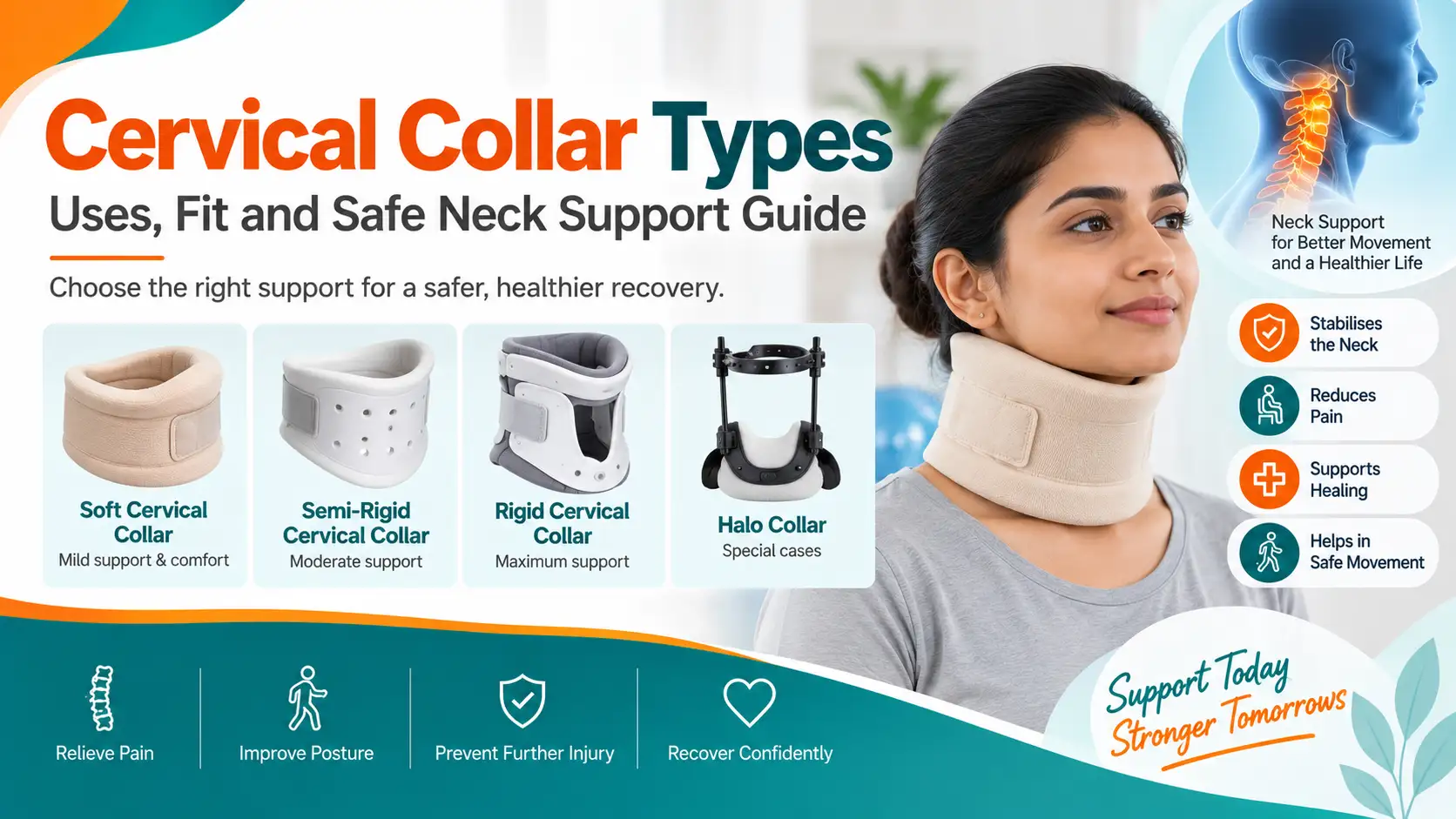
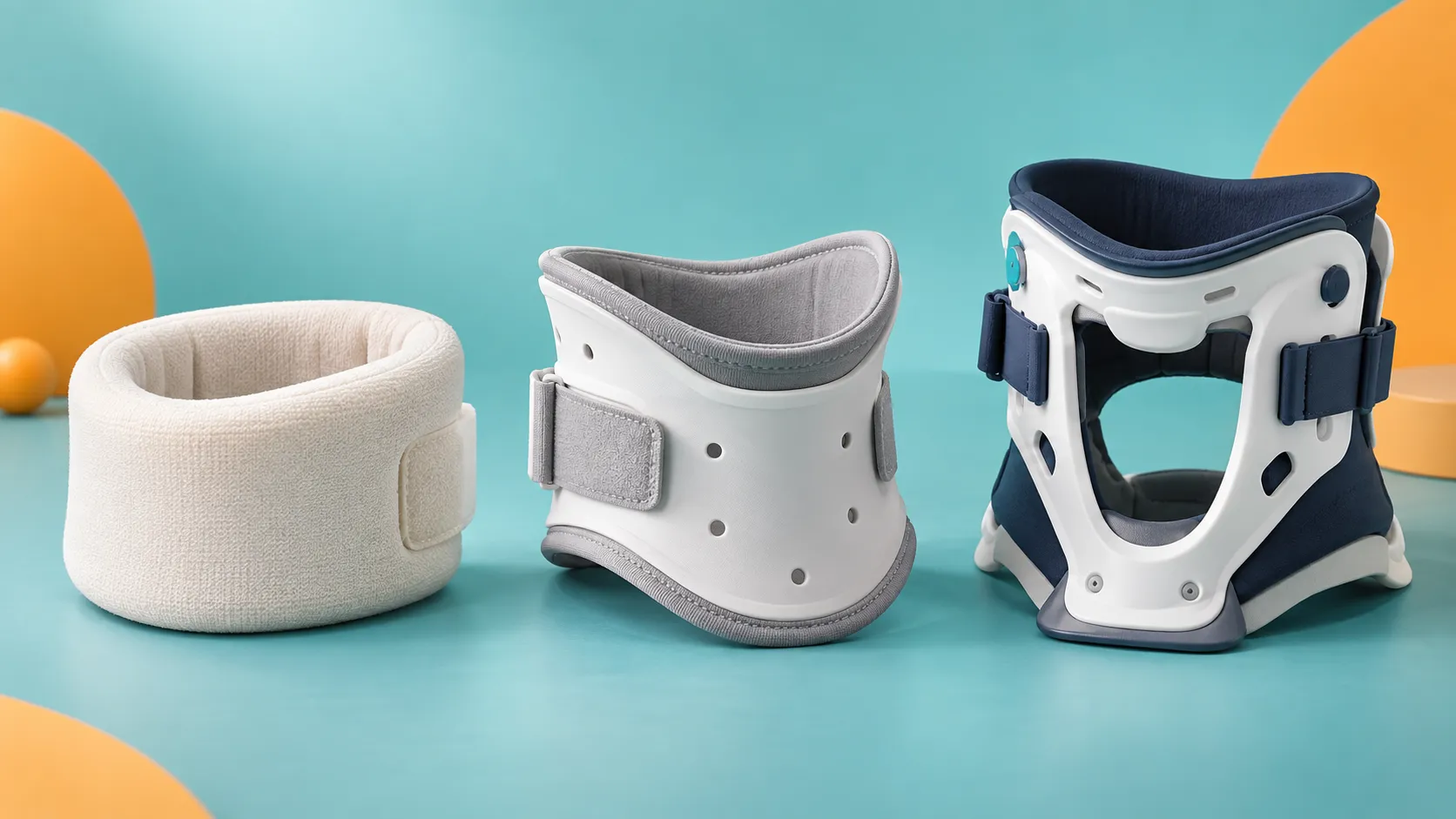
The types of neck collars differ in how much movement they restrict. Product names and exact designs vary, so the following categories are for understanding rather than self-prescribing.
- Soft cervical collar: Usually made of foam and covered with fabric. It provides light support and a reminder to avoid extreme movement. It should be used only for the time and purpose advised by a clinician.
- Semi rigid collar: Offers more structure than a soft collar and may be selected when more controlled neck movement is needed. Correct height and fit are important.
- Rigid cervical collar: Made from firmer materials and designed to limit motion more substantially. It is commonly used in trauma or after surgery under medical direction.
- Specialised immobilising devices: Some injuries need more restrictive equipment that supports the neck and upper body. These are fitted and monitored by an experienced clinical team.
The “best” collar is not the one that feels most restrictive. It is the device, fit, and duration selected for a clearly assessed clinical need. A device that is too tall can push the head into an uncomfortable position; one that is too short may not provide the intended support.

How to know whether a neck pain collar fits
A prescribed cervical collar should be fitted by a trained professional or according to the instructions given by the prescribing team. The chin should rest in its intended support without being forced upward. The collar should not press excessively on the throat, jaw, ears, or shoulders. It should be secure enough to serve its purpose, but not so tight that it affects breathing, swallowing, circulation, or skin comfort. Do not alter the collar, add padding, or switch to a different model without advice. If you notice pressure sores, numbness, increased pain, breathing or swallowing difficulty, new tingling, or a change in arm strength, remove or adjust the device only as your clinical team has instructed and seek prompt advice.
How long should a cervical collar be worn
There is no safe universal number of hours or days for a cervical supporter. Duration depends on why it was prescribed. Some people may need it only briefly; others may need it for a defined period after injury or surgery. Follow the plan from the treating doctor or physiotherapist, including instructions about sleeping, bathing, skin checks, driving, and when to begin reducing use. Do not keep using a collar simply because it feels reassuring. Long-term or unnecessary use can reduce normal neck movement and contribute to stiffness or muscle deconditioning. Equally, do not stop a prescribed rigid collar early without checking with the clinician responsible for your care.
Cervical support and physiotherapy
When a collar is part of a treatment plan, physiotherapy may help at the appropriate stage. The focus can include posture, comfortable movement, gradual strengthening, work setup, and a return to daily activities. The timing depends on the diagnosis and whether the neck needs protection first. Exercises should never be started or progressed against a surgeon’s or doctor’s restrictions. For a one-to-one assessment of neck pain, posture, or movement concerns, explore Apricot Care physiotherapy services in Pune. A clinician can decide whether rehabilitation, medical review, or a different next step is appropriate.

What to do for ordinary neck stiffness
For many people, neck pain is linked to an awkward sleeping position, prolonged desk work, a pinched nerve, or a minor injury. A low, firm pillow, changing position regularly, and gentle movement within comfort can be useful self-care measures. Heat or cold may feel helpful for some people. A pharmacist or doctor can advise on pain medicines that are suitable for your health history and other medicines. Avoid driving, cycling, or using equipment if you cannot turn your head safely. Do not use a neck collar as a way to continue activities that are unsafe because your movement is limited.
When neck pain needs urgent care
Get urgent medical help after a serious fall, road traffic collision, sports impact, or other injury that could affect the neck. Emergency assessment is also important if neck pain occurs with new arm or leg weakness, loss of balance, trouble walking, loss of bladder or bowel control, severe headache, fever with marked illness, or difficulty breathing or swallowing. Arrange prompt medical review if neck pain persists for several weeks, worsens, follows an injury, or comes with pins and needles, numbness, or a cold arm. These symptoms may need assessment beyond a collar or home care.
A practical checklist before buying a cervical supporter
- Know the reason for using it. A collar should have a clinical purpose, not simply be a default purchase for any neck pain.
- Ask which type is appropriate. Soft, semi-rigid, and rigid devices are not interchangeable.
- Confirm the fit and wear schedule with a clinician or the prescribing team.
- Ask whether you may sleep, drive, work, shower, or exercise while wearing it.
- Understand the review plan and the symptoms that require urgent contact.
If you need help deciding the next step for neck or spine symptoms, book a physiotherapy assessment with Apricot Care.
book a physiotherapy assessment
Conclusion
A cervical collar can be useful when it is chosen for a diagnosed need, fitted correctly, and used for the duration advised by a clinical team. It is not a general cure for neck pain. If your symptoms are new, persistent, worsening, or follow an injury, seek an assessment before relying on a cervical supporter.
For personalised guidance on neck pain and rehabilitation, contact Apricot Care or call +91 73876 41462.
Frequently asked questions
What is a cervical supporter used for?
A cervical supporter is a collar that supports or limits neck movement. It may be used for a specific injury, after some procedures, or during clinical assessment when a doctor or other qualified clinician recommends it.
What are the types of cervical collar?
Common types include soft, semi-rigid, and rigid cervical collars. They provide different levels of movement restriction, so the type should be selected for the person’s diagnosed need and fitted correctly.
Can I wear a neck pain collar for everyday neck stiffness?
Do not routinely wear a neck pain collar for everyday stiffness unless a clinician advises it. For many common neck pain problems, gentle movement and a gradual return to usual activity are preferred over prolonged collar use.
How tight should a cervical neck support be?
A cervical neck support should be fitted according to the instructions from the prescribing team. It should not cause breathing or swallowing difficulty, excessive pressure, numbness, or worsening pain. Seek advice if the fit feels wrong.
Can I drive while wearing a cervical collar?
Do not drive if the collar or your neck symptoms prevent you from turning your head and operating the vehicle safely. Ask your clinician when driving is appropriate for your condition and collar plan.
Does Apricot Care provide physiotherapy support for neck pain?
Yes. Apricot Care provides physiotherapy assessment and rehabilitation support for neck pain and movement concerns. The clinician will assess your symptoms and advise whether physiotherapy, medical review, or another care pathway is appropriate.
References
Official guidance on neck pain self care, neck collar use and when to seek medical advice
Medical note
Medical note: This article provides general education and does not replace a medical examination. Seek urgent medical care after significant trauma or if neck pain occurs with new weakness, numbness, walking difficulty, loss of bladder or bowel control, severe headache, fever with marked illness, breathing difficulty, or swallowing difficulty.
With 3.5 years of experience, he specializes in personalized rehabilitation for stroke, spinal cord injuries, and mobility training to help improve mobility and functional independence.
.webp)