How Physiotherapy Helps Elderly Patients Stay Independent


Dr. Amol Kathar
MPT (Neuro), 5+ years clinical experience in neurological rehabilitation
How Physiotherapy Helps Elderly Patients Stay Independent
For many families, the moment it becomes clear that a parent or grandparent needs extra support is not a single dramatic event, it is a string of small ones. A missed step on the stairs. Needing both hands on the armrest to stand up. Skipping the evening walk because the legs "just don't feel steady anymore."Geriatric physiotherapy exists precisely for this stage: to catch and reverse this decline before it costs someone their independence.
Why Ageing Affects Balance, Strength and Mobility
Ageing brings a natural, gradual decline in muscle mass (sarcopenia), joint flexibility, and the sensory systems that support balance, including vision, inner-ear function, and proprioception (the body's sense of its own position). None of this happens overnight, but left unaddressed, it compounds: weaker legs make standing up harder, which leads to less daily movement, which leads to further weakness. Physiotherapy for elderly patients is built to interrupt exactly this cycle.
Falls: The Risk Geriatric Physiotherapy Is Built Around
Falls are one of the leading causes of injury and loss of independence in older adults worldwide, and a large proportion of adults aged 65 and over experience at least one fall each year. The good news, backed by a substantial body of research, is that falls are largely preventable rather than an inevitable part of ageing.
Global falls prevention guidelines highlight structured, multicomponent exercise combining strength, balance, and gait training as one of the most effective single interventions available. Programmes built on this model, such as the widely studied Otago Exercise Programme, have been shown in clinical trials to meaningfully reduce fall rates in community-dwelling older adults. Reviews of physiotherapy-led fall prevention consistently report reductions in fall incidents through combined strength and balance training, alongside home safety modifications and patient education.
How Geriatric Rehabilitation Actually Helps Elderly Patients Stay Independent
Rebuilding Strength Where It Matters Most
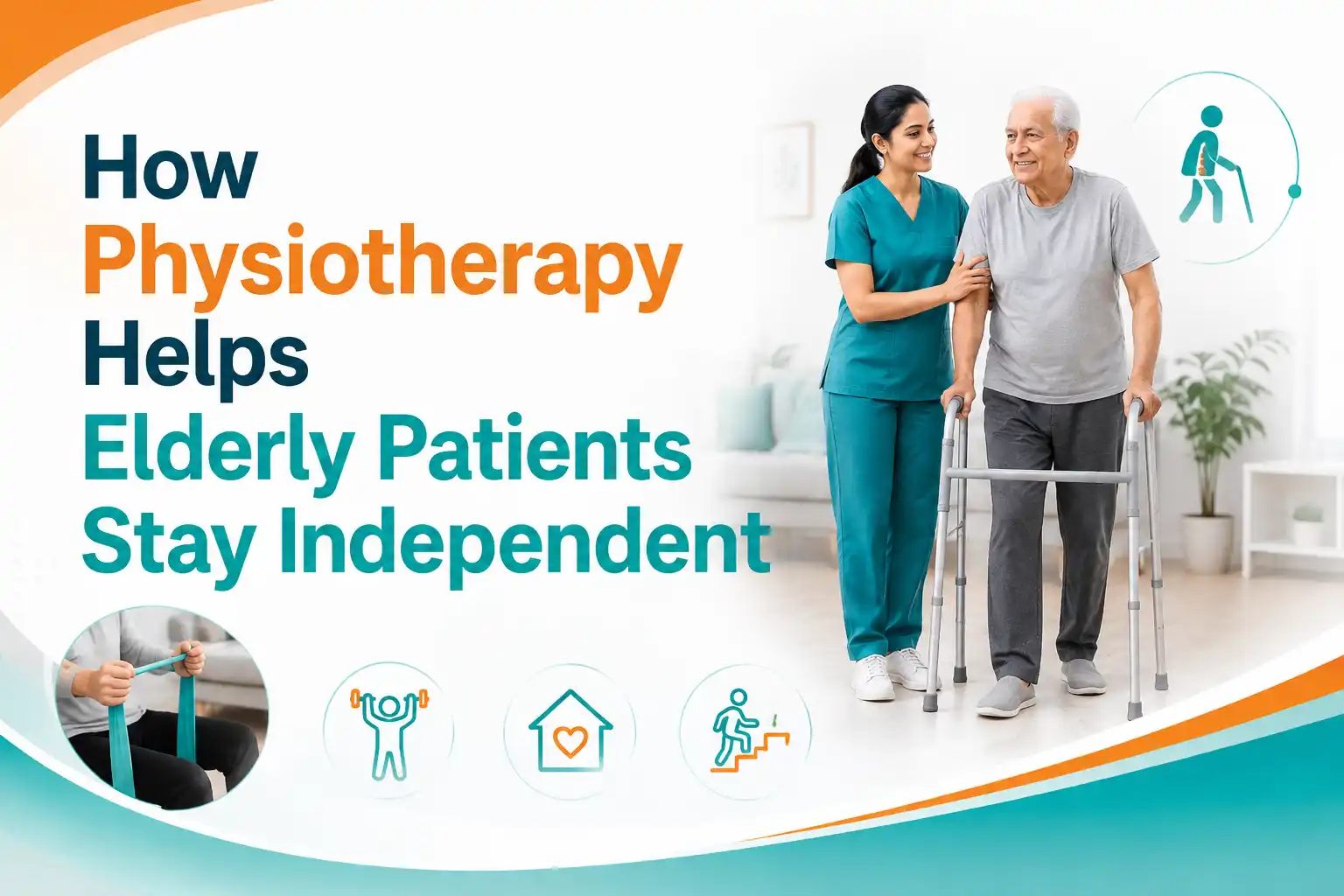
Leg and core strength directly determine how easily someone can stand from a chair, climb stairs, or catch themselves if they stumble. Geriatric physiotherapy typically includes resistance exercises, often using light weights, resistance bands, or simple body-weight movements like sit-to-stands, progressively increased as strength improves.
Retraining Balance and Reaction Time
Balance-specific exercises, ranging from static standing practice to more dynamic reaching and stepping tasks, retrain the body's ability to correct itself before a stumble becomes a fall. This is distinct from general strength work and is specifically why balance training is included as its own component of a well-designed programme.
Improving Gait and Confidence in Walking
Many older adults develop a shortened, shuffling, or overly cautious gait as an unconscious response to feeling unsteady, which itself increases fall risk. Structured gait training helps restore a more natural, efficient walking pattern.
Addressing the Fear of Falling
Fear of falling is common after even a single fall or near-fall, and it often leads people to restrict their own activity, which accelerates the very decline they are trying to avoid. A good geriatric physiotherapy programme addresses this directly, rebuilding confidence through graded, supervised practice rather than leaving the person to avoid movement altogether.
Home Safety and Assistive Devices
Physiotherapists commonly assess the home environment and recommend practical changes like grab bars, better lighting, clearing walking paths, and appropriate use of canes or walkers, as well as training in how to use any assistive device safely and effectively.
Common Conditions Addressed Through Geriatric Physiotherapy
- Age-related muscle weakness and general deconditioning
- Osteoarthritis and joint stiffness affecting mobility
- Balance disorders and history of falls or near-falls
- Recovery after hospitalisation, illness, or surgery, including joint replacement
- Osteoporosis-related precautions and safe movement training
- Age-related neurological conditions affecting movement and coordination
What a Geriatric Physiotherapy Programme Typically Involves
A comprehensive programme generally starts with an assessment of current strength, balance, gait, and specific daily-activity limitations, often as part of what is known as a comprehensive geriatric assessment. From there, a personalised plan combining strength training, balance retraining, gait work, and, where relevant, a home safety review is built and adjusted as the person progresses. Two to three sessions per week is a commonly recommended frequency for meaningful improvement, though this is tailored to each person's condition and goals.
Stay Independent for Longer with Geriatric Physiotherapy
Independence in later life is not something that simply has to fade, it is something that can be actively protected. Geriatric physiotherapy, grounded in strength training, balance retraining, and fall-risk reduction, gives older adults a genuine, evidence-based path to staying steady, confident, and in control of their own daily lives for longer.
Book a Geriatric Physiotherapy Assessment in Pune
If a parent or loved one is showing early signs of reduced strength or unsteadiness, don't wait for a fall to act. Book a geriatric physiotherapy assessment with Apricot Care, Kharadi, Pune and give them a personalised plan to stay independent.
Frequently Asked Questions
Q1. At what age should someone consider geriatric
physiotherapy?
There is no fixed age; it is more about function than a number. If an older
adult is experiencing reduced strength, unsteadiness, a recent fall, or
growing hesitancy with everyday movement, that is the right time for an
assessment, regardless of exact age.
Q2. Can geriatric physiotherapy really prevent falls, or does it
just help after one happens?
Both. It is one of the most evidence-supported ways to reduce fall risk
before a fall occurs, and it is equally important for rebuilding confidence
and function after a fall has already happened.
Q3. Is physiotherapy safe for elderly patients with osteoporosis or
fragile joints?
Yes, when the programme is designed specifically around those precautions. A
physiotherapist adjusts exercise type, intensity, and progression to protect
fragile bones and joints while still building meaningful strength and
balance.
Q4. How is geriatric physiotherapy different from general
physiotherapy?
Geriatric physiotherapy accounts specifically for age-related changes in
bone density, joint health, and sensory systems, and typically integrates
fall-risk assessment and home safety considerations alongside the exercise
programme itself, areas that are not always part of a general physiotherapy
plan.
This article is for general educational purposes and does not replace an individual clinical assessment. Please consult a qualified physiotherapist or physician, especially if there is a recent fall, fracture, or underlying bone or joint condition.
Reference Links Used
https://www.physio-pedia.com/Physiotherapy_and_Older_People
https://activephysiobrampton.com/blog/can-physiotherapy-reduce-fall-risk-in-seniors/
With 5+ years of experience, he specializes in personalized rehabilitation for stroke, spinal cord injuries, and mobility training to help patients regain independence.
.webp)