Home Physiotherapy in Pune: Is It Right for Your Loved One?


Dr. Arpita Ganguly
BPT, MPT (Neuro), 7+ years clinical
experience in neuro rehabilitation & functional recovery
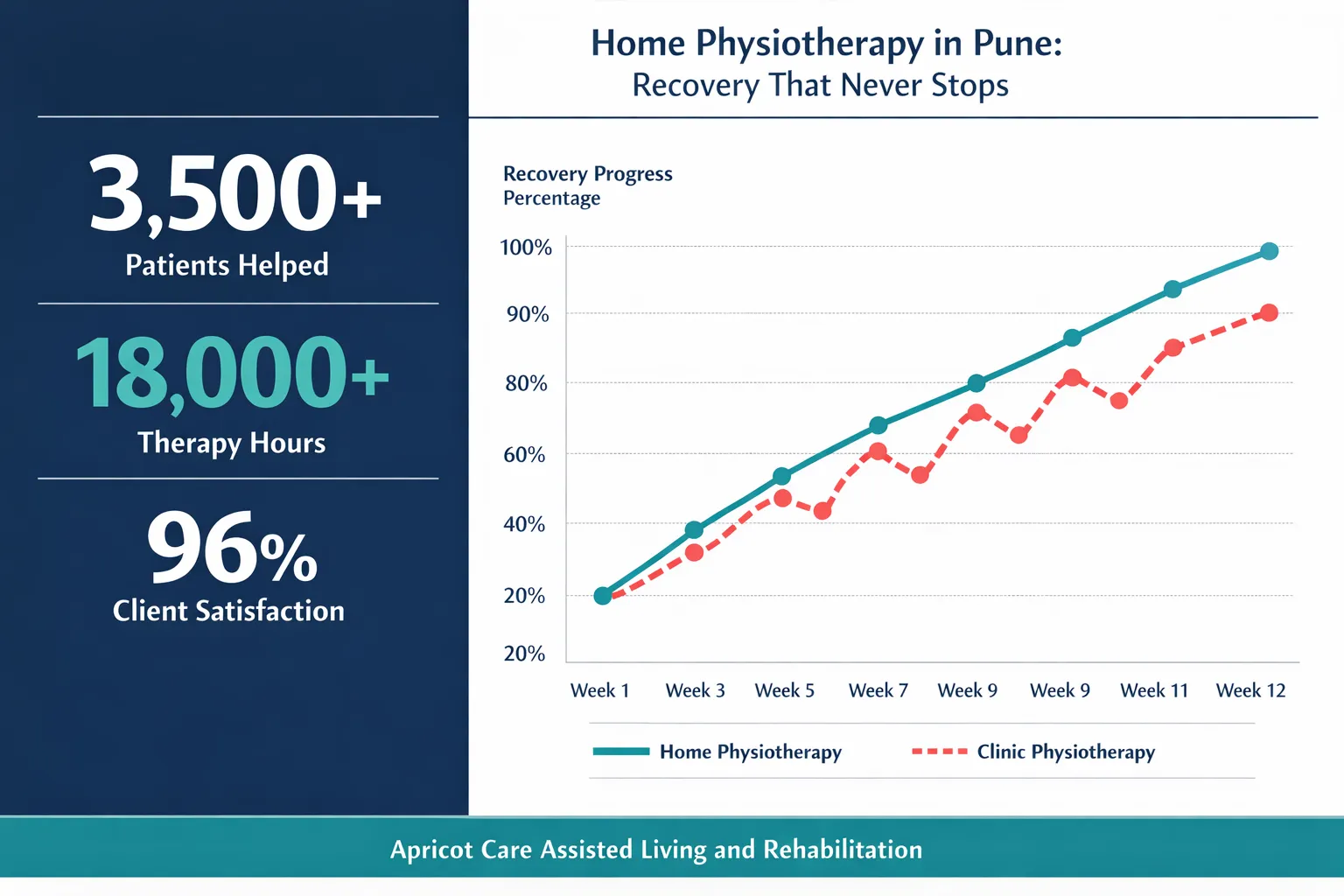
It was a Tuesday morning in Kharadi. Meena had just helped her 67-year-old father, Ramesh, get dressed. Three weeks had passed since his stroke. The discharge papers from the hospital listed one clear instruction: start physiotherapy immediately. The clinic was 9 kilometers away. The auto-rickshaw ride alone left Ramesh so exhausted that he slept for three hours after arriving home, missing the exercises the therapist had just shown him. By week five, the family was skipping sessions. By week eight, his therapist noted a visible plateau in recovery.
This is not an unusual story in Pune. It is, in fact, the most common reason neurological recovery quietly stalls. Not a lack of love, not a lack of money, but the simple grinding reality of getting a compromised person to a clinic and back, five days a week, in a city that never stops moving.
Home physiotherapy is the delivery of professional physiotherapy treatment at the patient's residence by a qualified therapist who brings the tools, the knowledge, and the care directly to the door.
In 2025, it is no longer a luxury option or a last resort. It is rapidly becoming the smarter, evidence-supported first choice for families managing post-stroke, orthopedic, and neurological recovery, especially in a fast-growing city like Pune.
But is it right for your loved one? Let's walk through everything you need to know, including what most websites don't tell you.
The Numbers Tell a Clear Story
.webp)
Before we talk about what works, let's talk about why this matters right now.
India's home healthcare market was valued at USD 13.70 billion in 2024 and is projected to reach USD 42.47 billion by 2035, driven by an aging population, rising chronic disease burden, and a growing preference for care at home. That is not a trend. It is a structural shift.
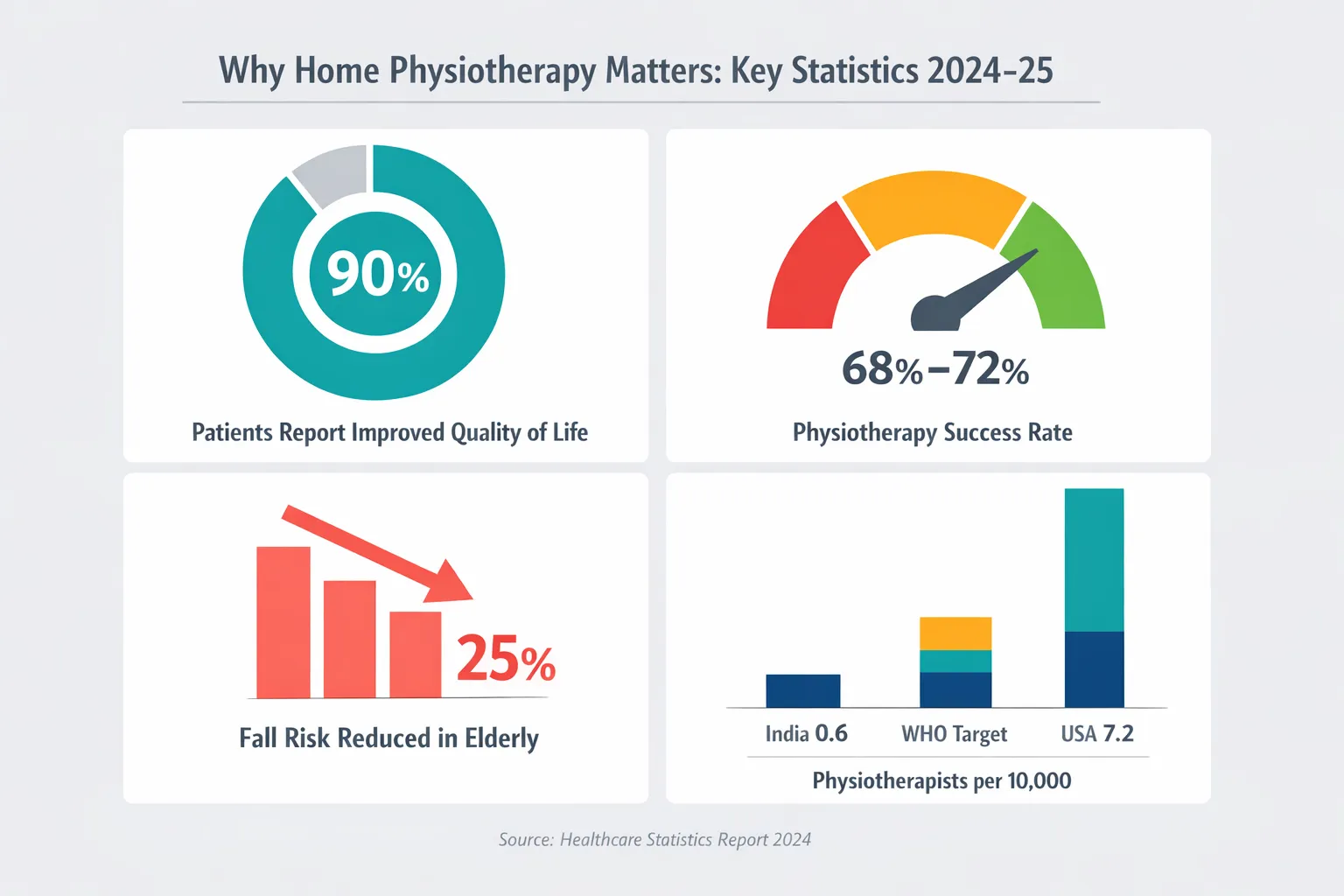
India's physiotherapy market itself is projected to grow from USD 1 billion to USD 1.9 billion by 2030. And yet, India has only 0.6 qualified physiotherapists per 10,000 people, well below the WHO's recommended minimum of 1.0, and far behind the United States at 7.2 per 10,000.
What that means for families in Pune is simple: access to a trained neuro physiotherapist coming directly to your home is not a downgrade from clinic care. It is genuinely rare and valuable.
By 2025, an estimated 140 million people in India will be aged 60 and above. The need for structured, accessible rehabilitation at home has never been more urgent.
What Most centers Don't Tell You About Home Physiotherapy
Every physiotherapy center in Pune will tell you the same three things: it's convenient, it's personalized, and it saves travel time. That's true. But it scratches only the surface of why home physiotherapy works, particularly for neurological patients.
The "Familiar Environment" Advantage Is Clinically Real
For patients recovering from a stroke, Parkinson's disease, or a spinal cord injury, the home environment is not just comfortable. It is therapeutically superior for relearning daily tasks.
Think about what functional recovery actually means. It is not just about walking on a therapy-room floor. It is about climbing the three steps to your bathroom. It is about reaching the kitchen shelf where the glasses are kept. It is about navigating around the coffee table in the dark.
A therapist working in your actual living space can train you in your real environment. That is a clinical advantage no gym-grade clinic floor can replicate.
The Hidden Cost of Travel for Neurological Patients
Here is something almost no Pune-based physiotherapy blog discusses: for a patient recovering from a stroke or living with Parkinson's, a 20-minute auto-rickshaw ride is not just inconvenient. It is neurologically taxing.
The sensory input of traffic, including noise, vibration, and unpredictable motion, places significant cognitive and physical demand on a recovering nervous system. Many patients arrive at clinics already fatigued, which reduces the quality and output of the session that follows. Then they make the same journey home.
A randomized trial published by the American Heart Association found that many post-stroke patients receive suboptimal rehabilitation doses primarily because of transportation difficulty and limited access to regional rehabilitation care. At home, that energy stays available for healing.
The Therapy Window Argument: Every Session Matters
Research confirms that for stroke survivors, the first three to six months represent the peak neuroplasticity window, a period during which the brain is most receptive to rewiring and relearning. Missing sessions during this window has a real, lasting cost.
A session skipped because of traffic, a family conflict, bad weather, or patient fatigue is not just a missed appointment. It is a missed opportunity the brain may not get back at the same intensity.
Home physiotherapy protects that window by removing every barrier between the patient and consistent care.
Family Members Learn, and That Multiplies Recovery
Here is the quiet advantage that almost no competitor in Pune talks about: when therapy happens at home, the family watches. They ask questions. A good therapist teaches them three exercises they can do with their loved one after dinner, on weekends, and between sessions.
That family involvement compounds recovery at zero additional cost. And research backs it. A 2010 synthesis of 11 trials covering 1,711 stroke patients found that home rehabilitation showed greater benefit than clinic care specifically in terms of cost, patient satisfaction, and caregiver strain. The caregiver, who shows up every day, becomes a quiet second therapist.
Who Benefits Most from Home Physiotherapy in Pune?
Not every patient is the same. Here is a condition-by-condition guide to help your family decide.
For neurological physiotherapy in Pune, in particular, the home setting is not just practical. It is often the setting where the most meaningful functional progress happens.
What Does the Research Actually Say?
Let's be direct about the evidence because families deserve clarity, not marketing language.
A study published in PubMed comparing physiotherapy at a primary health care centre versus at patients' homes found that both settings produced similarly improved clinical outcomes in stroke survivors across motor function, balance, and walking speed over a 10-week period. Home did not underperform. It matched the clinic.
A randomized clinical trial across 11 US sites found that home-based rehabilitation for stroke patients produced comparable efficacy to dose-matched, intensity-matched in-clinic therapy. Same results. At home.
Physical therapy overall carries a success rate of 68 to 72 percent, with 90 percent of patients reporting improved quality of life after treatment and the risk of falls reduced by 25 percent in older adults. Home delivery does not dilute these outcomes. It often improves adherence, which is the biggest predictor of success.
Here's the Surprising Truth: Home Physiotherapy Is Not Right for Everyone
Here is something most physiotherapy providers will never say to you directly: home-based care is the wrong choice in certain situations. Knowing when to escalate is just as important as knowing when to choose home care.
Home physiotherapy may not be appropriate when:
- The patient is in the acute hospital phase and requires continuous medical monitoring
- The condition requires robotic-assisted therapy such as exoskeletons, robotic gait trainers, and VR-based neuro stimulation, which cannot be transported to a home setting
- The patient is highly motivated by the social energy of a clinical environment and performs measurably better there
- Complex multidisciplinary cases require a neurologist, respiratory therapist, and physiotherapist in the same room at the same time
- There has been a sudden change in condition that requires immediate investigation
In these cases, the right answer is a facility equipped to deliver the full spectrum of care, with in-clinic therapy combined with the option to transition home when the time is right.
How to Evaluate a Home Physiotherapy Provider in Pune: The Questions Nobody Tells You to Ask
Families often choose based on Google reviews and price alone. Here is a more useful checklist:
- Is the therapist a BPT or MPT graduate with a neurological or orthopedic specialization? General physios may not have the training to handle post-stroke or spinal cord injury cases safely.
- Does the therapist bring clinical equipment? TENS, portable ultrasound, and muscle stimulators. Home care does not have to mean hands-only care.
- Is there a senior therapist reviewing your treatment plan? Supervision structures matter in complex cases.
- Will you always get the same therapist? Continuity of care is a major driver of outcomes. Frequent therapist changes fragment recovery.
- Does the therapist involve family members in the session? If the answer is no, you are missing one of the biggest advantages of home-based care.
- Is there an escalation path? What happens if your loved one's condition changes? Is there a linked facility or clinic they can transition to?
What Apricot Care Brings to Your Doorstep
At Apricot Care Assisted Living and Rehabilitation, a trusted neuro rehabilitation centre in Pune with over 25 years of experience, home physiotherapy is not a standalone offering. It is one part of a fully coordinated care system.
Our team of nine specialist physiotherapists brings structured, condition-specific therapy directly to patients recovering from stroke, Parkinson's disease, spinal cord injury, cerebral palsy, and post-surgical conditions. For patients who begin in our inpatient facility and transition home, or for those who need to step up from home care to clinic-based robotic therapy, the path is seamless.
We serve patients across Kharadi, Magarpatta, Viman Nagar, Wadgaon Sheri, and Wagholi, with online therapy options for families beyond these areas.
The Honest Summary: Is Home Physiotherapy Right for Your Loved One?
.webp)
Here is a quick framework:
Choose home physiotherapy if:
- Your loved one has a neurological condition such as stroke, Parkinson's, or SCI
- They are post-surgical and mobility is limited
- Travel causes fatigue, anxiety, or skipped sessions
- You want to be actively involved in the recovery process
- Consistent, frequent therapy is a priority
Reconsider or combine with clinic care if:
- Robotic or VR therapy is part of the treatment plan
- The acute phase has not yet passed
- Complex multidisciplinary monitoring is needed
The best home physiotherapy is not clinic care that has been downgraded to your living room. It is purposeful, functional, environment-specific therapy that trains the patient for the life they actually live, not the life they live in a therapy gym.
Closing Thought
Remember Ramesh from the beginning of this article? In a different version of that story, his daughter finds a qualified neuro physiotherapist from a trusted provider in Pune. The therapist comes to the house every morning. By week three, she has taught the family five assisted exercises. By week eight, Ramesh is walking to the kitchen on his own.
The clinic is still 9 kilometers away. He has visited three times, for robotic therapy sessions that needed the equipment only a facility can provide. Everything else happened at home, in the chair he has sat in for thirty years, in the life he is learning to live again.
Thinking about home physiotherapy for a family member recovering from a neurological condition or surgery? What is the one question you still have about whether it is the right choice?
Book a free consultation with the Apricot Care team to discuss the right care pathway for your loved one.
Sources:
Market
Research Future — India Home Healthcare Market
Chiratae
Ventures — India Physiotherapy Market
American
Heart Association — Stroke Rehabilitation at
Home
PMC —
Home-Based Telerehabilitation vs In-Clinic
Therapy
PubMed — Home vs
Clinic Physiotherapy for Stroke Survivors
Physical
Therapy Statistics
With 7+ years of experience, she specializes in neuro-rehabilitation, geriatric care, and balance training to help patients improve mobility and functional independence.
.webp)