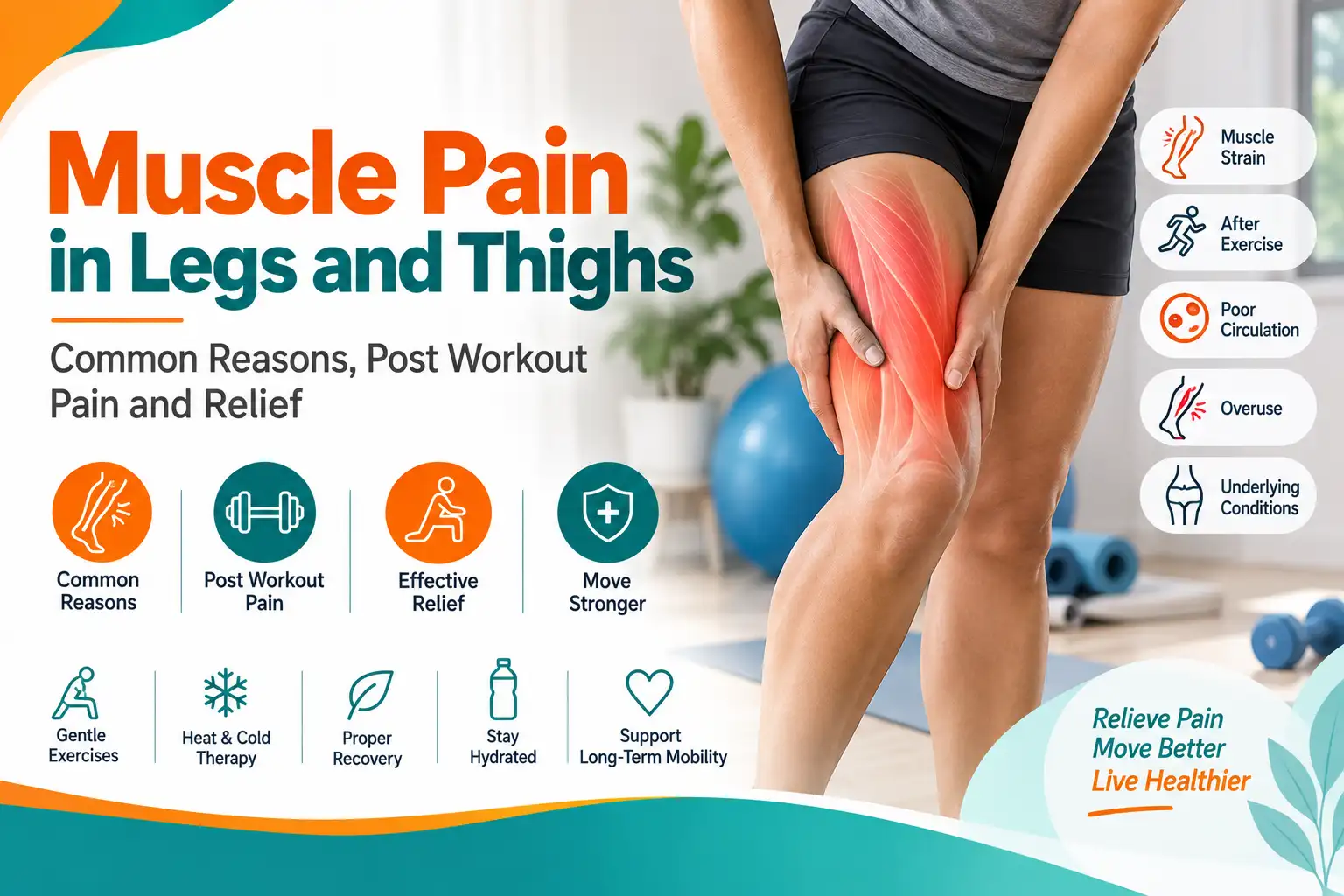
Muscle Pain in Legs and Thighs: Common Reasons, Post Workout Pain and Relief


Dr. Amol Kathar
MPT (Neuro), 3.5+ years clinical experience in neurological rehabilitation
Muscle pain in the leg can range from a mild ache after a long walk to pain that makes stairs, running, or sleep difficult. Muscle pain in the thighs is often related to overuse, a strain, a new exercise routine, or a sudden increase in training. It can also come from joints, nerves, blood vessels, medicines, infection, or another medical condition. This guide explains common muscle pain reasons, how to think about post-workout soreness, and when an assessment is important.
The location of pain alone cannot confirm its cause. New severe pain, a visible deformity, major swelling, weakness, trouble bearing weight, or breathing symptoms should be assessed promptly. If you are unsure how much activity is safe, a physiotherapy assessment can help you make a measured return to movement.
Common Muscle Pain Reasons
Muscles can become painful when the load placed on them exceeds what they are currently prepared to tolerate. That can happen after lifting, climbing stairs, running, cycling, a new gym programme, repetitive work, or returning to activity after a long break. A muscle strain can occur when fibres are overloaded, especially during a sudden acceleration, stretch, or change of direction.
Not all leg or thigh pain starts in the muscle. Pain can be referred from the lower back or hip, linked to a tendon or joint, or accompanied by nerve irritation. More widespread muscle aches can occur with viral illness, medicine effects, sleep problems, inflammatory conditions, or other medical causes. Persistent or unexplained symptoms deserve a clinical review rather than self-diagnosis.
- Overuse or a sudden change in training volume, speed, weight, terrain, or frequency.
- A strain or direct impact during sport, a fall, or heavy physical work.
- Postural or movement demands, including long periods of sitting, standing, squatting, or climbing.
- Muscle cramps, which are sudden involuntary contractions and may occur after exertion or at night.
- Pain referred from the hip, knee, lower back, or nerves, which may feel like muscle pain but need a different plan.
Muscle Pain in the Thigh
The thigh contains large muscles that work during walking, stairs, squatting, running, and getting up from a chair. Front-thigh discomfort can occur after activities that repeatedly load the quadriceps. Back-thigh discomfort is commonly reported after sprinting, fast walking, or movements that place a long stretch on the hamstrings. Inner-thigh pain may follow a change of direction or an activity that challenges the adductor muscles.
Where pain is felt can guide an assessment, but it does not identify the exact tissue or diagnosis. A clinician will also ask about the movement that triggered symptoms, swelling or bruising, walking ability, previous injury, low-back symptoms, and changes over time.
Muscle Pain After a Workout
Muscle pain post workout is often delayed onset muscle soreness, sometimes called DOMS. It may begin hours after unfamiliar or harder-than-usual activity and can make the muscle feel tender, stiff, or achy for a short period. This is different from sudden sharp pain during activity, a popping sensation, rapidly increasing swelling, or loss of function, which may indicate an injury and should not be ignored.
A gradual training plan gives the body time to adapt. Increase one part of your routine at a time, such as distance, weight, speed, or frequency. A realistic recovery plan also includes sleep, adequate food and fluids, and rest days that match the intensity of training. If pain repeatedly returns at the same distance, lift, or exercise, an assessment can identify modifiable movement and load factors.
Safe Muscle Pain Relief at Home
For a mild, recent ache where there are no warning signs, it may help to reduce the activity that clearly aggravates it for a short time while keeping gentle, comfortable movement in the day. Complete inactivity for long periods can lead to stiffness and loss of confidence. The right balance between protection and activity is individual.
- Use a comfortable level of movement, such as easy walking or gentle range-of-motion activity, if it does not worsen symptoms.
- For a new minor injury, cold or heat may feel soothing when used safely with a protective layer on the skin. Choose the option that is comfortable and stop if it causes discomfort or skin irritation.
- Avoid forcing a stretch into sharp pain or repeatedly testing a painful movement to see if it has improved.
- Do not use medicine, supplements, or massage devices as a substitute for assessment when pain is severe, unexplained, or accompanied by other symptoms. Ask a clinician or pharmacist about medicines that are appropriate for you.
- Return to sport or gym training in stages. A short reduction in load is often more useful than pushing through sharp or worsening pain.
Need help returning to gym, running, work, or sport after leg pain?
Book a Muscle and Sports Injury Assessment
How Physiotherapy Can Help
Physiotherapy begins with an assessment of the painful area and the tasks that bring on symptoms. Depending on the presentation, the therapist may review walking, balance, joint movement, strength, flexibility, training history, footwear, work demands, and previous injuries. This helps distinguish a straightforward overload problem from a situation that needs medical review or a different treatment pathway.
A rehabilitation plan may include symptom-guided movement, progressive strength work, balance or control exercises, and a staged return to the activity you value. For sport and gym-related symptoms, it can also involve training-load changes and sport-specific progressions. Learn about sports injury physiotherapy at Apricot Care and orthopedic physiotherapy for muscle and joint rehabilitation.
When Leg Muscle Pain Needs Urgent Assessment
Do not assume every sore calf, thigh, or leg is a routine muscle problem. Seek urgent medical care if you have any of the following.
- One-sided leg swelling, warmth, redness, tenderness, or pain that is unexplained, especially with chest pain, shortness of breath, coughing blood, dizziness, or collapse.
- Inability to bear weight after significant injury, a visible deformity, an open wound, or rapidly increasing swelling or bruising.
- New weakness, loss of sensation, a cold or pale limb, or severe pain that is out of proportion to the injury.
- Fever, feeling very unwell, a spreading red area, or pain with signs of infection.
- Severe unexplained muscle pain, dark urine, markedly reduced urine, or symptoms after a new medicine or dose change.
These signs need a medical assessment and may require urgent treatment. They are not suitable for home exercise, massage, or a delayed physiotherapy appointment.
A Sensible Next Step
Muscle pain often settles with sensible load management and gradual return to activity. When symptoms keep returning, affect work or sport, or do not fit the pattern of simple post-workout soreness, an assessment can provide clarity and a more individual plan. The goal is not to promise pain-free activity by a set date. It is to identify a safe starting point and build capacity progressively.
For individual guidance, contact Apricot Care.
Frequently Asked Questions
What are common reasons for muscle pain in the legs?
Common reasons include overuse, a sudden increase in activity, a muscle strain, cramps, direct injury, or movement demands at work or in sport. Leg pain can also come from joints, nerves, blood vessels, medicines, or medical conditions, so persistent or unexplained pain should be assessed.
Is muscle soreness after a workout normal?
Mild muscle soreness after unfamiliar or harder-than-usual exercise can occur and is often delayed onset muscle soreness. Sudden sharp pain, a popping sensation, major swelling, bruising, or loss of function is not typical post-workout soreness and should be assessed.
What can I do for mild muscle pain relief?
For mild symptoms without warning signs, reduce the aggravating activity briefly and continue gentle comfortable movement. Heat or cold may feel soothing when used safely. Stop an activity that causes sharp or worsening pain and seek advice if symptoms persist or concern you.
Can physiotherapy help with thigh muscle pain?
Yes. Physiotherapy can assess how thigh pain affects movement and function, screen for problems needing medical review, and create a progressive plan for strength, mobility, activity, and return to sport or work when appropriate.
When is leg muscle pain an emergency?
Seek urgent medical care for one-sided swelling, redness, warmth, unexplained severe pain, chest pain, shortness of breath, inability to bear weight after major injury, new weakness or numbness, a cold or pale limb, fever, or rapidly worsening symptoms.
Does Apricot Care provide physiotherapy for muscle pain in the legs and thighs?
Yes. Apricot Care provides physiotherapy for muscle pain in the legs and thighs based on an individual assessment, functional goals, training or work demands, and clinical needs.
References
- Muscle pain causes and warning signs: general guidance on muscle aches
- Muscle cramp symptoms and when to seek help: information about muscle cramps
Medical note: This article is for general education and does not replace medical diagnosis or individual treatment advice. Seek urgent care for one-sided leg swelling with chest symptoms, severe injury, loss of sensation or strength, fever, or rapidly worsening pain.
With 3.5 years of experience, he specializes in personalized rehabilitation for stroke, spinal cord injuries, and mobility training to help patients regain independence.
.webp)