


The first steps out of bed can be the worst part of heel pain. You may walk more comfortably after a few minutes, only for the ache to return after a long day on your feet. If this sounds familiar, plantar fasciitis stretches and exercises may help, but the right amount matters. Gentle movement can ease stiffness; progressive strengthening can help the foot handle walking and standing again. This guide explains how to start, how to judge your response, and when heel pain needs a professional assessment.
What Plantar Fasciitis Heel Pain Usually Feels Like
The plantar fascia is a strong band of tissue along the sole of the foot. Plantar fasciitis, also called plantar heel pain, commonly causes discomfort under the heel or into the arch. A typical clue is pain with the first steps after sleeping or sitting, followed by partial easing as you move. The pain can return after prolonged standing, a long walk or a run. Some people notice calf tightness or reduced ankle movement too.
That pattern is helpful, but it is not a diagnosis by itself. Pain at the back of the heel may involve the Achilles tendon. Burning, tingling or numbness may suggest a nerve problem. Sudden severe pain after a jump or fall raises different concerns. Before following an exercise plan, consider where the pain is, what started it and whether you can bear weight normally.
Why Stretches and Strengthening Are Both Useful
Stretching aims to make the plantar fascia and calf more comfortable through movement. Strengthening builds the capacity of the calf and foot to manage load. The two approaches serve different purposes, so doing a few stretches is not always enough if standing or walking demands remain high. The plan also needs to address how much activity you do and what happens to your symptoms afterward.
There is no need to push a tender heel through intense pain to get a benefit. Start at a level that feels manageable, then review your first-step pain the following morning. If that is clearly worse or your walking becomes more limited, reduce the dose or seek individual guidance. The aim is steady progress over time, not a perfect exercise session on day one.
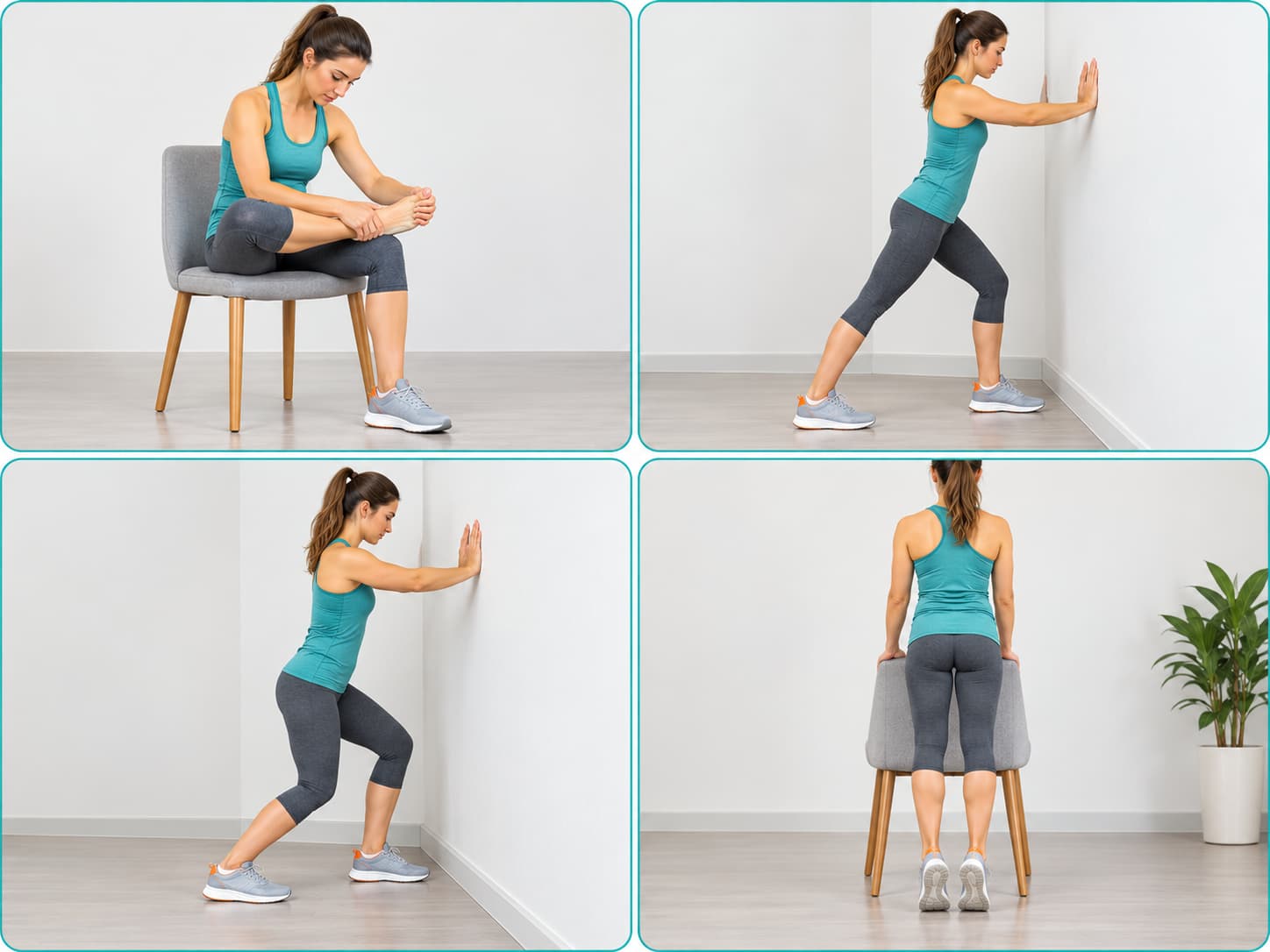
Plantar Fasciitis Stretches and Exercises to Try
These are general examples for adults with a typical plantar heel-pain pattern and no warning signs. A physiotherapist may change the starting position, hold time or resistance based on your symptoms, balance and other health conditions. Use a supportive surface for standing exercises, and stop if pain is sharp or symptoms clearly worsen.
Seated Plantar Fascia Stretch
Sit comfortably and cross the painful foot over the opposite knee. Hold the base of the toes and gently draw them toward the shin until you feel a mild stretch along the arch. Keep the ankle relaxed and avoid pulling hard on the toes. Hold for about 20 to 30 seconds, then release; repeat two or three times if comfortable. Some people find this particularly useful before their first steps in the morning or after sitting for a while.
Straight Knee Calf Stretch
Stand facing a wall with the painful leg behind you. Keep that heel on the floor and the back knee straight while bending the front knee. Lean forward only until you feel a gentle calf stretch. Hold about 20 to 30 seconds, then relax. Repeat two or three times. Keep the back foot pointing forward rather than letting it turn out; that helps you control the movement.
Bent Knee Calf Stretch
Use the same wall position, but bend the back knee slightly while keeping the heel down. The stretch should shift lower in the calf. Move slowly and do not force the heel to stay down if it causes sharp pain. A gentle hold of about 20 to 30 seconds may be enough. These two calf stretches can be useful when ankle movement is limited, but they are not a test you must pass before walking.
Supported Double Leg Heel Raises
Stand with both feet on level ground, holding a sturdy chair or counter. Rise onto the balls of your feet, pause briefly, then lower slowly. Begin with a small number you can manage comfortably, such as five to ten repetitions. If the heel is more painful later or the next morning, reduce the repetitions or range. When double-leg raises become easy, a clinician may progress you toward a single-leg version or additional resistance. Do not jump to that stage simply because it appears in a video.
You do not have to do every exercise at once. Start with one or two gentle stretches and a manageable strengthening exercise, then let your symptom response guide progression. A short, consistent routine is usually easier to maintain than an ambitious routine that repeatedly flares the heel.
A Simple Way to Judge Whether Your Routine Is Helping
Choose a useful baseline: how painful are your first ten steps in the morning, how long can you stand at work, or how far can you walk before the heel becomes more noticeable? Check the same measure once or twice a week. A small temporary ache during exercise can be acceptable for some people, but a marked increase in pain, swelling or limping afterward is a reason to scale back.
If you sit for a long time, try a little gentle foot movement before standing. If you spend many hours on hard floors, shorter standing blocks or supportive footwear may make the exercises easier to tolerate. Runners may need to reduce speed, distance or hills for a while and rebuild gradually. Rest alone does not restore capacity, but doing too much can keep the tissue irritated.
What Else Can Help Alongside Exercise
Footwear matters when every step is uncomfortable. A shoe that feels stable and cushioned may be preferable to a thin, unsupportive sandal during a flare. Some people benefit from a temporary insole or heel support, but no shoe or insert is guaranteed to cure the condition. Try practical changes before spending heavily on products, and discuss persistent problems with a clinician.
A wrapped cool bottle rolled gently under the foot may offer short-term comfort for some people. Avoid very cold contact if sensation is reduced, especially with diabetes or nerve problems. Pain medication is a separate decision: ask a pharmacist or doctor what is suitable for you rather than assuming an anti-inflammatory medicine is safe with your health conditions or other medicines.
If heel pain is limiting work or walking, plantar fasciitis physiotherapy in Pune can help identify a suitable starting routine and activity level.
When to Stop Exercises and Seek Medical Advice
Seek prompt medical care if heel pain begins after significant trauma, you cannot bear weight, the foot is hot, red and swollen, or you have fever, an open wound, new numbness, or a cold or discoloured foot. People with diabetes or poor circulation should seek advice early for skin damage or signs of infection. These features should not be treated as routine plantar fasciitis.
Arrange a non-urgent assessment if the pain has lasted several weeks without improvement, is getting worse, keeps returning, or does not follow the typical first-step pattern. An assessment can check other possible causes and whether your current exercise dose and walking load are appropriate. Imaging is not always needed for a typical presentation, but a clinician can decide when it is useful.
How Physiotherapy Can Personalise the Plan
A physiotherapist looks beyond one painful spot. The assessment may include the exact heel location, morning symptoms, calf and ankle movement, foot strength, balance, work demands, footwear and recent changes in walking or running. The goal is to find a tolerable baseline and progress it toward what you need to do each day.
Someone who stands through a long retail shift may need a different plan from a runner returning to training. The first person may work on standing breaks and footwear alongside exercise; the second may need a staged running plan. Both may need calf strength, but the pace and amount will depend on their symptom response. If a different diagnosis is suspected, referral for medical review comes before progressing exercises.
Pain around the ankle rather than under the heel may need a different assessment; see ankle pain physiotherapy for that pathway.
The Bottom Line
Plantar fasciitis stretches and exercises can be a useful part of heel-pain care, especially when they are paired with sensible activity changes. Start gently, build calf and foot strength over time, and watch your morning pain and walking tolerance. Do not force a painful stretch or continue a routine that repeatedly leaves you worse. When symptoms are persistent or unusual, a clinician can check the diagnosis and help you choose the next step.
Need help with heel pain in Pune? Explore Apricot Care plantar fasciitis physiotherapy or contact the Kharadi clinic. You can also call +91 73876 41462 to ask about an appointment.
Frequently Asked Questions
What is the best stretch for plantar fasciitis?
A gentle plantar fascia stretch can be a useful starting point: while seated, pull the toes toward the shin until you feel a mild stretch under the arch. Calf stretches may also help if the calf is tight. There is no single best stretch for everyone, and forceful stretching should not worsen heel pain.
Should I exercise with plantar fasciitis or rest completely?
Complete rest is rarely the long-term goal. Many people can continue a manageable amount of walking and begin gentle stretching, then add strengthening as symptoms allow. Temporarily reduce activities that repeatedly cause a clear flare, and seek advice if you cannot find a tolerable level.
Can I do plantar fasciitis exercises first thing in the morning?
Gentle seated foot or calf movement before your first steps may make the morning transition more comfortable. Keep it easy and stop if pain becomes sharp. Strong loading exercises are often better introduced at a time and level your foot tolerates.
How long does it take for heel exercises to help?
Response varies. Some people notice easier first steps in a few weeks, while others need a longer period of load management and progressive exercise. Track morning pain, walking tolerance and next-day symptoms rather than expecting one session to fix the problem.
When should heel pain be checked by a clinician?
Seek prompt assessment for severe pain after injury, inability to bear weight, a hot red swollen foot, fever, a wound, new numbness or a cold or discoloured foot. Arrange a routine assessment when pain is persistent, worsening or not following a typical first-step pattern.
Does Apricot Care provide plantar fasciitis physiotherapy in Pune?
Yes. Apricot Care offers plantar fasciitis and heel-pain physiotherapy assessment in Kharadi, Pune. The clinician can review foot and ankle movement, calf strength, footwear and activity load, then recommend an individual exercise plan or medical referral when appropriate.
References
- 2023 physical therapy clinical practice guideline for plantar heel pain
- Hospital patient guide to plantar fasciitis and calf stretching
- Plantar heel pain self care and exercise guidance
Medical Note: This article provides general information, not a diagnosis or individual exercise prescription. Stop exercises that cause sharp pain or a clear worsening of symptoms. Seek prompt medical attention for severe pain after injury, inability to bear weight, fever, a wound, new numbness or a cold or discoloured foot.
.webp)