Post-Fracture Physiotherapy in Pune | Bone Fracture Rehabilitation at Apricot Care

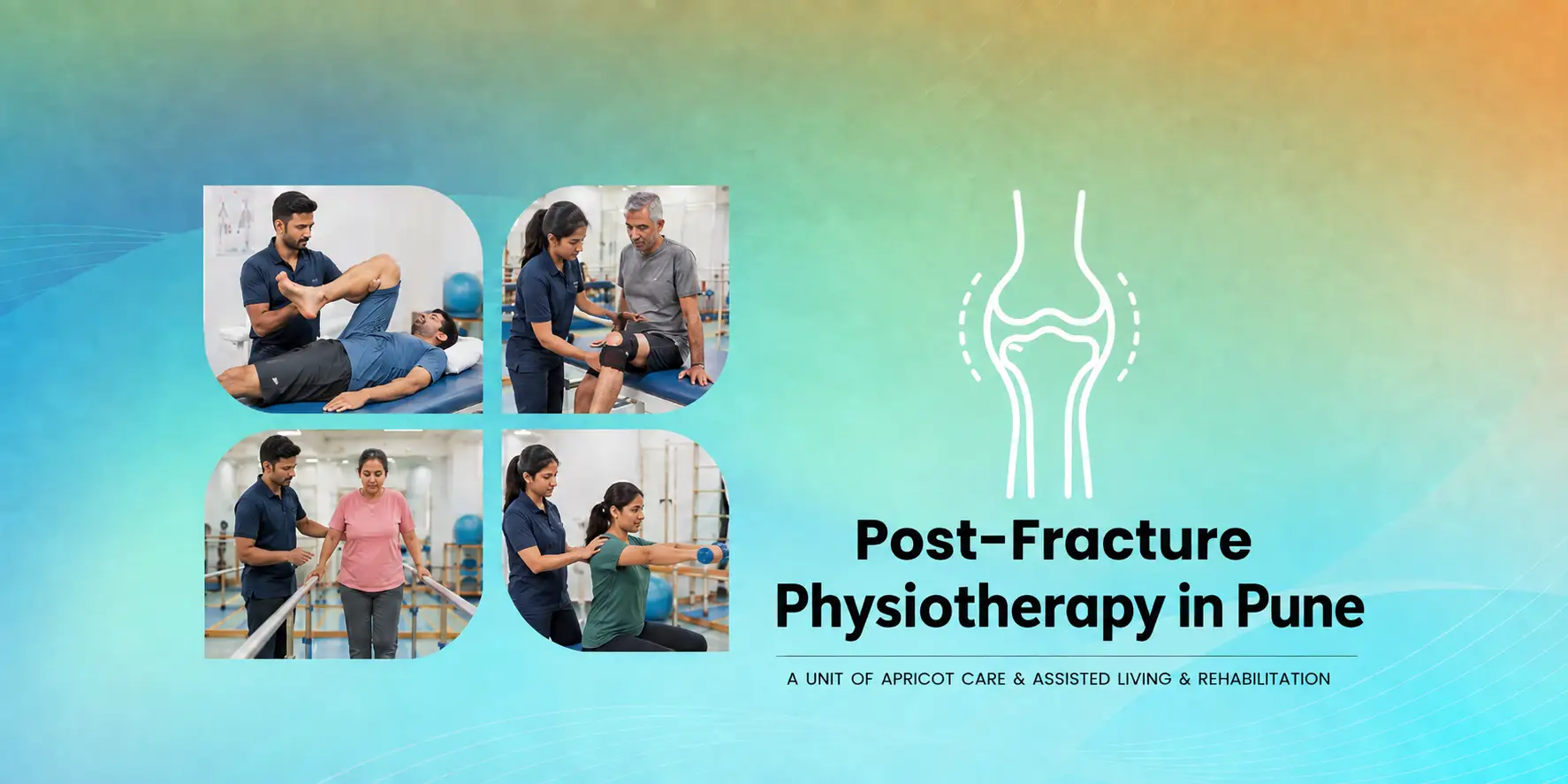
A fracture heals. The question is what it heals into. Without proper rehabilitation, a fracture leaves behind stiff joints, weak muscles, altered movement patterns, and a fear of re-injury that can last for years. Apricot Care's post-fracture physiotherapy program in Pune is structured to restore full strength, range of motion, and confidence: so the fracture becomes a chapter, not a permanent limitation.
3,500+ Patients Treated | Full Fracture Rehabilitation Protocols | In-Clinic & Home Visits Available
What Is Post-Fracture Physiotherapy?
Post-fracture physiotherapy is a phased rehabilitation program that begins during the immobilization period (while the bone is healing in a cast or brace) and continues through full functional recovery. The goal is to prevent muscle wasting, joint stiffness, and swelling during immobilization, and then systematically restore mobility, strength, and normal function once the fracture has healed.
Physiotherapy after a fracture is as important as the bone setting itself: because bone union without functional recovery is an incomplete outcome.
Fractures We Rehabilitate
- Upper limb fractures
- Distal radius fracture (Colles fracture): wrist and hand rehabilitation
- Humeral shaft and proximal humerus fractures: shoulder and elbow function
- Clavicle (collarbone) fractures: shoulder mobility and strength
- Metacarpal and finger fractures: fine motor and grip restoration
- Olecranon (elbow) fractures
- Scaphoid (wrist) fractures
- Lower limb fractures
- Femoral shaft and neck fractures: hip and knee rehabilitation (including post-ORIF and post-nail)
- Tibial and fibular fractures: knee, ankle, and walking rehabilitation
- Ankle fractures (bimalleolar, trimalleolar): proprioception and gait
- Calcaneal (heel bone) fractures: weight-bearing and foot function
- Metatarsal fractures: gait and footwear guidance
- Spine and other
- Vertebral compression fractures: spinal stabilization and posture rehabilitation
- Rib fractures: breathing exercises and pain management
- Pelvic fractures: mobility, weight-bearing, and functional return
Our Post-Fracture Rehabilitation Protocol
Phase 1: Immobilization Phase
Physiotherapy does not wait for the cast to come off. During immobilization, we begin:
- Exercises for joints above and below the fracture to prevent stiffness spreading
- Muscle isometric contractions inside the cast to prevent muscle wasting
- Swelling management techniques
- Education on what to expect and how to protect the healing bone
- Mobility assistance: walking with correct crutch or walker technique
Phase 2: Post-Immobilization
Once the cast or brace is removed:
- Gradual joint range of motion restoration: the joint will be stiff; this is expected and correctable
- Scar tissue management around surgical wounds
- Swelling reduction: IFT, ultrasound, elevation techniques
- Progressive weight-bearing program (for lower limb fractures)
- Beginning gentle strengthening around the healed fracture
Phase 3: Strengthening and Functional Restoration
- Progressive resistance exercises to rebuild muscle strength to pre-fracture levels
- Balance and proprioception retraining: especially important for ankle and lower limb fractures
- Gait normalization: correcting compensatory walking patterns that developed during healing
- Return to functional tasks: cooking, driving, work, carrying, sport
Phase 4: Full Return to Activity
Discharge is functional: you can do what you need to do, with confidence and without guarding or compensating. For athletes and active individuals, this includes sport-specific conditioning.

our service
Our Comprehensive Care and Support Services
.webp)
.webp)
-(1).webp)
24/7 Nursing and Medical Supervision
At Apricot Care Assisted Living and Rehabilitation, we provide 24/7 nursing support to ensure that you receive continuous care and medical monitoring. Whether you're staying in our facility or recovering at home, our trained nurses and medical staff are always available to address your needs, ensuring a safe and secure environment throughout your recovery journey.
.webp)
.webp)
.webp)
.webp)
.webp)
.webp)
.webp)
.webp)
.webp)
.webp)
.webp)
.webp)
Why Choose Apricot Care for Post-Fracture Physiotherapy in Pune?
Starts During Immobilization
Physiotherapy starts during immobilization: we do not wait for the cast to come off; early intervention prevents the stiffness and weakness that makes phase 2 harder
Full Electrotherapy Suite
IFT, TENS, therapeutic ultrasound, and laser therapy for swelling, pain, and soft tissue healing in the fracture area
Home Visits from Day One
For patients in casts who cannot manage clinic travel, our physiotherapists come to you
Surgeon-Coordinated Care
We follow your orthopaedic surgeon's weight-bearing and protection instructions and communicate progress as needed
Scar & Soft Tissue Management
For surgically managed fractures (ORIF, nail), we include wound scar mobilization when appropriate to prevent adhesions limiting joint movement
Meet Your Home Physiotherapists
-
Dr. Kunal Rajendra Kadam Sr. Therapist, Post-Fracture & Orthopedic Rehabilitation
-
Dr. Harshda Labade Clinical Physiotherapist, Geriatric and Musculoskeletal Care
-
Dr. Ruchita Chilka Sr. Therapist, Fracture and Joint Rehabilitation
What to Expect in Your First Session
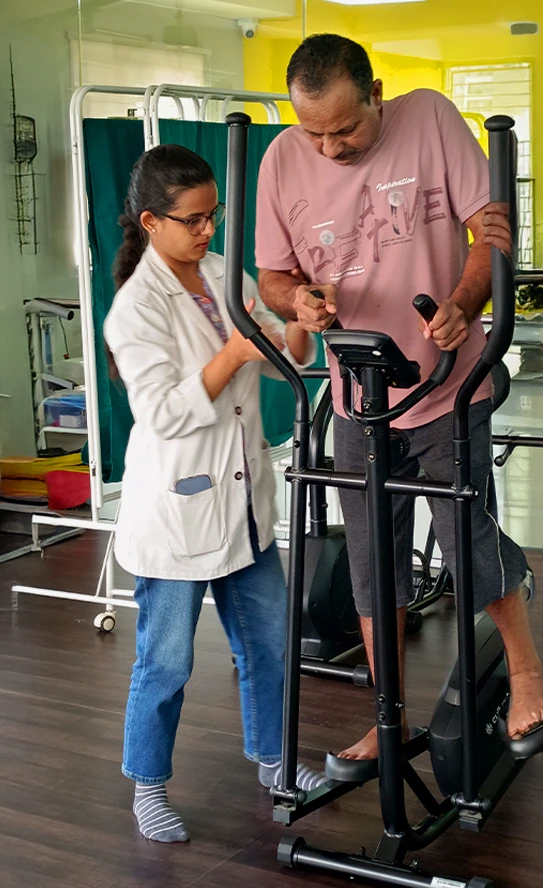
When you contact us after a fracture: whether still in a cast or newly out of it: your physiotherapist begins with a brief review of your X-ray reports and surgeon's notes. A physical assessment identifies which joints are stiff, how much muscle strength has been lost, and what your current pain and swelling levels are. Treatment begins in the same session: appropriate exercises for your current fracture healing stage, manual therapy where indicated, and electrotherapy for swelling and pain. You leave with a home exercise program to begin immediately.
.webp)