Post-Surgical Physiotherapy in Pune | Post-Operative Rehabilitation at Apricot Care

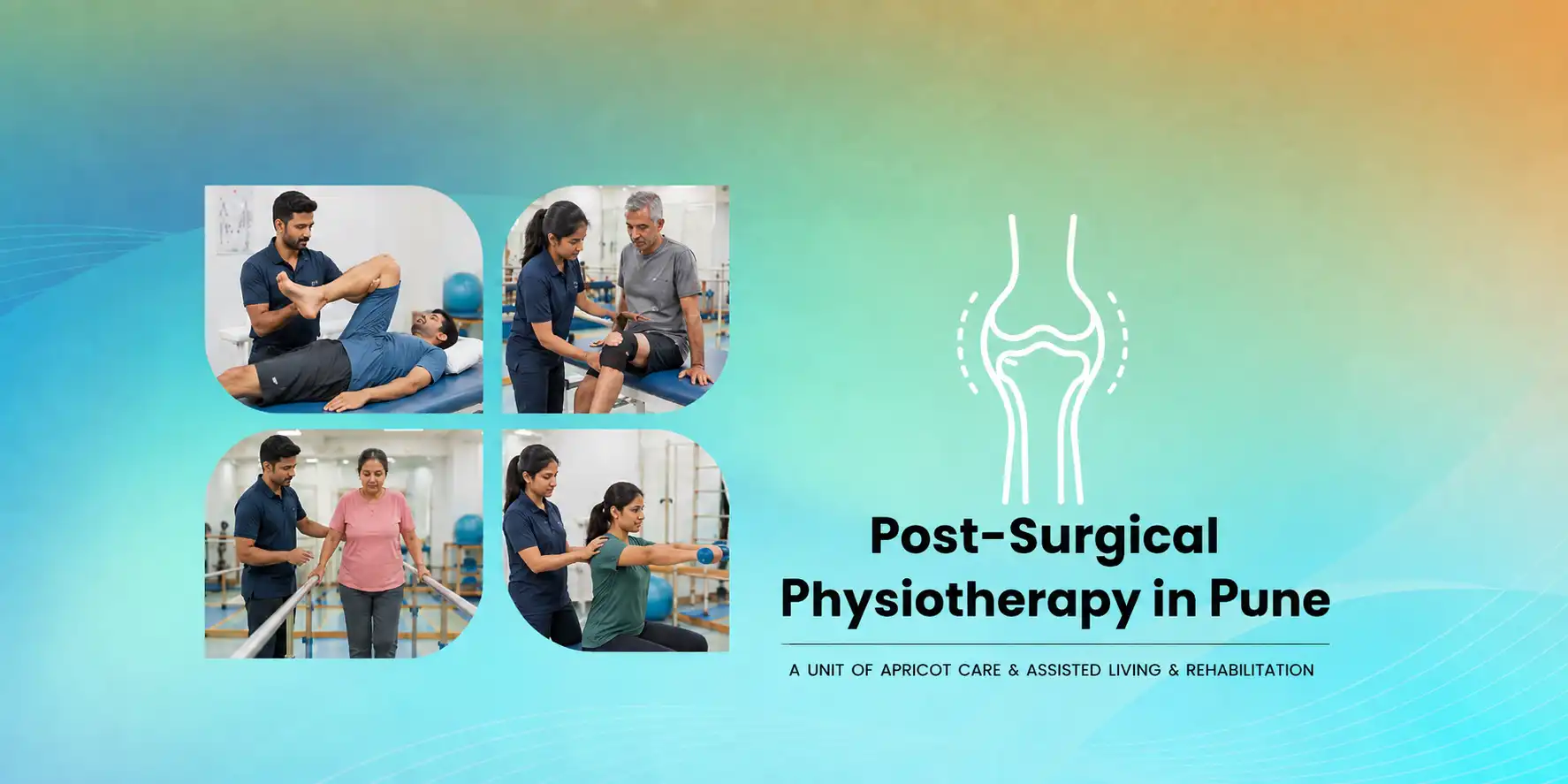
Surgery fixes the structural problem. Physiotherapy is what restores the function. Without structured rehabilitation, even the most technically successful surgery can leave patients with persistent stiffness, weakness, pain, and a return to dependence that the surgery was meant to end. Apricot Care's post-surgical physiotherapy program in Pune begins where your hospital discharge ends: and continues until you are fully back to life.
3,500+ Patients Rehabilitated | Dedicated Post-Surgical Protocols | In-Clinic & Home Visits | Stay Facility Available
What Is Post-Surgical Physiotherapy?
Post-surgical physiotherapy: also called post-operative rehabilitation: is a structured, phased program of exercises, manual therapy, and functional training designed to restore movement, strength, and independence after surgery. It prevents post-operative complications, manages pain more safely than long-term medication, prevents scar tissue adhesions, and accelerates return to daily activity and work.
Physiotherapy after surgery is not optional recovery: it is a clinical requirement that directly determines your final functional outcome.
Surgeries We Specialize In
- Orthopedic Surgery
- Total Knee Replacement (TKR): the most protocol-intensive and time-critical rehabilitation
- Total Hip Replacement (THR): precautions, gait, and functional restoration
- Spine surgery: discectomy, laminectomy, spinal fusion, microdiscectomy
- ACL / PCL / MCL reconstruction: phased return-to-sport rehabilitation
- Rotator cuff repair: shoulder mobility and strength protocol
- Shoulder replacement (TSA): range of motion and functional use
- Fracture fixation: ORIF, intramedullary nailing, plates and screws
- Ankle reconstruction and foot surgery
- Neurological and Other Surgery
- Craniotomy recovery: functional motor and balance rehabilitation
- Carpal tunnel release: hand and wrist rehabilitation
- Post-cardiac surgery: supervised mobilization and cardiopulmonary rehabilitation
Our Post-Surgical Rehabilitation Protocol
Pre-Surgical Physiotherapy (Prehabilitation)
For planned elective surgeries: knee replacement, hip replacement, spine surgery: we recommend starting physiotherapy 2–4 weeks before the operation. Stronger muscles before surgery consistently produce faster, better recovery after it. We also teach the post-surgical exercises in advance so you can begin them immediately after the procedure without learning them while in pain.
Phase 1: Early Post-Op (Days 1–7)
Focus: pain management, preventing blood clots (DVT), controlling swelling, and beginning gentle range of motion. For home visit patients, your physiotherapist arrives the day after or within 48 hours of hospital discharge.
Phase 2: Subacute Recovery (Weeks 2–6)
Focus: restoring joint range of motion to functional levels, progressive weight-bearing, beginning muscle strengthening, and normalizing gait pattern. Sessions increase in frequency and intensity as healing allows.
Phase 3: Functional Restoration (Weeks 6–12)
Focus: rebuilding full muscle strength, advanced balance and coordination, stair and slope training, return-to-work tasks, and for active patients, sport-specific conditioning.
Phase 4: Return to Activity
Discharge criteria are functional, not calendar-based. You are cleared when you can do what you need to do: not simply because a fixed number of weeks have passed.

our service
Our Comprehensive Care and Support Services
.webp)
.webp)
-(1).webp)
24/7 Nursing and Medical Supervision
At Apricot Care Assisted Living and Rehabilitation, we provide 24/7 nursing support to ensure that you receive continuous care and medical monitoring. Whether you're staying in our facility or recovering at home, our trained nurses and medical staff are always available to address your needs, ensuring a safe and secure environment throughout your recovery journey.
.webp)
.webp)
.webp)
.webp)
.webp)
.webp)
.webp)
.webp)
.webp)
.webp)
.webp)
.webp)
Why Choose Apricot Care for Post-Surgical Physiotherapy in Pune?
Surgery-specific protocols
TKR, THR, and spine surgery each have their own evidence-based rehabilitation pathway at Apricot Care, not a single generic program applied to every patient
Day 1 home visit
We send a physiotherapist to your home from the day after discharge so your rehab begins immediately, not after you gain enough mobility to reach a clinic
Stay facility for intensive rehabilitation
For patients who require in-patient post-surgical rehab with daily therapy and 24/7 nursing support
Prehabilitation programs
We start work before your surgery date so you arrive in the best possible condition
Liaison with your surgeon
We follow the surgeon's protocol and precautions, especially for THR (hip precautions) and spine surgery, and communicate progress at your follow-up appointments
Equipment at home
Portable electrotherapy devices, cryotherapy, and CPM (continuous passive motion) guidance brought to the home visit where needed
Meet Your Home Physiotherapists
-
Dr. Kunal Rajendra Kadam Sr. Therapist, Post-Fracture & Orthopedic Rehabilitation
-
Dr. Prajakta Joshin Sr. Therapist, Orthopedic Post-Surgical Rehabilitatio
-
Dr. Ruchita Chilka Sr. Therapist, Fracture and Joint Rehabilitation
What to Expect After You Contact Us Post-Surgery
When you call or WhatsApp us after your surgery, our coordinator will ask which surgery you had, when it was performed, your current level of mobility, and whether you need a home visit or can come to the clinic. A physiotherapist is assigned and arrives (or an appointment is scheduled) within 24–48 hours. The first session assesses your wound status, swelling, pain level, and current range of motion, then begins gentle treatment appropriate to your post-op day. You will not be rushed through exercises that are too advanced for your recovery stage.
.webp)