Interferential Therapy (IFT) Treatment in Kharadi, Pune
Targeted Pain Relief That Helps You Move And Recover Faster

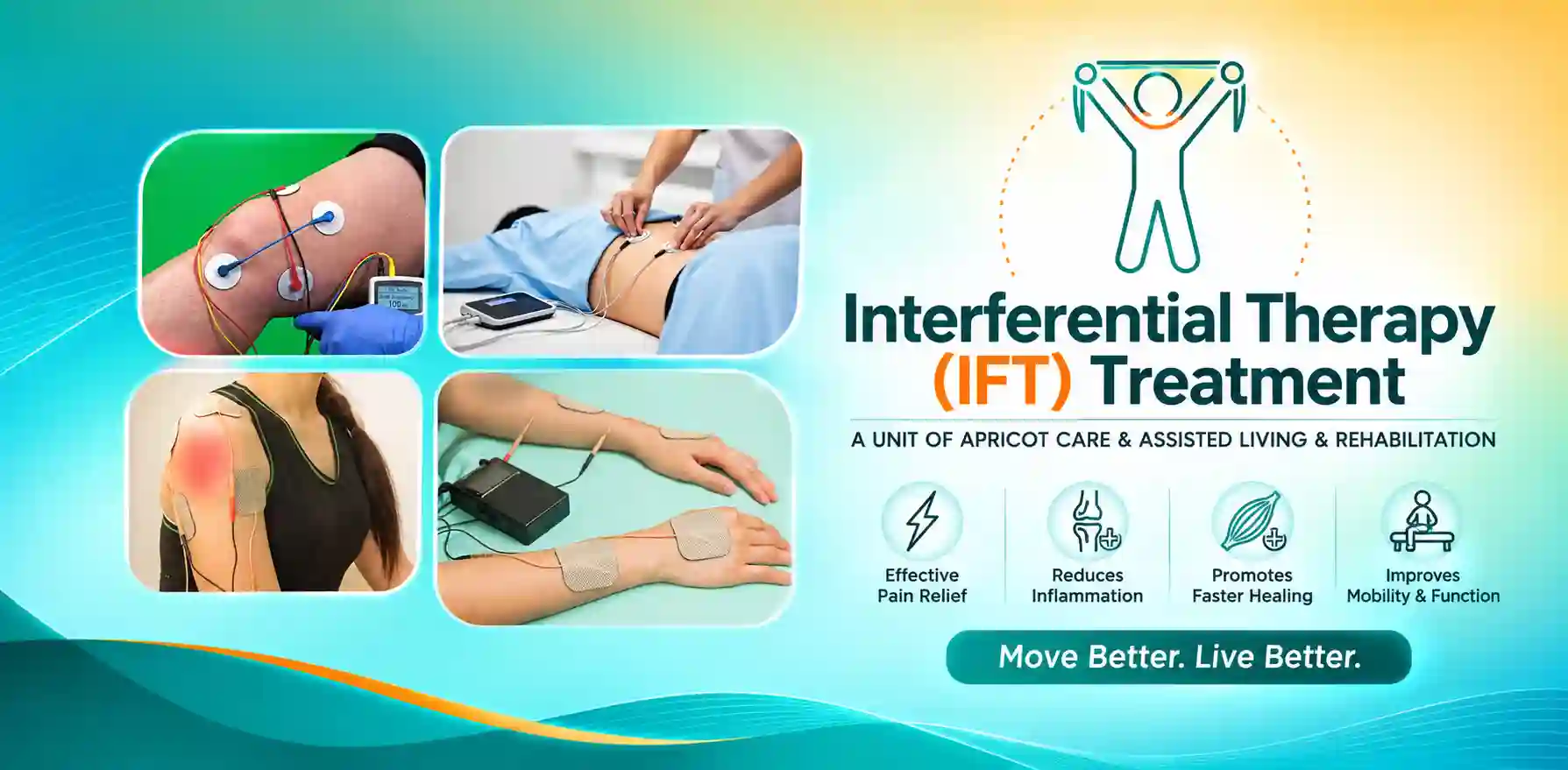
Deep, stubborn pain that does not settle with rest or tablets needs treatment that reaches where the problem actually sits. Interferential therapy (IFT) uses gentle electrical stimulation to reach deep into muscles, joints and nerves relieving pain, reducing swelling and getting your recovery moving again. At Apricot Care in Kharadi, our physiotherapists use IFT as one precise tool inside a complete, personalised rehabilitation plan, not as a stand-alone gadget session.
What Is IFT in Physiotherapy?
Interferential Therapy (IFT) is a safe, non-invasive electrotherapy used in physiotherapy to treat deep pain and swelling. Two medium-frequency electrical currents are passed through the skin, and where they cross inside the tissue they create a therapeutic low-frequency current. This deep stimulation blocks pain signals, improves blood flow and relaxes tight, guarded muscles usually felt only as a mild, pleasant tingling.
Because the treating effect is generated inside the body rather than at the skin surface, IFT reaches deep structures far more comfortably than surface-level electrical stimulation. That is why physiotherapists reach for it in back pain, joint pain and post-injury swelling where the pain source is too deep for creams or heat packs alone.
How Interferential Therapy Works
IFT uses two medium-frequency currents for example, one at 4000 Hz and another at around 4100 Hz. On their own, medium-frequency currents pass through the skin easily and comfortably. When the two currents meet deep in the tissue, they combine to produce a low-frequency "beat" equal to the difference between them (in this example, 100 Hz). That beat frequency is the part that does the therapeutic work: closing the "pain gate," stimulating circulation and easing muscle spasm all delivered deep inside the body where the pain actually lives.
IFT vs TENS: What Is the Difference?
IFT and TENS are both electrotherapy pain treatments, but they work differently. TENS uses a low-frequency current applied at the skin surface, while IFT uses two medium-frequency currents that cross to deliver treatment deep inside the tissue. In short: TENS is better for surface and nerve-related pain you can manage at home, while IFT reaches deeper joints and muscles and is delivered by a physiotherapist.
| Feature | IFT (Interferential Therapy) | TENS |
|---|---|---|
| Full form | Interferential Therapy | Transcutaneous Electrical Nerve Stimulation |
| Current used | Two medium-frequency currents that interfere | Single low-frequency current |
| Depth of effect | Deep muscles, joints, deep nerves | Mainly superficial / near-surface nerves |
| Comfort | Comfortable at depth; less skin tingling | Can feel sharper on the skin at higher intensity |
| Best suited to | Deep joint pain, swelling, muscle spasm, post-injury | Surface and nerve pain, at-home relief |
| Where it's used | Clinic, under physiotherapist supervision | Clinic and portable home units |
Both have their place. In practice, your physiotherapist chooses IFT when the pain source is deep and swelling needs to be moved and often combines it with exercise and hands-on therapy for a lasting result.
Types of IFT
There are two main ways IFT is applied, and your physiotherapist selects the right one for your condition:
-
Bipolar (two-electrode) IFT: the two currents are mixed inside the machine and delivered through two electrodes. Useful for treating a smaller, more defined painful area.
-
Quadripolar (four-electrode) IFT: four electrodes are placed so the two currents cross and "interfere" inside the tissue, concentrating the treating effect at the point where they meet. Useful for larger or deeper areas such as the low back.
-
Suction (vacuum) electrodes: quadripolar treatment can also be delivered through suction electrodes, which hold the pads in place and add a gentle massaging effect to further aid circulation. Whichever setup is used, the electrode placement, intensity and frequency are always set to your specific condition, never a fixed factory preset.
Beat Frequency in IFT and What It Treats
The beat frequency is the low-frequency current produced where the two medium-frequency currents meet, and it is the single most important setting in IFT. Different beat frequencies produce different therapeutic effects.
| Beat frequency (typical) | What it is used for |
|---|---|
| 1–10 Hz | Stimulating muscle, muscle re-education |
| 10–25 Hz | Reducing muscle spasm and guarding |
| 80–150 Hz | Pain relief through the "pain gate" mechanism (often used for acute pain) |
| 1–100 Hz sweep | Improving circulation, reducing swelling and oedema |
These are typical clinical ranges the exact frequency, sweep and intensity are chosen by your physiotherapist after assessing your condition. This is precisely why IFT should be delivered under professional supervision rather than self-administered.
Conditions We Treat with IFT
IFT is used across a wide range of musculoskeletal and pain conditions, including:
- Low back pain, neck pain and spondylosis
- Knee pain and osteoarthritis
- Frozen shoulder and rotator cuff injuries
- Sciatica and nerve-related pain
- Sports injuries, muscle strains and ligament sprains
- Post-surgical pain, stiffness and swelling
- Fibromyalgia and chronic pain conditions
- Plantar fasciitis, tennis elbow and carpal tunnel syndrome
Not sure whether IFT suits your condition? Book an assessment and our physiotherapist will confirm the right treatment approach for you.
What to Expect: Your IFT Treatment at Apricot Care
IFT works best as part of a structured rehabilitation programme, not as a stand-alone treatment so your care follows four clear steps:
-
Assessment: a physiotherapist examines your condition, movement and pain pattern, and screens for anything that would make IFT unsuitable.
-
Personalised plan: we set your treatment goals and decide how IFT fits alongside exercise therapy and hands-on treatment.
-
IFT sessions: electrodes are placed around the affected area and intensity is raised to a strong-but-comfortable tingling. Each application takes about 10–20 minutes.
-
Active rehab and review: as pain settles, we progress you into strengthening and mobility work, adjusting the plan at every review.
Most patients need 6 to 12 sessions, depending on whether the condition is acute or chronic and typically notice a difference within the first few sessions.
Is IFT Treatment Safe?
Yes IFT is one of the safest electrotherapy treatments when applied by a qualified physiotherapist. Side effects are rare and usually limited to mild, temporary skin redness under the electrodes.
IFT is avoided in certain situations, including pregnancy, pacemakers or other implanted electronic devices, active cancer, deep vein thrombosis, and broken or infected skin in the treatment area. We screen every patient for these before the first session which is exactly why IFT should be taken under professional supervision rather than self-administered at home.
Why Choose Apricot Care for IFT in Pune
- Qualified physiotherapists trained in advanced electrotherapy
- Modern IFT equipment with parameters set for your specific condition
- IFT delivered inside a complete rehab plan so we treat the cause, not just the pain
- Personalised session plans with progress reviews, never a fixed package pushed on you
- Transparent guidance on how many sessions you actually need
Deep pain should not decide what you can and cannot do. Book your assessment today and let our team build a recovery plan around your goals.
Our IFT Treatment Approach
At Apricot Care, IFT is used as part of a complete physiotherapy programme, not as a stand-alone machine treatment.
Personalised IFT Treatment
Electrodes are placed around the painful area, and the intensity is adjusted to a strong but comfortable tingling sensation.

IFT settings are selected according to:
- Pain location and severity
- Swelling or muscle spasm
- Treatment area
- Patient comfort
- Stage of recovery
A typical IFT application takes around 10 to 20 minutes and is supervised by a qualified physiotherapist.
Hands-On Physiotherapy
IFT may help reduce pain, but restricted movement and muscle tightness may still require hands-on treatment.
Depending on your condition, your physiotherapist may use:
- Joint mobilisation
- Soft tissue release
- Assisted stretching
- Movement correction
- Posture guidance
These techniques help improve mobility and prepare your body for active rehabilitation.
Exercise-Based Rehabilitation
Exercise is essential for improving strength, movement and long-term function. Your programme may include:
- Mobility exercises
- Muscle strengthening
- Core stability exercises
- Balance training
- Functional movement practice
- Home exercise guidance
Your exercises are selected according to your condition and recovery goals, not from a generic exercise sheet.
Book IFT Physiotherapy Near Me in Pune
Visit Apricot Care in Kharadi, Pune

our service
Our Comprehensive Care and Support Services
.webp)
.webp)
-(1).webp)
24/7 Nursing and Medical Supervision
At Apricot Care Assisted Living and Rehabilitation, we provide 24/7 nursing support to ensure that you receive continuous care and medical monitoring. Whether you're staying in our facility or recovering at home, our trained nurses and medical staff are always available to address your needs, ensuring a safe and secure environment throughout your recovery journey.
.webp)
.webp)
.webp)
.webp)
.webp)
.webp)
.webp)
.webp)
.webp)
.webp)
.webp)
.webp)
Why Choose Apricot Care for IFT Physiotherapy?
One-to-One Care
Your session is guided by a physiotherapist who monitors your comfort and treatment response.
Complete Rehabilitation Approach
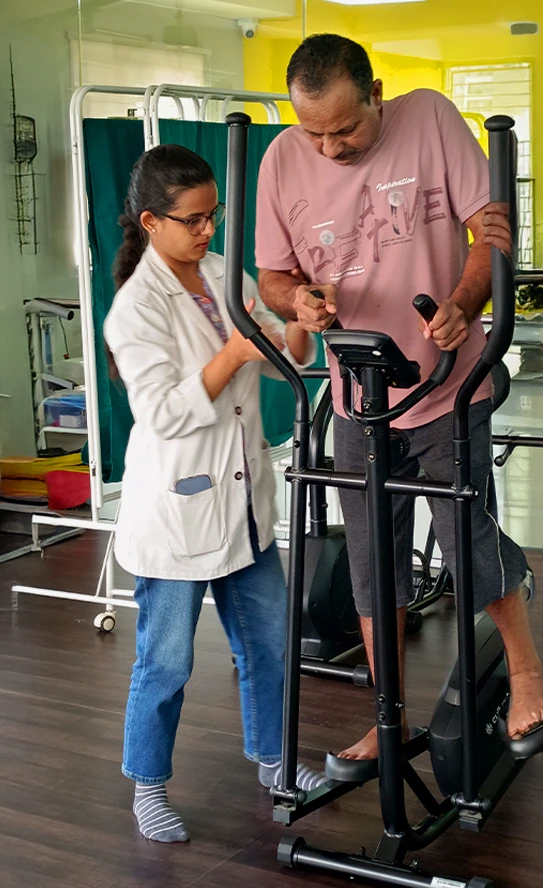
IFT is combined with exercise therapy, manual therapy and mobility work when required.
Individual Treatment Settings
Electrode placement, intensity, frequency and treatment time are selected for your condition.
Regular Progress Reviews
We review changes in pain, movement and function instead of continuing treatment without measuring progress.






.webp)






.webp)