Sports Physiotherapist in Pune for Injury Recovery
A sports injury affects more than pain. It can change training, performance, confidence
and
the ability to return safely to the activity you enjoy. Apricot Care provides
sports physiotherapy in Pune
from its Kharadi clinic for recreational athletes, gym-goers, runners and people
returning
to cricket, football, badminton, cycling, swimming and other activities.
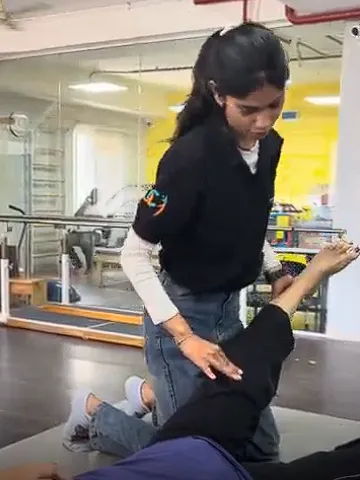
Your sports physiotherapist assesses the injury, the movement demands of your sport and
your
current physical capacity. Rehabilitation is then progressed from symptom control and
basic
movement to strength, power, agility and sport-specific exposure. Return to sport should
be
based on evidence from your recovery, not only the number of weeks since injury.
Rehabilitation progresses from safe movement and strength to power, agility and
sport-specific return-to-play goals.
One-to-One Assessment
Injury evaluation based on your sport, training demands and current function.
Progressive Sports Rehab
Strength, balance, power, agility and controlled sport-specific loading.
Clinic and Home Care
Kharadi clinic rehabilitation with selected Pune home-care options.
When to Book an Assessment
When to See a Sports Physiotherapist in Pune
Book an assessment when pain, swelling, stiffness, weakness or repeated injury is
affecting
training or competition. Early review can be useful after an ankle sprain, muscle strain
or
overload problem, especially when you are unsure how much activity is safe.
Physiotherapy
also supports planned rehabilitation after ligament, meniscus, tendon or fracture
treatment
when medical precautions are clear.
You do not need to be a professional athlete. Many people need sports rehab after
increasing
running distance, starting a new gym programme, returning after a long break or playing
weekend sport around a demanding work schedule. The plan should reflect your actual
level
and goals rather than using elite-athlete protocols without context.
Sports Injury Assessment
Sports Injuries and Performance Problems We Assess
Common Sports Injuries and Recurring Symptoms
Common presentations include ankle sprains, calf and hamstring strains,
knee
pain,
patellofemoral pain, tendon overload,
shoulder
pain,
tennis or golfer's elbow,
low
back pain
and post-operative rehabilitation. We also assess recurring symptoms that appear only at
a
particular distance, speed, weight or stage of training.
Training Load, Recovery and Performance Factors
A sports physiotherapy assessment looks beyond the painful area. Training load,
recovery,
sleep, strength, mobility, balance, technique, footwear or equipment, previous injuries
and
competition schedule may all matter. These factors are considered as contributors, not
used
to make simplistic claims about a single root cause.
Seek prompt medical assessment for visible deformity, suspected fracture or dislocation,
inability to bear weight after significant trauma, rapidly increasing swelling, an open
wound, loss of sensation or worsening weakness. Head injury with confusion, repeated
vomiting, loss of consciousness, seizure, severe headache or deteriorating symptoms
requires urgent concussion assessment. Chest pain, breathlessness or collapse during
exercise is a medical emergency.
Your First Visit
What Happens During a Sports Physiotherapy Assessment
The physiotherapist reviews how the injury happened, symptom behaviour, training
history, competition demands, previous injuries, medical conditions and relevant
reports. The physical assessment may include joint movement, strength, balance, hop
or
landing control, running or lifting technique and sport-specific tasks when safe.
Testing is selected for the injury and stage of recovery. A recent ankle sprain may
begin with swelling, walking and balance measures, while later testing may examine
hopping, direction change and repeated effort. After surgery, the programme follows
the
surgeon's restrictions and tissue-healing timelines. The assessment ends with a
working
diagnosis, goals, expected milestones and a plan for training modification.
01
Injury and Training History
How the injury happened, symptom behaviour, previous injuries and competition
demands.
02
Movement and Capacity Testing
Joint movement, strength, balance, landing, running or lifting tasks when
appropriate.
03
Stage-Specific Evaluation
Testing is selected according to the injury, healing stage and medical
precautions.
04
Rehabilitation Milestones
A working diagnosis, clear goals, expected milestones and training modifications.
Visit Apricot Care
Consult a Sports Physiotherapist at Our Clinic in Kharadi, Pune
Visit our Kharadi clinic for sports injury assessment, rehabilitation and structured
return-to-sport planning. We support recreationally active individuals, runners,
gym-goers
and athletes recovering from muscle, tendon, ligament and joint injuries.
A clear sports rehab plan usually moves through overlapping phases. Progress depends on
symptoms,
tissue healing and performance criteria rather than a rigid calendar.
Phase 1: Protect the Injury and Maintain Safe Activity
Early care may focus on swelling, pain, safe movement and protecting healing tissue.
Complete rest is not always necessary. Your physiotherapist can identify forms of
training that do not aggravate the injury, helping maintain general fitness and
confidence where appropriate.
Phase 2: Restore Movement and Foundational Strength
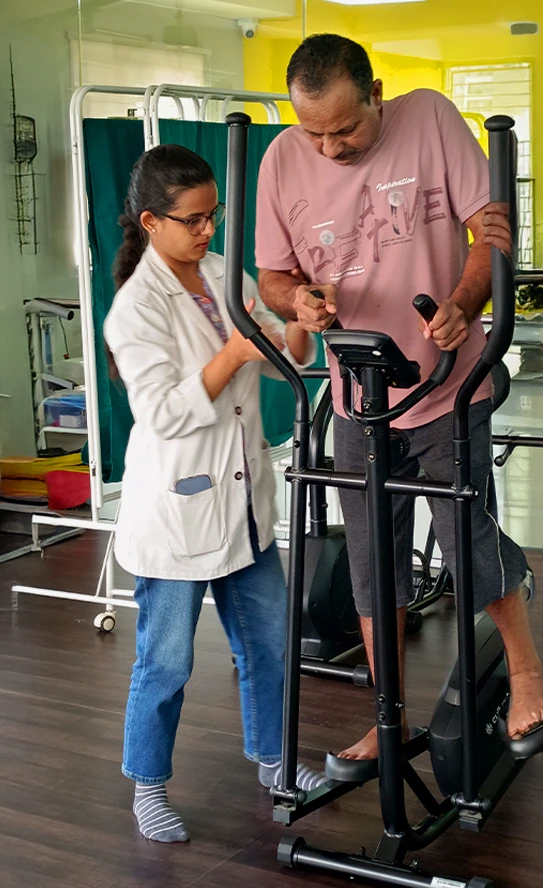
Exercises rebuild joint movement, muscle capacity, balance and control. Loading
begins
at a level the injured area can tolerate and progresses using resistance,
repetitions,
speed or complexity. Technique matters, but rehabilitation also needs enough load to
prepare the body for sport.
Phase 3: Power, Agility and Sport-Specific Training
Later rehabilitation may add jumping, landing, acceleration, deceleration, direction
change, throwing, overhead work or repeated sprint effort. These tasks are
introduced
in a controlled environment before full training. The exact content depends on the
sport, position and previous level.
Phase 4: Return-to-Sport Testing and Progression
A safe return considers movement quality, strength, endurance, confidence,
sport-specific tolerance and the risk of re-injury. No single test can guarantee
safety.
The physiotherapist combines relevant measures with medical guidance and a staged
return from individual drills to modified training and full participation.
Sports Injury Prevention and Training Guidance
Prevention is not about promising that an injury will never happen. It is about
managing
known risks. Depending on your sport, this may include strength work, balance
training,
warm-up planning, gradual changes in volume, recovery days and technique review. A
sudden jump in running distance, bowling volume, match load or gym intensity may
need
correction even when the exercise itself is appropriate.
For recurring problems, we review what changed before each flare-up and build a plan
you
can sustain. The objective is to make you less dependent on repeated passive
treatment
and more capable of managing training decisions.
Why Choose Apricot Care as Your Sports Physio Clinic in Pune
Apricot Care's sports rehabilitation service is based at the Kharadi clinic. Care is
one-to-one and goal-led, with progress measured against relevant tasks rather than
pain
alone. Before starting, ask about the physiotherapist's qualifications,
registration,
experience with your sport and how return-to-sport decisions will be made.
The clinic can coordinate with an
orthopaedic
surgeon,
sports physician or coach when needed. Home care may be useful in the early
post-operative
period,
while clinic-based rehabilitation is generally better suited to advanced loading and
performance testing. No provider can guarantee an exact return date before assessing
the injury and response to rehabilitation.
Kharadi and East Pune
Sports Physiotherapy Near Kharadi and East Pune
The centre is in Thite Nagar, Kharadi, convenient for people from Chandan Nagar,
Viman
Nagar, Wadgaon Sheri, Wagholi, Kalyani Nagar, Magarpatta, Hadapsar and the Nagar
Road
area. When searching for a sports rehabilitation centre near me, compare clinical
credentials, access to progressive exercise, sport-specific testing, communication
and
referral processes. Learn more about
sports
physiotherapy in Kharadi.
Visit Apricot Care for injury assessment, progressive loading and structured
return-to-sport planning.
Selected Home-Care Options
Home care may support selected patients during the early post-operative
period
or when regular clinic travel is difficult.
Common Questions
Frequently Asked Questions About Sports Physiotherapy
Consult a sports physiotherapist when pain, swelling, weakness, stiffness or
instability affects training or competition. An assessment is also useful when an
injury repeatedly returns or when you need a structured plan to resume running, gym
training or sport.
Return to sport should be based on symptoms, movement, strength and sport-specific
function rather than time alone. Pain should be well controlled, movement and
strength
should be sufficiently restored, and training intensity should increase gradually.
At Apricot Care, the physiotherapist reviews the injury, training demands and
return-to-sport goals. The assessment may include movement, strength, balance and
functional tests before creating a progressive rehabilitation programme.
A sports physiotherapist can assess and rehabilitate muscle strains, ligament
sprains,
tendon pain, joint injuries and movement problems related to running, gym training
or
sport. Physiotherapy is also used to restore movement, strength and stamina after
surgery.
Do not ignore sharp, increasing or persistent pain. Continuing at the same intensity
may aggravate the condition. Reduce the activity that triggers symptoms and obtain
an
assessment, particularly when pain is accompanied by swelling, instability, weakness
or
reduced movement.
Apricot Care provides one-to-one physiotherapy at its Kharadi clinic. Treatment is
personalised according to the injury, physical demands and recovery goals rather
than
using the same exercise programme for every patient.


.webp)