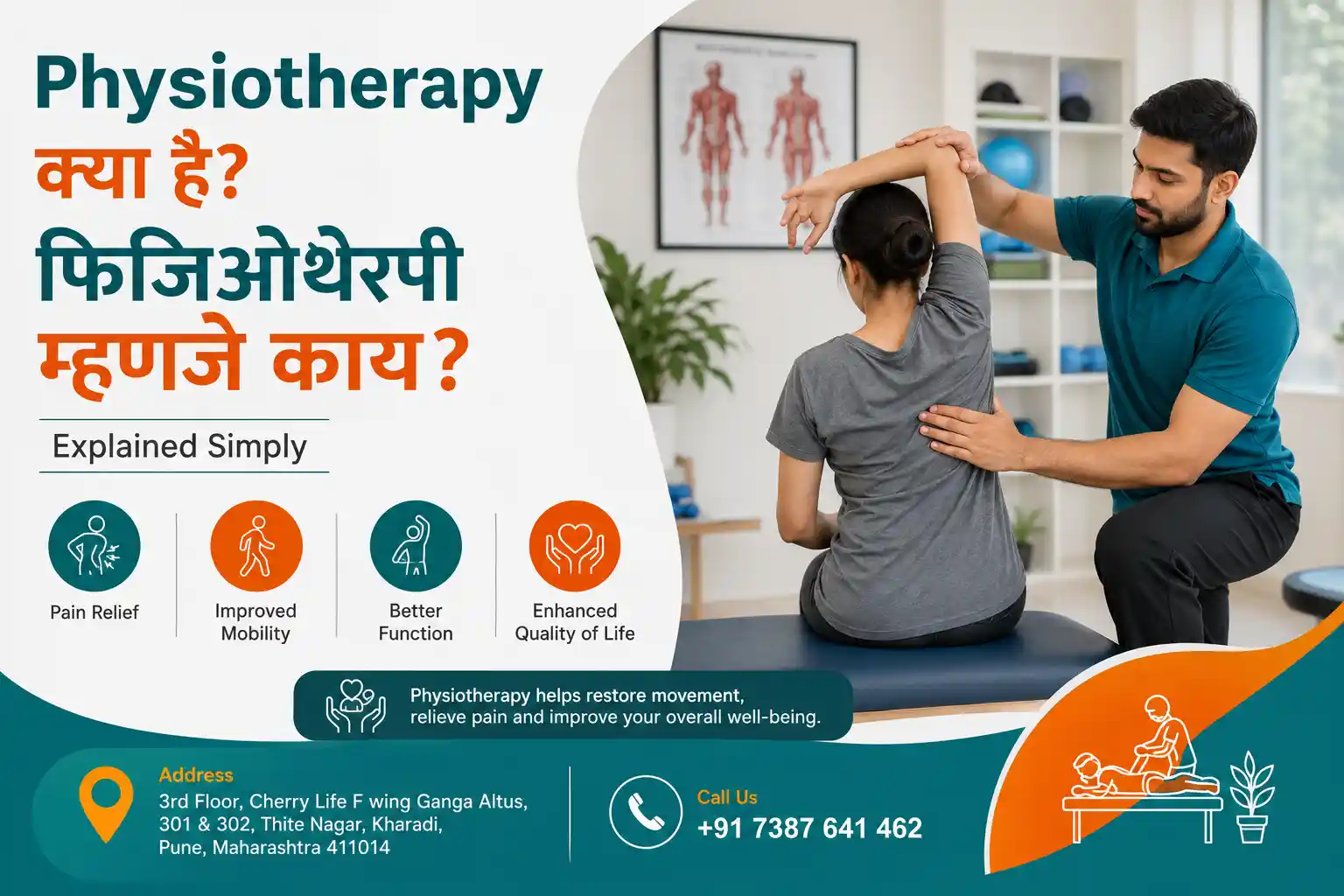
Physiotherapy Meaning in Hindi and Marathi: Physiotherapy Kya Hai, Explained Simply


Dr. Krutika Bhadane
PT (Neuro), BPTh, MPTh (Neurosciences), 3+ years clinical
experience in neurological rehabilitation
If you've searched for physiotherapy meaning in Hindi, or typed "physiotherapy kya hai" into Google, you're not alone; it's one of the most commonly searched health terms in India. That's because doctors and hospitals usually say "physiotherapy" in English, while patients and families want to understand it in the language they're actually comfortable with Hindi, Marathi, or plain, simple everyday words.
In this guide, we'll break down the physiotherapy meaning in Hindi and physiotherapy meaning in Marathi, explain physiotherapy kya hai in the simplest possible terms, and walk you through what actually happens during a session, who needs it, and how it can help you or your loved one recover without unnecessary medicines or surgery.
Physiotherapy Meaning in Hindi (फिजियोथेरेपी का हिंदी में मतलब)
In everyday Hindi, physiotherapy is almost always called फिजियोथेरेपी (Fiziyotherapy) a direct transliteration of the English word, since that's how most doctors, hospitals, and patients refer to it in conversation.
The more formal, textbook Hindi term is भौतिक चिकित्सा (Bhautik Chikitsa), sometimes also written as शारीरिक चिकित्सा (Sharirik Chikitsa). Both mean roughly "physical treatment" a branch of healthcare that treats pain, injury, and movement problems using exercise, hands-on techniques, and physical methods instead of medicines or surgery. A physiotherapist, in Hindi, is called a भौतिक चिकित्सक (Bhautik Chikitsak).
In one line: Physiotherapy meaning in Hindi = फिजियोथेरेपी / भौतिक चिकित्सा a science-based treatment that uses exercise, movement, and physical techniques to reduce pain and restore normal function of the body.
Physiotherapy Meaning in Marathi (फिजिओथेरपी म्हणजे काय)
In Marathi too, most people use the transliterated word फिजिओथेरपी (Fiziotherapy) the term you'll hear used by doctors, hospitals, and patients across Maharashtra, including here in Pune.
The formal Marathi terms are भौतिकोपचार (Bhautikopchar) or भौतिक उपचार (Bhautik Upchar), and sometimes शारीरिक चिकित्सा (Sharirik Chikitsa) again pointing to the same idea: treating the body's pain, injury, or disability through physical means like exercise, massage, and movement therapy rather than medicines. A physiotherapist in Marathi is referred to as a फिजिओथेरपिस्ट.
In short: Physiotherapy meaning in Marathi = फिजिओथेरपी / भौतिकोपचार a non-medicinal, movement-based treatment used to recover from injury, reduce pain, and regain strength and mobility.
Physiotherapy Kya Hai? Understanding It in Simple Words
Now that we know what physiotherapy is called in Hindi and Marathi, let's answer the bigger question physiotherapy kya hai, actually?
In the simplest terms, physiotherapy is a form of healthcare where a trained professional the physiotherapist helps you move better, feel less pain, and recover function using exercises, hands-on techniques, and sometimes equipment like electrical stimulation or ultrasound. No tablets, no injections, no scalpel just science-based physical methods.
It's used for an enormous range of situations from a stiff neck after long hours at a desk, to helping someone walk again after a stroke, to getting an athlete back on the field after a sports injury.
What Does a Physiotherapist Actually Do?
A typical physiotherapy session usually involves:
- Assessing your condition how you move, where it hurts, and what's causing it
- Designing a treatment plan specific to your body and your recovery goals
- Hands-on treatment stretching, joint mobilisation, and massage-based techniques
- Guided exercises to rebuild strength, balance, and flexibility
- Education on how to move safely and reduce the chance of the problem returning
Who Needs Physiotherapy?
You may benefit from physiotherapy if you're dealing with:
- Chronic back or neck pain
- Joint pain knee, shoulder, or hip
- Recovery after surgery or a fracture
- Sports injuries
- Neurological conditions such as stroke or Parkinson's disease
- Age-related mobility or balance issues
- Postural problems from long desk hours
Types of Physiotherapy Treatment Techniques
Physiotherapy isn't a single technique it's a toolbox of methods, chosen based on what your body needs:
Manual Therapy
Hands-on techniques such as joint mobilisation, soft-tissue massage, and manipulation to reduce stiffness and pain.
Exercise Therapy
Customised strengthening, stretching, and balance exercises the backbone of most physiotherapy plans.
Electrotherapy
Techniques such as Interferential Therapy (IFT), ultrasound, and TENS use mild electrical currents or sound waves to reduce pain and inflammation.
Specialised Physiotherapy
Depending on the condition, physiotherapy is further divided into specialised areas such as neuro physiotherapy, orthopedic physiotherapy,pediatric physiotherapy, and geriatric physiotherapy each built around the specific needs of that patient group.
Common Conditions Treated With Physiotherapy
Physiotherapy is commonly used to manage:
- Back pain
- Knee pain
- Shoulder pain and frozen shoulder
- Sports injuries
- Sciatica
- Post-surgical and post-fracture recovery
- Neurological conditions such as stroke and Parkinson's disease
Benefits of Physiotherapy (फिजियोथेरेपी के फायदे)
- Reduces pain naturally, without long-term dependency on painkillers
- Improves mobility, flexibility, and strength
- Speeds up recovery after surgery, injury, or illness
- Helps prevent falls and improves balance in elderly patients
- May reduce the need for surgery in some conditions when started early
- Improves posture and helps prevent recurring pain
- Supports long-term independence and overall quality of life

When Should You See a Physiotherapist?
You don't need to wait until the pain becomes unbearable. Consider consulting a physiotherapist if:
- Pain has lasted more than a few days and isn't improving
- You've had a recent injury, surgery, or fracture
- You notice reduced flexibility, strength, or balance
- Simple daily tasks climbing stairs, bending, lifting have become difficult
- Your doctor has recommended rehabilitation
For a more detailed breakdown, read our guide on when to visit a physiotherapist.
Physiotherapy in Pune - Getting the Right Care Near You
If you're in Pune and searching for physiotherapy meaning and treatment guidance, Apricot Care's team of qualified physiotherapists provides personalised care for a wide range of conditions from post-surgical recovery to neurological rehabilitation at our physiotherapy clinic in Kharadi, pune and through home physiotherapy in Pune for patients who are unable to travel.
Whether you're looking for physiotherapy in Pune for a simple backache or specialised neuro physiotherapist support after a stroke, our team designs every treatment plan around your specific condition and recovery goals.
Conclusion
Whether you know it as फिजियोथेरेपी, फिजिओथेरपी, or simply physiotherapy, the goal remains the same helping your body move, function, and feel better without relying only on medicines. Understanding physiotherapy meaning in Hindi, physiotherapy meaning in Marathi, and physiotherapy kya hai is just the first step. The next is knowing when to reach out to a qualified physiotherapist, before a small problem becomes a bigger one.
Book Your Physiotherapy Consultation in Pune
If you or a loved one is dealing with pain, an injury, or a condition that's affecting daily movement, Apricot Care's physiotherapy team in Pune is here to help. Book a consultation today and take the first step toward recovery.
Frequently Asked Questions
What is physiotherapy called in Hindi?
Physiotherapy is commonly called फिजियोथेरेपी in Hindi, with भौतिक चिकित्सा (Bhautik Chikitsa) as its formal name. A physiotherapist is known as a भौतिक चिकित्सक.
What is physiotherapy called in Marathi?
In Marathi, physiotherapy is usually called फिजिओथेरपी, with भौतिकोपचार (Bhautikopchar) as the formal term.
Physiotherapy kya hai, in simple words?
Physiotherapy is a non-medicinal, non-surgical treatment that uses exercise, hands-on techniques, and physical methods like electrotherapy to reduce pain, restore movement, and improve function after an injury, surgery, or illness.
Is physiotherapy painful?
Physiotherapy shouldn't be painful. You may feel mild discomfort or muscle soreness during certain exercises or manual techniques similar to how a workout feels but a qualified physiotherapist will always adjust the treatment to your comfort level.
How many physiotherapy sessions will I need?
This depends on your condition, its severity, and how your body responds to treatment. Some people notice improvement within a few sessions, while others need a longer plan read our detailed guide on how long physiotherapy takes to show results for a clearer picture.
Can physiotherapy be done at home?
Yes. Many conditions especially for elderly patients or those recovering after surgery can be managed through home physiotherapy in Pune, where a physiotherapist visits and treats you in familiar surroundings.
Do I need a doctor's referral to see a physiotherapist?
Not necessarily physiotherapists are trained to directly assess and treat musculoskeletal and movement-related issues. That said, if you have a complex medical condition, it's a good idea to keep your doctor informed as well.
This article is for general information and does not replace an in-person assessment. Please consult a qualified physiotherapist or neurologist for a diagnosis and treatment plan suited to your condition.
.webp)